A Painful Crossroads: Jeremiah Owusu-Koramoah Faces an Uncertain NFL Future While Embracing a New Purpose
A Painful Crossroads: Jeremiah Owusu-Koramoah Faces an Uncertain NFL Future While Embracing a New Purpose
For the past several seasons, Jeremiah Owusu-Koramoah has embodied everything the Cleveland Browns hoped for in a modern defensive star—speed, intelligence, versatility, and relentless energy. Drafted with high expectations, he quickly exceeded them, becoming one of the most dynamic linebackers in the league and a cornerstone of Cleveland’s defensive identity. His ability to disrupt plays, cover sideline to sideline, and deliver explosive hits made him a fan favorite and a rising face of the franchise.
But now, that promising trajectory has been shaken by a reality far more serious than anything that happens on the field.

After suffering a devastating neck injury in 2024, Owusu-Koramoah has spent more than a year away from football, rehabbing and searching for clarity about his future. While many initially believed the injury would be a temporary setback, recent developments have cast doubt on whether he will ever return to the NFL. In a deeply personal revelation, he shared that doctors warned him the injury could be career-ending—a statement that has left fans, teammates, and the organization grappling with uncertainty.
At the same time, however, another chapter of his life is beginning.
Owusu-Koramoah recently announced that he has been accepted into the prestigious Harvard Kennedy School, where he plans to pursue a master’s degree in public policy. The news, while inspiring, carries a bittersweet undertone. For many, it signals that he is preparing for life beyond football—a future that once seemed distant for a player in the prime of his career.
In the essay that helped secure his admission, Owusu-Koramoah confronted the harshest question an athlete can face: “If football ends tomorrow, how then will I be defined?” It is a question rooted in identity, purpose, and the often fragile nature of professional sports careers. For a player whose life has revolved around football for years, the emotional weight of that question cannot be overstated.
For Browns fans, the words hit especially hard.
They remember the explosive rookie who immediately changed the energy of the defense. They remember the game-changing plays, the sideline-to-sideline speed, and the passion he brought to every snap. He wasn’t just another talented player—he represented hope for a defense that had long searched for consistency and leadership.
Now, that hope is intertwined with concern.
Neck injuries are among the most serious in football, often carrying long-term health risks that extend far beyond the game itself. While modern medicine has allowed many players to return from significant injuries, the uncertainty surrounding neck trauma is different. It’s not just about performance—it’s about quality of life. For Owusu-Koramoah, the decision is not simply whether he can return, but whether he should.
And that distinction matters.
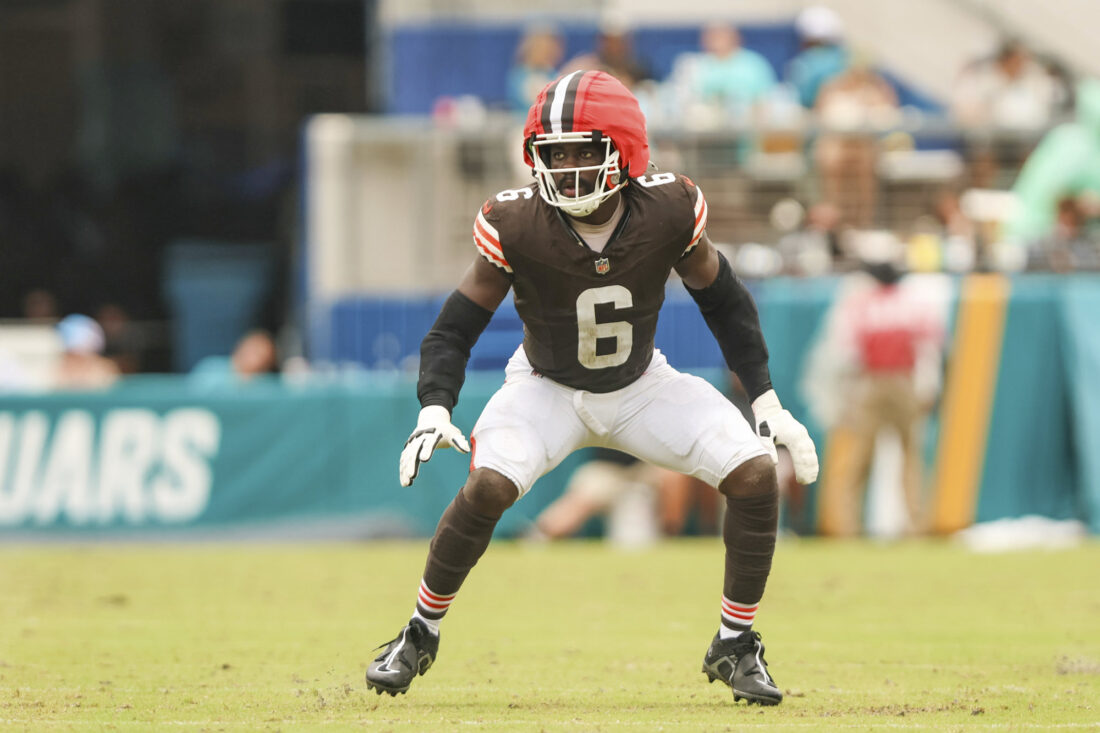
In choosing to pursue higher education at one of the world’s leading institutions for public policy, Owusu-Koramoah is demonstrating a level of foresight and maturity that goes beyond athletics. The Harvard Kennedy School is known for shaping leaders who go on to influence governments, communities, and global initiatives. His acceptance into such a program speaks not only to his intelligence but also to his desire to make an impact beyond the football field.
This transition, however, does not erase the emotional weight of what might be lost.
The NFL is a league built on fleeting moments—careers can rise and fall in an instant. For a player like Owusu-Koramoah, who appeared destined for stardom, the possibility of an early end is particularly difficult to accept. Fans are left wondering what could have been: Pro Bowl selections, All-Pro honors, perhaps even a legacy as one of the great defenders in Browns history.
Yet, there is also something undeniably powerful about the path he is choosing.
Rather than clinging to uncertainty or risking further harm, he is actively redefining himself. He is confronting the reality that football, while significant, is only one chapter of a much larger story. In doing so, he is setting an example not just for athletes, but for anyone facing unexpected change.
Teammates and coaches have expressed admiration for his resilience throughout this process. While the Browns organization has not officially closed the door on his return, there is a growing understanding that his long-term health must come first. In a sport often defined by toughness and sacrifice, moments like this remind everyone involved that there are limits—and that those limits deserve respect.
For the city of Cleveland, the situation carries a unique emotional resonance. The Browns have endured years of rebuilding and heartbreak, and players like Owusu-Koramoah represented a new era of promise. His potential departure, if it comes to that, would not just be the loss of a talented linebacker—it would be the loss of a symbol of that progress.
Still, his story is far from over.
If anything, it is evolving.
The same qualities that made him a standout on the field—discipline, intelligence, and determination—are likely to serve him well in his academic and future professional pursuits. Whether he eventually returns to football in some capacity or fully transitions into a new career, there is little doubt that he will continue to make an impact.
And perhaps that is the most important takeaway.
The question he posed in his essay—“If football ends tomorrow, how then will I be defined?”—is one that resonates far beyond sports. It challenges the idea that identity should be tied to a single role or achievement. For Owusu-Koramoah, the answer appears to be unfolding in real time: he will be defined not just by what he did on the field, but by how he adapts, grows, and contributes when faced with adversity.
For now, fans wait.

They wait for updates, for clarity, for any sign of what comes next. They hold onto hope that perhaps, somehow, he might return to the game he loves. But they also recognize the importance of the journey he is now undertaking—a journey that may ultimately prove just as meaningful as any football career.
In the end, whether Jeremiah Owusu-Koramoah ever takes another snap for the Cleveland Browns or not, his story is already bigger than football.
It is a story about resilience, identity, and the courage to face an uncertain future head-on—and redefine what greatness truly means.