BREAKING: Pope Leo XIV Condemns Escalating Threats, Urges Global Call for Peace
BREAKING: Pope Leo XIV Condemns Escalating Threats, Urges Global Call for Peace
In a moment that has captured global attention and stirred intense debate, Pope Leo XIV has issued a strong and unambiguous response to recent escalating threats involving Iran, calling the rhetoric “completely unacceptable” and urging immediate action to prevent further conflict.
The statement, delivered with urgency and moral clarity, has quickly resonated across religious communities, political circles, and international observers. It marks one of the most direct and forceful interventions by a spiritual leader in recent geopolitical tensions.
A Voice Beyond Politics
“This is not about politics,” one Vatican observer noted shortly after the statement. “This is about human life, dignity, and responsibility.”
Indeed, Pope Leo XIV’s message was framed not as a political argument, but as a moral appeal — one rooted in the principles of peace, compassion, and the protection of innocent lives.
Rejecting any notion of neutrality in the face of potential violence, the Pope emphasized that language suggesting widespread destruction or targeting of entire populations crosses a line that cannot be ignored.

A Direct Response to Escalation
According to sources close to the Vatican, Pope Leo XIV was responding to increasingly aggressive rhetoric that raised concerns about the possibility of military escalation.
In his remarks, he warned that such statements — particularly those implying harm to entire nations or civilizations — are not only dangerous but fundamentally incompatible with international law and moral responsibility.
He stressed that any action targeting civilian populations, infrastructure, or cultural heritage sites would constitute a violation of basic human rights and global legal standards.
“These are not just political decisions,” he emphasized. “They are matters of life and death.”
A Call to Conscience
Perhaps the most striking aspect of the Pope’s message was his direct appeal to ordinary people.
Rather than limiting his words to governments or institutions, Pope Leo XIV addressed the global community — urging individuals to speak out, to advocate for peace, and to refuse silence in the face of potential conflict.
“Do not remain silent,” he said. “Raise your voices for peace.”
The call has been interpreted by many as a challenge not only to political leaders but also to citizens around the world to engage actively in promoting dialogue and preventing violence.
Drawing a Moral Line
In a time when geopolitical tensions are often framed in strategic or political terms, Pope Leo XIV’s intervention reframed the issue in moral language.
He did not draw a partisan line.
He drew a human one.
By emphasizing the value of every life and the responsibility to avoid unnecessary suffering, he positioned himself as a voice of conscience in a rapidly evolving global situation.
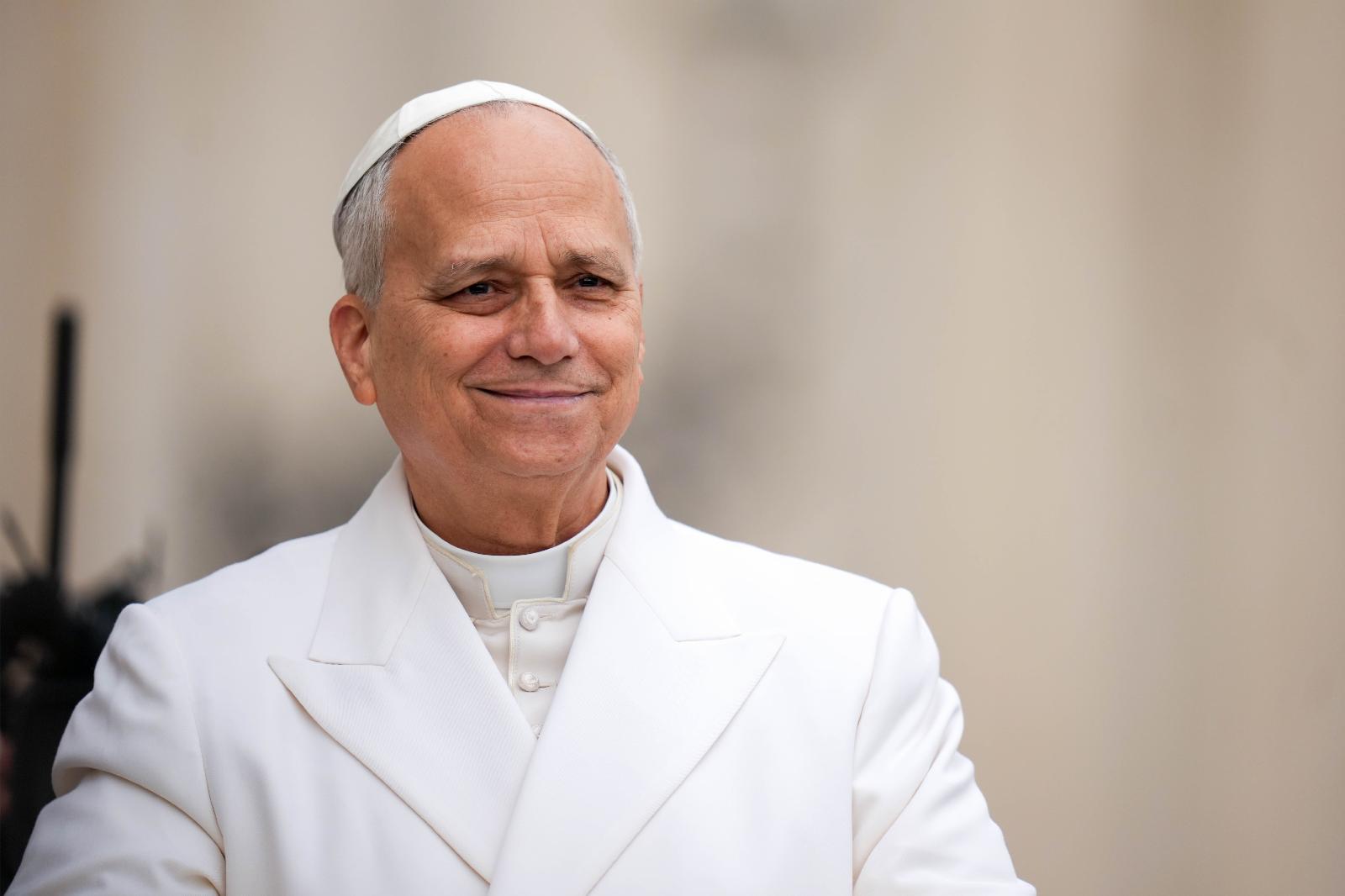
Reaction Around the World
The response to the Pope’s statement has been swift and varied.
Supporters have praised his courage, arguing that spiritual leaders have a duty to speak out when human life is at risk.
“This is moral leadership,” one commentator said. “It’s about standing up when it matters most.”
Religious communities across different countries have echoed his message, organizing prayer gatherings and discussions centered on peace and reconciliation.
At the same time, some critics have questioned whether such direct statements risk blurring the line between spiritual leadership and political involvement.
Despite the debate, few have denied the impact of his words.
The Role of the Church in Global Issues
Historically, the Catholic Church has played a significant role in advocating for peace and humanitarian principles during times of conflict.
From calls for ceasefires to mediation efforts, the Church has often positioned itself as a neutral but morally engaged actor on the world stage.
Pope Leo XIV’s statement continues that tradition, while also reflecting the unique challenges of the modern era — where communication is instant, tensions can escalate rapidly, and global audiences are more interconnected than ever.
A Message Rooted in Responsibility
Throughout his remarks, the Pope returned to a central theme: responsibility.
Responsibility of leaders to choose words carefully.
Responsibility of nations to uphold international law.
Responsibility of individuals to speak out against injustice.
It is a message that extends beyond any single conflict, touching on broader questions about how humanity responds to crisis and power.
A Defining Moment
As tensions continue to unfold, many observers see this as a defining moment — not just for global politics, but for the role of moral leadership in the modern world.
By stepping forward and speaking with clarity, Pope Leo XIV has positioned himself as one of the prominent voices calling for restraint, reflection, and peace.
Whether his words will influence decision-making at the highest levels remains to be seen.
But their impact on public discourse is already clear.

Looking Ahead
The coming days and weeks will be critical.
Diplomatic efforts, political decisions, and public responses will all shape the trajectory of the situation.
In this uncertain environment, voices like that of Pope Leo XIV serve as reminders of the human stakes involved — and the importance of choosing dialogue over destruction.
Final Thoughts
In a world often defined by power struggles and political calculations, moments of moral clarity can stand out.
Pope Leo XIV’s message is one such moment.
It is not a policy proposal.
It is not a strategic analysis.
It is a call — a call to conscience, to humanity, and to peace.
And as history continues to unfold, it may also become a reminder of who chose to speak — and who chose to remain silent.