
Waylon Jennings – Ruby, Don’t Take Your Love to Town: A Haunting Portrait of Pain, Pride, and Loneliness

Waylon Jennings – Ruby, Don’t Take Your Love to Town: A Haunting Portrait of Pain, Pride, and Loneliness
Introduction
“Ruby, Don’t Take Your Love to Town” has long stood as one of country music’s most emotionally charged narratives—a stark, intimate monologue from a wounded veteran watching the woman he loves walk out the door. Though the song was originally written by Mel Tillis and brought to widespread fame by Kenny Rogers and The First Edition in 1969, Waylon Jennings’ rendition carries a different weight. It may not be the version that topped charts, but it is one that breaks hearts with its raw honesty, quiet intensity, and unfiltered human truth.
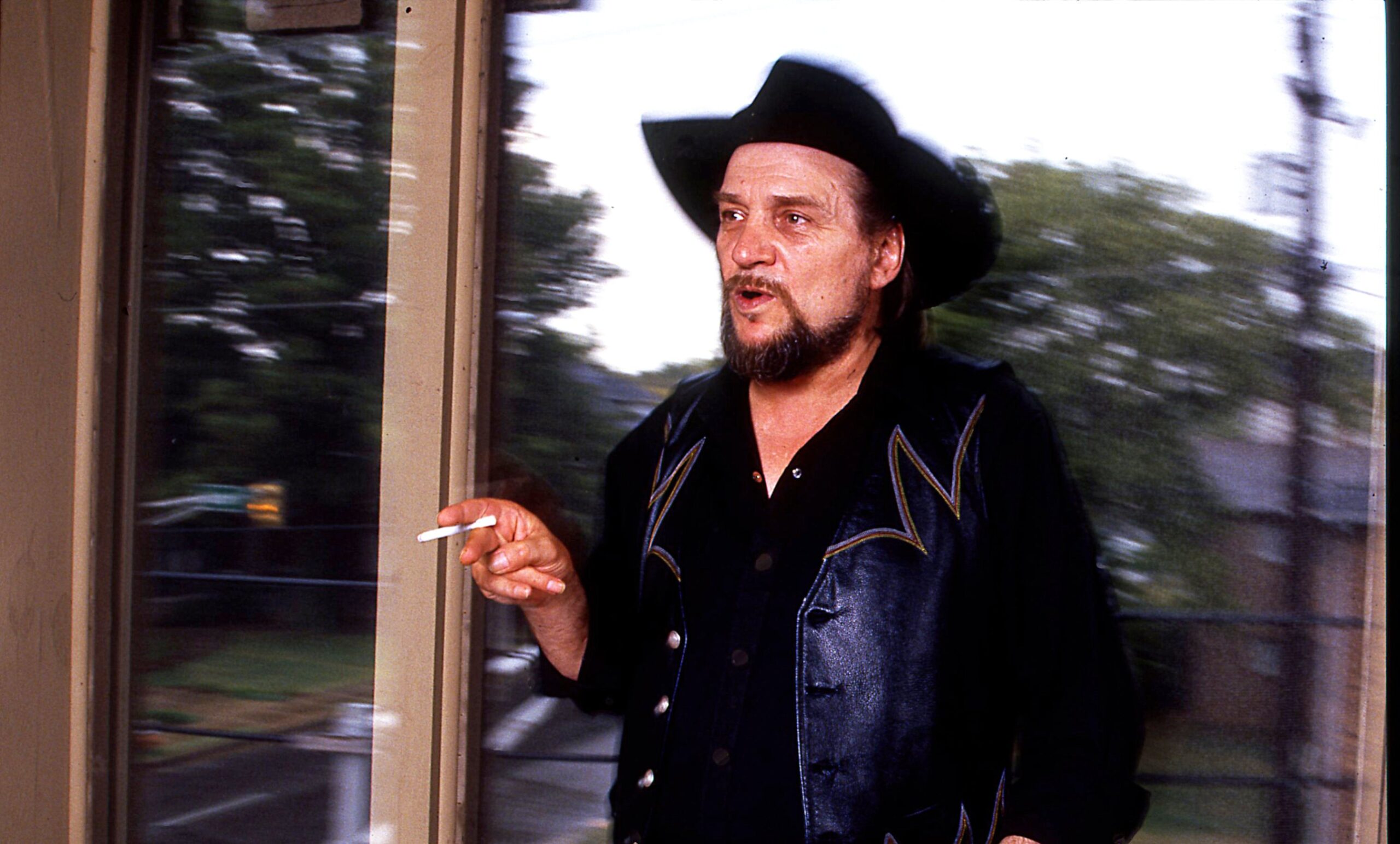
A Story Told in Stillness
The song centers on a paralyzed veteran—emotionally and physically confined—who observes his wife Ruby preparing to leave for the night. The implication is unmistakable: she is seeking comfort elsewhere. Instead of anger shouted into the air, the song unfolds as a restrained, painful confession. Waylon Jennings steps into this character with an uncanny sensitivity, turning each line into a tremor beneath the surface.
Unlike flashier country ballads of the era, Waylon’s version avoids dramatics. There are no soaring instrumentation choices or emotional outbursts. Instead, the beauty lies in the silence between phrases, the heaviness in his voice, and the sense of a man trapped in a moment he cannot change.
Waylon’s Interpretation: Quiet Fire, Deep Humanity
Waylon Jennings had a gift for inhabiting stories that felt lived-in, real, and unvarnished. With “Ruby, Don’t Take Your Love to Town,” he taps into a palette of emotions that goes beyond sorrow: dignity, frustration, love, resentment, vulnerability. His gravelly voice, edged with fatigue, captures not only the narrator’s physical helplessness but the deeper emotional paralysis of watching love slip away.
Where other artists leaned into drama, Waylon leans into truth. His delivery avoids theatrics and instead evokes a subtle, simmering fire that never fully erupts—making it even more powerful. The resignation in his tone, the slight cracks at certain words, the breath between verses—all contribute to a portrait of a man enduring the hardest moment of his life in complete stillness.
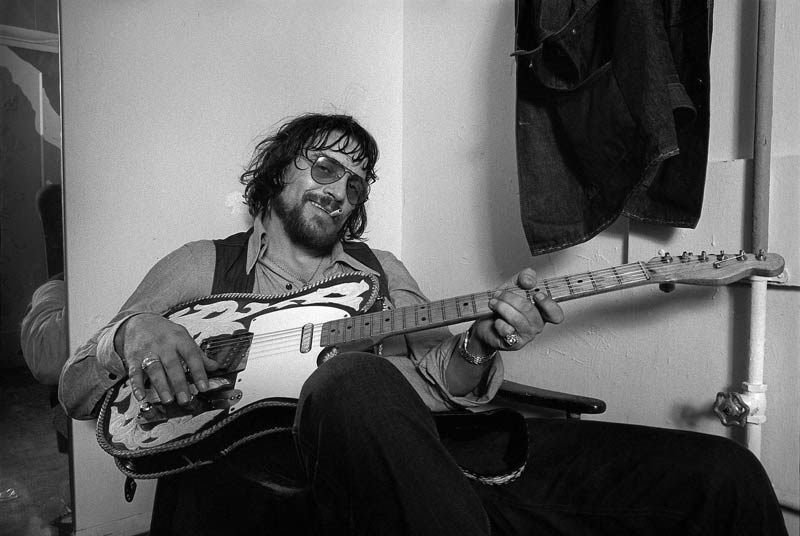
Musical Minimalism with Maximum Impact
The arrangement behind Waylon is intentionally sparse. A steady guitar, a gentle rhythm, and a minimal backing allow the listener to connect fully with the narrator’s voice. There are no distractions—just a man, his thoughts, and the quiet devastation of watching someone he loves walk out the door.
This stripped-down approach not only suits the story but amplifies it. The simplicity transfers the emotional weight from the instruments to the storytelling, ensuring nothing gets in the way of the listener and the pain at the song’s center.
A Song for the Forgotten and the Wounded
One reason Waylon’s version resonates so deeply is his own connection to themes of hardship, resilience, and the unspoken struggles of American life. He was an outspoken supporter of veterans and someone who lived through his own battles—external and internal. That experience infuses authenticity into his performance.
Listeners who carry their own scars—whether from war, loss, heartbreak, or loneliness—often find something deeply personal in the way Waylon sings this song. It feels less like performance and more like confession, as though he is sharing a truth that he himself has felt.

Cultural and Emotional Legacy
Even though Jennings’ rendition did not reach the commercial heights of the Kenny Rogers version, it has secured a place of honor among country traditionalists and fans who appreciate emotional storytelling over mainstream success. His take on “Ruby, Don’t Take Your Love to Town” stands as one of the most somber, humane, and haunting interpretations of a country classic.
It is a reminder that country music at its core is not about polish—it is about truth. It is about giving voice to those who struggle silently, about telling stories that others are afraid to speak aloud.
Conclusion
“Ruby, Don’t Take Your Love to Town” remains a landmark in American songwriting: a story of love strained to its breaking point, of vulnerability laid bare, of a man left behind by circumstances he never chose. In Waylon Jennings’ hands, the song becomes even more than its lyrics—an emotional portrait painted with restraint, dignity, and devastating clarity.
His version lingers long after the final note, reminding listeners that some of the most powerful stories are not the loudest ones—they are the quiet confessions whispered in a dark room, where only truth remains.