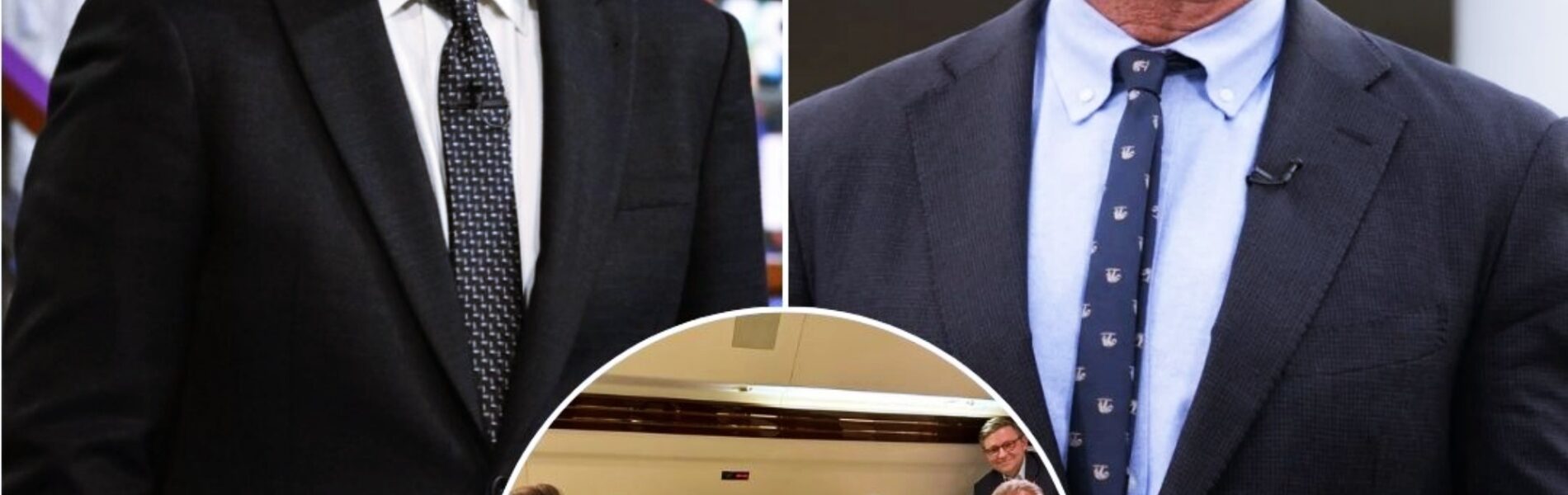
Colbert Skewers RFK Jr. After Fake Thanksgiving Photo. What was meant to look like a cozy Thanksgiving power dinner instead ignited a wave of ridicule after a glossy photo shared by RFK Jr. was quickly exposed as digitally altered…


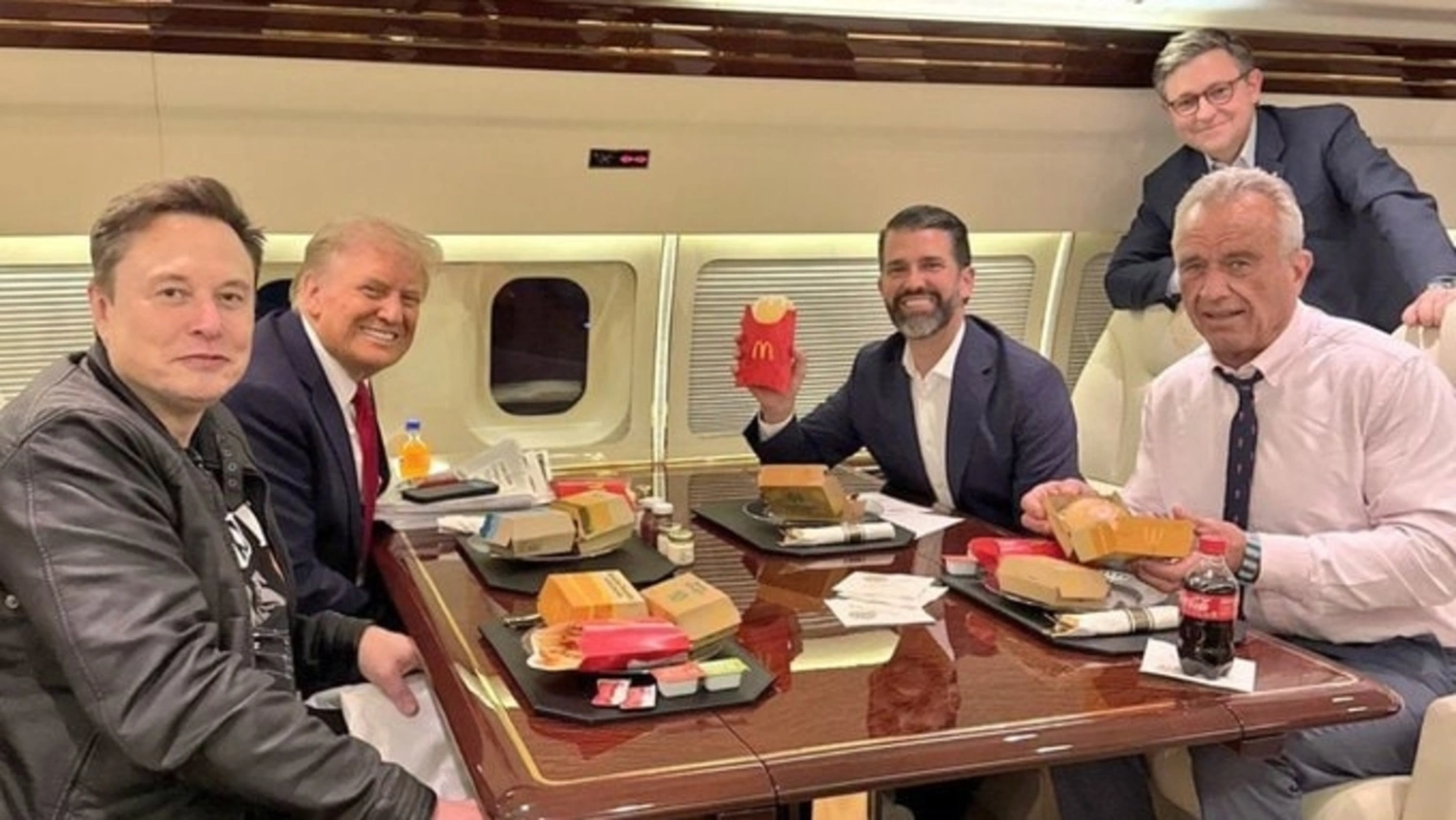
What was meant to look like a cozy, power-packed Thanksgiving moment instead detonated into a late-night punchline. After a holiday-themed image featuring Donald Trump, Donald Trump Jr., Robert F. Kennedy Jr., Elon Musk, and Mike Johnson appeared on RFK Jr.’s official page, the internet did what it does best: it tore the picture apart pixel by pixel. Within hours, side-by-side comparisons began circulating, showing the same group in the same poses from an earlier photo aboard a private jet—except this time, the fast-food meal on the table had been swapped out for a traditional Thanksgiving spread.
By the time night fell, the verdict across social media was brutal and nearly unanimous: the “Thanksgiving dinner” wasn’t a real dinner at all. It was a digitally altered image.
And by the next night, Stephen Colbert had turned the entire episode into a national punchline.
On The Late Show, Colbert wasted no time bringing up the photo that had already become an online spectacle. With mock sincerity, he introduced the image as a “heartfelt holiday moment among America’s most powerful men,” before pausing and asking the question that had already dominated comment sections all day: “So… did they also deep-fry the pixels?”
The crowd erupted.
Colbert then walked viewers through what made the image so suspicious, using exaggerated zoom-ins and comedic “forensic analysis” graphics. He pointed out that every person in the photo appeared frozen in identical positions to the earlier jet-meal shot, down to the angle of hands, the folds in jackets, and the reflections on the tabletop.
“The people didn’t move,” Colbert said. “The lighting didn’t move. The plane didn’t move. The only thing that traveled through time and space was the turkey.”
The audience howled as he added, “This is the first known case of a Thanksgiving dinner that exists only in the side dishes.”
The punchline that followed was aimed squarely at RFK Jr.’s public image and controversies surrounding technology and misinformation: “If you’re going to sell us a holiday miracle, at least make sure the yams aren’t glitching.”
The moment marked the peak of a day-long uproar that began when the altered image appeared under Kennedy’s official account and immediately drew skepticism. Users were quick to notice that the seating arrangement, facial expressions, clothing, and even the table reflections appeared identical to a previously published photo taken on a private plane where the same group posed over McDonald’s meals.
The only visible difference: the food itself.
Fries and burger boxes had been replaced with turkey, mashed potatoes, stuffing, and cranberry sauce.
Digital artists and amateur sleuths alike pointed out that in true photography, swapping an entire meal would inevitably change shadows, hand grip positions, steam patterns, utensil placement, and reflections. None of those changed here. The image behaved exactly like a digital “re-skin”—the people remained static while the food alone transformed.
By mid-afternoon, the photo was no longer being shared as a wholesome holiday scene. It was being shared as a meme.
Captions ranging from “When your Thanksgiving dinner is still rendering” to “Powered by AI-oli” flooded timelines. One viral post joked that the turkey looked “emotionally unsupported by the physics of the room.” Another quipped, “These sides were brought to you by Photoshop.”

That shifting tone—from presentation to parody—is what drew Colbert’s attention.
On air, he leaned into the absurdity. He framed the image not just as a questionable holiday post, but as a symbol of how easily digital spectacle now masquerades as reality in politics.
“In the old days,” Colbert said, “if powerful men wanted to fake a meaningful gathering, they at least had to coordinate their schedules. Now you just Ctrl-V some mashed potatoes and call it family.”
He didn’t claim that Kennedy personally created the edit. Instead, he focused on the decision to share it publicly and let it stand as a representation of a Thanksgiving moment that, as far as anyone can verify, never actually happened in that form.
Colbert mocked the optics rather than the authorship. “Somewhere out there is a very confused turkey thinking, ‘I didn’t audition for this.’”
The segment struck a nerve because it collided with a broader cultural anxiety: the erosion of trust in images themselves. What once required a camera crew, lighting rigs, and physical presence can now be fabricated on a screen in minutes and passed off as real unless challenged.
Colbert made that point with characteristic sarcasm. “You used to need mistletoe to fake holiday cheer,” he said. “Now you just need a prompt and a good GPU.”
Behind the jokes, the political implications were impossible to miss. The image featured a lineup of figures who dominate modern headlines across politics, technology, and media. By presenting them together in a warm Thanksgiving tableau—digitally manufactured or not—the post projected unity, intimacy, and shared space.
But when the illusion collapsed under scrutiny, the intended message flipped.
Instead of signaling togetherness, the image became a case study in manufactured optics.
Colbert underlined that reversal with one of the loudest laughs of the night: “Nothing says authentic American tradition like a holiday dinner that violates three basic laws of physics.”
The audience erupted again.
By the following morning, clips of Colbert’s monologue were trending, layered over memes of the turkey floating above trays that once held fries. The late-night roast gave the episode its final cultural form: not scandal, not controversy, but embarrassment.
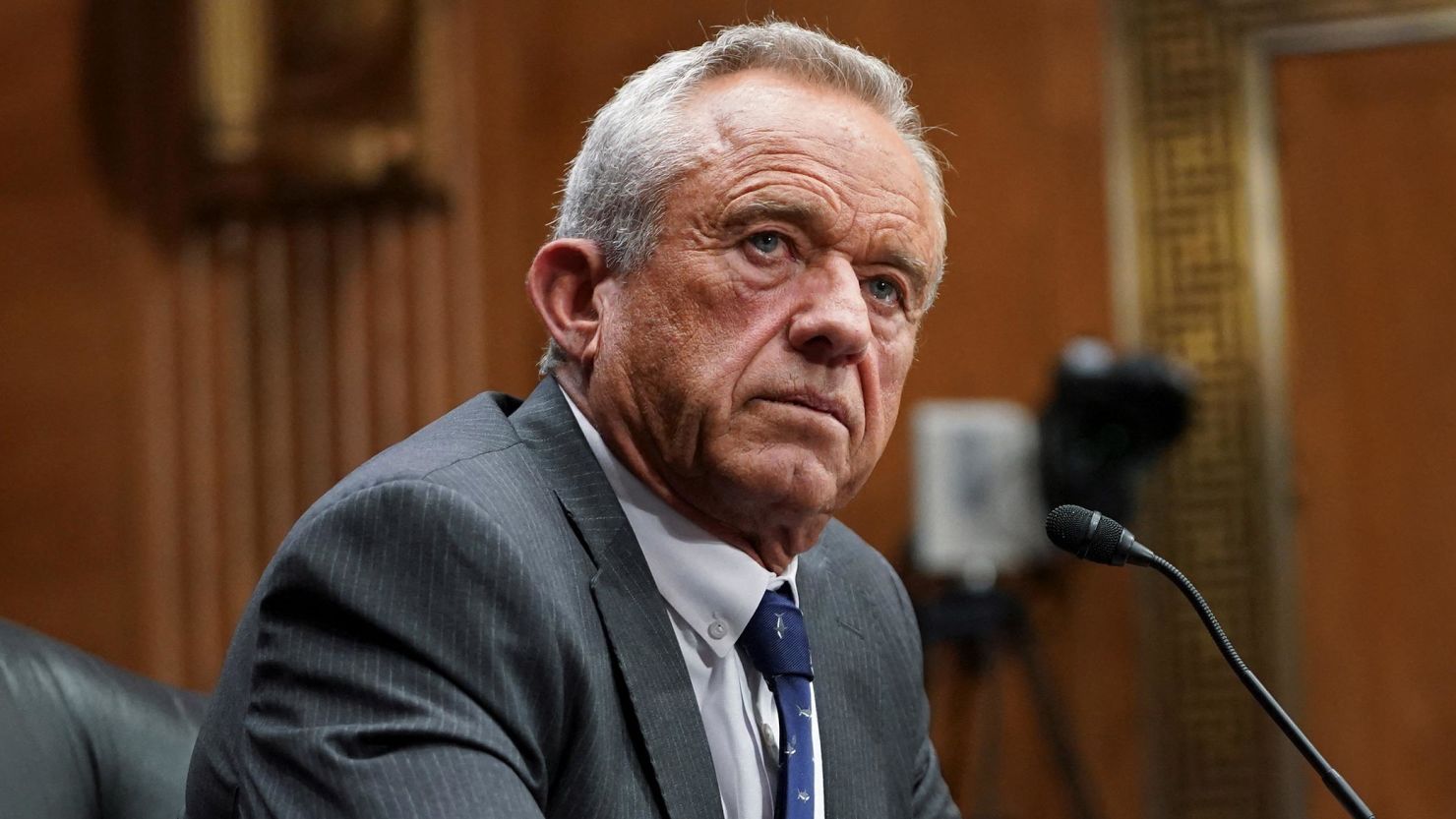
For RFK Jr., the episode landed at a particularly awkward time. His public profile has been marked by intense scrutiny over claims, sourcing, and credibility. Even though there is no proof that he personally edited the image, the fact that the altered photo was shared from his official platform made it fair game for mockery.
Colbert leaned into that distinction with a final jab: “I’m not saying he made it. I’m just saying he hit ‘post’ and the internet hit ‘enhance’—and it did not go well.”

The line drew one of the longest applause breaks of the night.
On social media, reactions split along predictable lines. Supporters dismissed the late-night mocking as elitist sneering. Critics amplified the jokes as proof that digital manipulation is now so obvious that it backfires immediately. Neutral observers simply marveled at how swiftly a carefully curated image had unraveled.
Within 24 hours, the image itself had largely vanished from serious discussion. What remained was the ridicule.
That, too, became part of Colbert’s commentary. “In politics,” he said, “the worst thing that can happen to your message isn’t contradiction—it’s comedy.”
The Thanksgiving photo had aimed for symbolism. It ended as spectacle.
What began as a glossy, holiday-themed tableau of powerful men at a shared table instead became a cautionary tale about digital credibility in the age of AI-assisted imagery. Colbert didn’t just roast the photo; he used it to underline a larger truth: when politics leans too heavily on visuals without verification, it hands comedians a loaded weapon.
And in this case, the joke didn’t just write itself.
It rendered itself.