Silence the Noise: Kirby Smart’s Defiant Stand and the Words That Redefined the Georgia Standard cz

ATLANTA — The narrative had already been written long before the opening kickoff. If you listened to pundits, talking heads, former players turned analysts, and the swarm of social-media critics over the past week, one message rang louder than any cowbell or stadium chant: the Georgia Bulldogs were slipping. They said the culture was cracking. They whispered that Kirby Smart had lost the locker room. They claimed the dynasty was—if not dead—then certainly gasping, staggering toward an inevitable collapse.
But on a thunderous Saturday night inside Mercedes-Benz Stadium, with rivalry tensions thick enough to taste in the air, the Bulldogs didn’t just win a football game. They reclaimed their soul.
In a gritty, bruising, old-school 16–9 victory over arch-rival Georgia Tech, the Bulldogs didn’t win with flair. They didn’t win with fireworks or video-game offense. They didn’t produce the kind of highlight-reel moments that dominate TikTok or rack up millions of likes. Instead, they dug their cleats into the kind of suffocating defense, bruising physicality, and stubborn discipline that built this program in the first place. Every tackle echoed. Every yard was contested. Every play felt like a statement.
Yet for all the drama on the field, the story that will define this night didn’t unfold between the whistles. It happened after the clock hit zero.
To understand the explosion of raw emotion that unfolded at midfield and later behind closed doors, one must understand the furnace the Bulldogs have lived in all week. Following a string of performances that fell below what Georgia fans call “the standard,” the scrutiny had been relentless. For the first time in years, the aura of invincibility—the mystique that had hovered over the program like an impenetrable shield—seemed to fracture. The rivalry against Georgia Tech wasn’t framed as a tune-up game but as a potential landmine, a trap waiting for a team already wobbling.
So when the final whistle blew and Georgia walked off with a 16–9 victory, Kirby Smart didn’t look like a man relieved. He looked like a man who had been holding a fire in his chest for days, waiting for the right moment to let it burn.
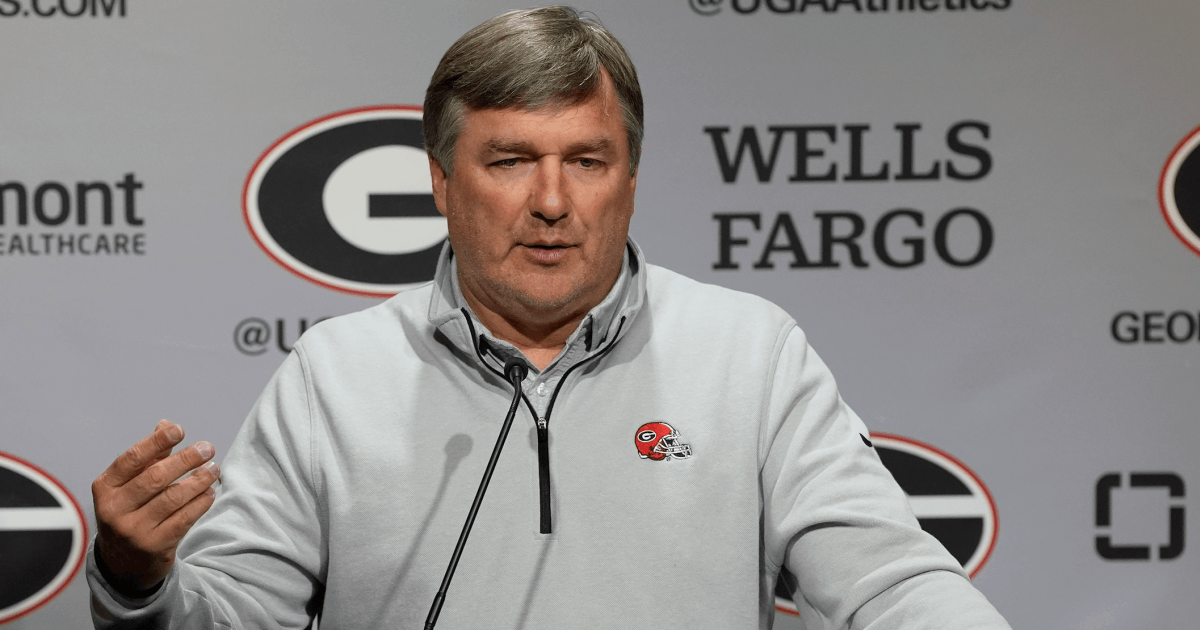
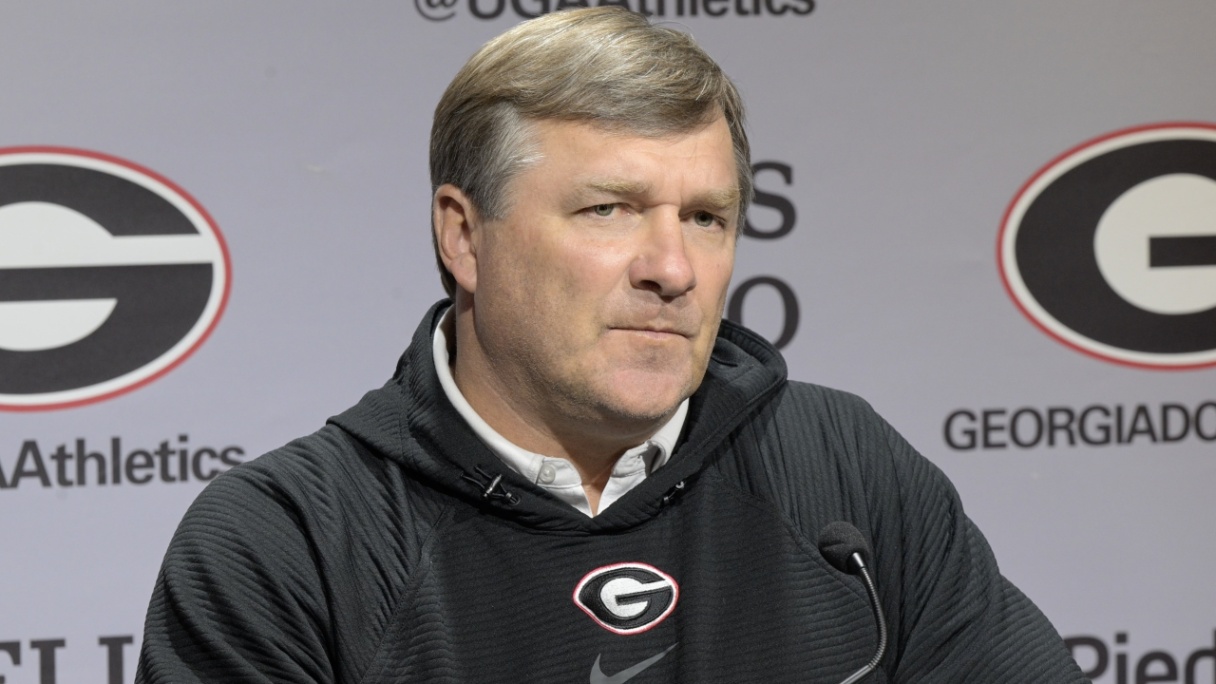
In his post-game press conference, Smart was less interested in discussing play-calling or defensive schemes. Instead, he fixed his stare on something much bigger: the existential identity crisis gripping college football. With conversations around NIL deals, the transfer portal, and the commercialization of the sport dominating every headline, Smart took a deliberate step away from the modern noise. The image of him at the podium—jaw set, eyes steeled, posture unyielding—spread instantly across social media.
“Football used to be about honor, teamwork, and tradition,” Smart said, his voice dropping into a heavier, almost sermon-like cadence. “Now it has become a competition centered on who can spend the most money. If we continue down this path, a sport built on pride will eventually turn into a business driven by greed.”
It wasn’t a rant. It wasn’t performative outrage. It was a sober warning from a man who has built his empire on pillars of toughness, loyalty, and relentless, unglamorous work. In an era where loyalty can be purchased, Smart drew a line in the sand. In Athens, the currency is still effort. The reward is still pride. And the foundation is still built on the brotherhood inside the locker room—not the bank account outside it.
But the moment that defined the night happened away from the cameras, in the concrete belly of the stadium. Reports quickly surfaced about Smart’s message to his team—a message that hit harder than any hit delivered on the field. Surrounded by young men who had spent the week hearing they weren’t good enough, who had been compared to legends they never asked to be measured against, Smart didn’t sugarcoat the truth. He acknowledged the criticism. He acknowledged the doubt. He acknowledged the weight of wearing the most scrutinized “G” in college football.
Then he reminded them of something deeper. Something older. Something sacred.
He reminded them that external validation is fleeting, but identity is forever. That the logo on the helmet is bigger than any scoreboard. That the standard isn’t defined by Twitter threads or analyst predictions—it’s defined by them.
And then he delivered the eleven words now spreading across every platform, plastered on fan pages, shouted in bars, and already being printed on shirts from Athens to Atlanta:
“We don’t play for the noise. We play for the G.”
Simple. Sharpened. Defiant.
In those eleven words, Smart dismantled a week of doubt, silenced critics without ever naming them, and re-anchored his team to the identity that has carried them through championships, heartbreaks, and everything in between. “The noise” is the chatter, the rankings, the narratives, and the fair-weather opinions. “The G” is the standard. The legacy. The brotherhood. The unspoken promise that every player makes when they step onto the field wearing red and black.
Georgia didn’t just win a football game on Saturday night. They redefined their purpose. They rediscovered their edge. And they reminded the world that dynasties don’t die because of noise.
They die when you start listening to it.
Kirby Smart made sure his team never would.