“IF THEY WANT THE FEVER TO TIE THIS SERIES WITH THE WHISTLE, DON’T MAKE THE ACES TAKE THE FLOOR AGAIN.” Aces guard Chelsea Gray
The Las Vegas Aces walked into Gainbridge Fieldhouse expecting to close out their first-round playoff series.
Instead, they walked out with everything still undecided.
Indiana Fever defeated Las Vegas 99–89 in Game 2 on Tuesday, evening the best-of-three series at 1–1 and sending the matchup back to Las Vegas for a winner-take-all Game 3.
The defeat immediately created another wave of discussion around the Aces, the Fever, Caitlin Clark and the officiating.
A dramatic claim circulating online now attributes strong comments about the referees to Aces veteran guard Chelsea Gray, including an accusation that officials had deliberately ignored Indiana’s fouls.
However, that specific quote has not been independently verified by the reliable sources reviewed.
What is confirmed is that Game 2 was an emotional and physical contest, with several moments that generated significant discussion after the final buzzer.
And the Aces certainly have reason to be frustrated with the result.
Las Vegas led 26–18 after the first quarter, appearing to have control of the elimination game.
Then everything changed.
Indiana exploded during the second and third quarters, outscoring Las Vegas by a combined 54–34 across those two periods.
The Fever suddenly controlled the pace.
Caitlin Clark began attacking in transition.
Indiana’s defense became more aggressive.
And the Fever repeatedly forced Las Vegas into difficult offensive possessions.
By the time the fourth quarter arrived, the Aces were fighting from behind.
The deficit eventually became too large to erase.
Clark finished with 27 points and 15 assists, while Kelsey Mitchell scored 26 and Aliyah Boston added 22.
For Las Vegas, Jackie Young led the way with 31 points.
A’ja Wilson contributed 22 points and nine rebounds.
Chelsea Gray finished with 10 points and seven assists.
But the numbers tell only part of the story.
The biggest difference was urgency.
After the game, Wilson acknowledged that Indiana appeared to play with a higher sense of urgency.
That assessment was echoed by Las Vegas coach Becky Hammon, who said the Fever had the necessary mental edge and that the Aces needed to regroup before Game 3.
That is a much different explanation than claiming the game was decided by officiating.
The Aces were outplayed for significant stretches.
Indiana dominated the second and third quarters.
The Fever also attacked the paint effectively, finishing with a 58–26 advantage in points in the paint, according to Indiana’s official Game 3 preview.
Clark was particularly influential.
She produced a double-double before halftime and became the driving force behind Indiana’s offensive rhythm.
The Fever’s guards repeatedly pushed the ball forward, while Boston provided another scoring threat inside.
That combination forced Las Vegas to defend multiple areas of the court.
At the same time, the Aces were unable to reproduce the overwhelming performance from Game 1.
In that opening game, Wilson dominated Indiana with 38 points and 16 rebounds as Las Vegas won 102–85.
Game 2 looked completely different.
Indiana threw more defensive attention toward Wilson and made her work for her opportunities.
Wilson still scored 22 points, but she did not have the same offensive freedom she enjoyed in Game 1.
That adjustment became one of the defining tactical differences between the two games.
The officiating debate, meanwhile, became another storyline.
Clark herself received a technical foul after an offensive foul during the second quarter.
Rather than slowing Indiana down, the sequence appeared to ignite the Fever.
Indiana went on a major run afterward and seized control of the game.
Late in the fourth quarter, another controversial moment involved Wilson.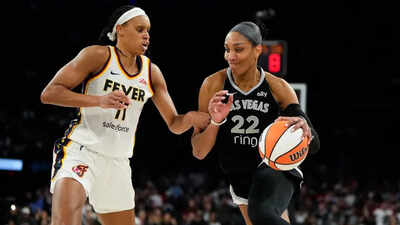
After being fouled by Sophie Cunningham, Wilson confronted a courtside fan during the stoppage.
Officials assessed Wilson a technical foul.
The Fever later said arena security determined that the spectator had not violated the venue’s fan code of conduct.
That incident added even more emotion to an already intense playoff environment.
But none of those moments establishes that the officials intentionally favored Indiana.
That distinction is important.
There is a difference between criticizing an individual call and claiming that an entire game was manipulated.
The latter requires evidence.
At this point, the available reporting confirms the result and documents several controversial moments, but does not substantiate the claim that Chelsea Gray accused officials of deliberately helping Indiana or that she was fined heavily for doing so.
The confirmed story is dramatic enough without adding unsupported details.
The Aces have lost home-court control in the series.
The Fever have forced a deciding game.
And now Las Vegas has to return home and win.
Game 3 is scheduled for Thursday, October 1, at 9:00 p.m. ET at Michelob ULTRA Arena.
There will be no fourth game.
There will be no opportunity to recover from another defeat.
The winner advances to the WNBA semifinals.
The loser begins the offseason.
That puts enormous pressure on both teams.
For Indiana, the challenge is maintaining the intensity that produced the Game 2 comeback.
For Las Vegas, the challenge is responding to a performance that exposed several weaknesses.
The Aces know exactly what Indiana can do now.
They have seen Clark control a game through scoring and passing.
They have seen Mitchell punish defensive mistakes.
They have seen Boston dominate inside.
And they know the Fever are capable of turning a deficit into a commanding lead.
Indiana, meanwhile, knows that Las Vegas is capable of a completely different performance.
The Aces have championship experience.
Wilson remains one of the most dominant players in the league.
Young just scored 31 points in Game 2.
Gray remains one of the most experienced postseason guards in the WNBA.
And Las Vegas now has the advantage of playing the deciding game at home.
That is why Thursday’s matchup could look nothing like Tuesday’s.
The Fever cannot assume that the same offensive rhythm will automatically return.
The Aces cannot assume that Game 1’s dominance will automatically return either.
Everything starts again.
The first possession.
The first defensive stop.
The first three-pointer.
The first momentum swing.
And eventually, the final buzzer.
The biggest question surrounding Chelsea Gray is therefore not whether an unverified quote circulating online becomes another viral controversy.
It is whether the veteran guard can help the Aces respond when their season is on the line.
Gray has been part of Las Vegas’ championship core for years.
She understands playoff pressure.
She understands adjustments.
And she knows that Game 3 will require a response from everyone.
The same applies to Clark.
The Fever have fought their way back into the series.
Now they have to finish the job on the road.
Two games have produced two completely different results.
Game 1 belonged to Las Vegas.
Game 2 belonged to Indiana.
Now the entire series comes down to one night.
🔥 LAS VEGAS 1–1 INDIANA.
🏀 GAME 3: WINNER TAKES THE SERIES.
⚡ CLARK VS. WILSON.
🔥 GRAY AND YOUNG VS. INDIANA’S BACKCOURT.
📍 LAS VEGAS.
For all the noise surrounding the officiating, the controversy and the emotions, one fact remains impossible to ignore:
The next game decides everything.
And when the ball goes up in Las Vegas, there will be no room for excuses.
There will only be basketball.
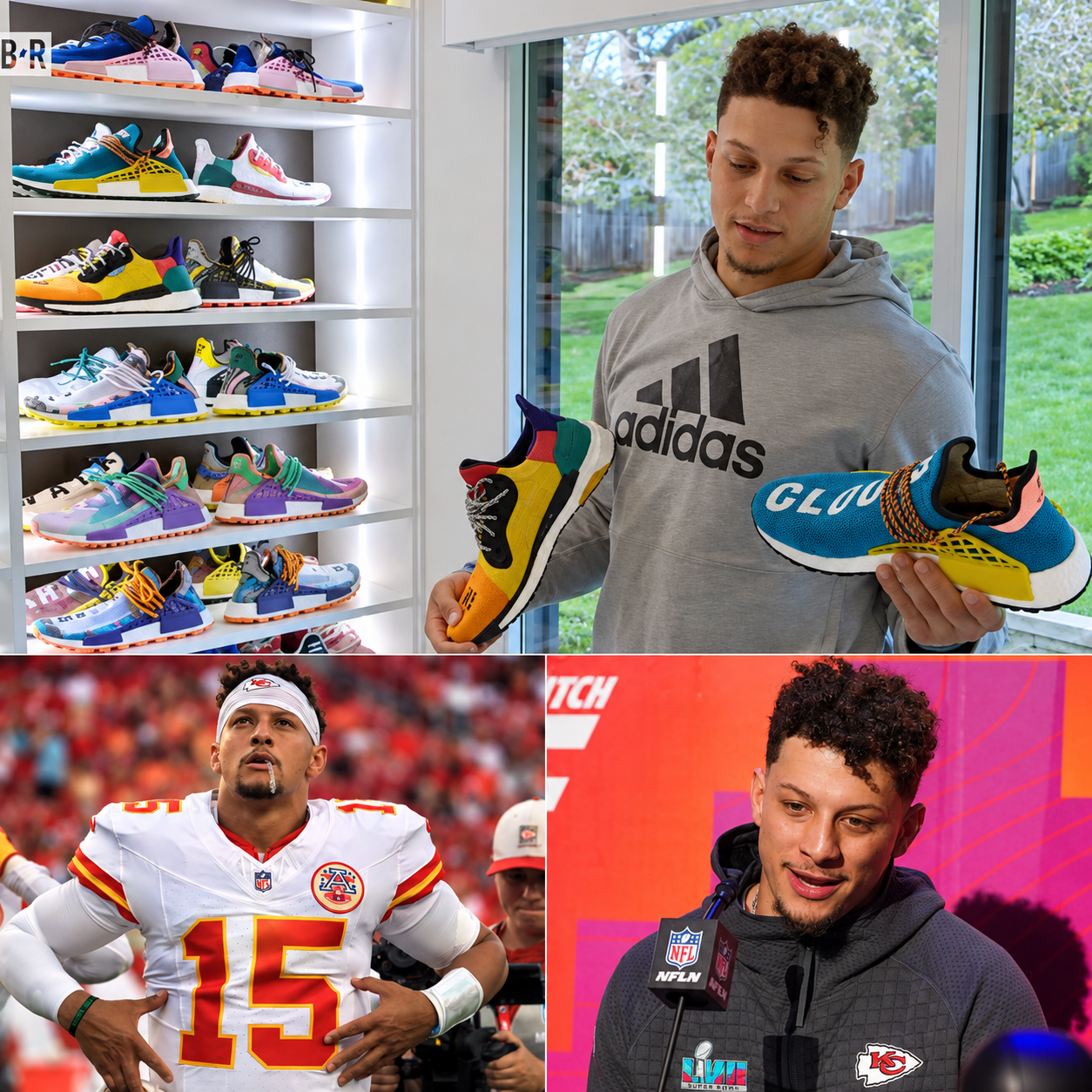
Patrick Mahomes has spent years creating unforgettable moments on an NFL field. But some of the most meaningful stories surrounding the Kansas City Chiefs quarterback have nothing to do with touchdowns or trophies.
They involve something much simpler: a pair of football cleats.
Mahomes has repeatedly used his platform to support young athletes and children, turning items connected to his football career into opportunities for people who may not have the same resources he had growing up.
That commitment is not new.
Back in 2017, shortly after entering the NFL, Mahomes donated cleats to his former high school, Whitehouse High School in Texas.
The gesture was significant because Mahomes did not simply provide equipment for a handful of players.
He wanted the entire football program to have access to the same team footwear, including varsity, junior varsity, and freshman players.
Mahomes explained at the time that he remembered seeing differences between students who could afford expensive equipment and those who could not.
For him, the cleats represented something bigger than footwear.
They represented belonging.
They represented being part of one team.
And they represented the opportunity for young players to step onto the field feeling that they had the equipment they needed.
That philosophy has remained part of Mahomes’ charitable work throughout his professional career.
His 15 and the Mahomies Foundation focuses on improving the lives of children through initiatives involving health, wellness, communities in need, and other charitable causes.
The foundation reflects a side of Mahomes that can sometimes disappear behind the enormous spotlight surrounding the Chiefs quarterback.
On Sundays, he is one of football’s biggest stars.
Away from the stadium, his attention has repeatedly returned to children and communities.
The cleats have become an especially powerful symbol of that approach.
The NFL’s My Cause My Cleats initiative has allowed players to wear customized footwear representing causes important to them, with many of those shoes subsequently auctioned to benefit charitable organizations.
Mahomes has participated in the initiative while representing his foundation and its work with children.
The Chiefs have previously highlighted his participation, describing 15 and the Mahomies as an organization dedicated to improving children’s lives and supporting communities in need.
That makes every pair of game-connected cleats potentially more meaningful than its appearance suggests.
To a fan, they may be memorabilia.
To a collector, they may be a piece of NFL history.
But when those shoes are connected to a charitable cause, they can become something else entirely.
They can become a way to transform a football memory into real-world support.
That is one reason Mahomes’ charitable relationship with footwear has resonated with fans.
His story has always been closely connected to the idea of giving young people opportunities.
Long before he became a Super Bowl champion, Mahomes understood what it meant for a young athlete to receive something that made them feel included.
The story of his high school cleats demonstrates that clearly.
One player even needed an unusually large size, and the coaching staff made sure that player’s needs were included in the order.
Mahomes wanted every player to have the opportunity to participate.
That detail reveals why the story is about much more than expensive shoes.
It is about access.
It is about giving children the chance to experience sports without feeling excluded because of circumstances outside their control.
And that message has become increasingly important as youth sports continue to require families to cover equipment and other costs.
For Mahomes, giving back is also deeply personal.
He has frequently spoken about pride in the communities and people who supported him throughout his journey.
His path from Texas high school quarterback to Texas Tech star to Kansas City superstar has been extraordinary.
But the people and places that helped shape that journey have remained part of his public charitable identity.
Kansas City has become another important part of that story.
Mahomes has established deep ties to the city since joining the Chiefs, and his foundation has supported initiatives intended to benefit children and communities.
That relationship makes his charitable work especially meaningful to Chiefs fans.
Every Sunday, thousands of people watch Mahomes wearing the Kansas City uniform.
Away from the field, some of his most important work involves helping young people find opportunities beyond simply watching the game.
And that may be the most powerful part of the cleats story.
The value of a pair of shoes is not ultimately measured by how much a collector is willing to pay.
Its value can also be measured by what that money makes possible afterward.
A football cleat can represent a touchdown.
It can represent a championship.
It can represent a specific season or unforgettable game.
But when connected to charity, it can also represent a classroom, a sports program, equipment, mentorship, or an opportunity for a child who otherwise might not have received one.
That is the larger legacy Mahomes has continued building.
The NFL Auction has featured Mahomes game-worn and customized cleats, including a 2025 pair that closed at $15,050 in February 2026.
That sale demonstrates the extraordinary interest surrounding memorabilia connected to one of the NFL’s biggest stars.
Still, individual auction results should not be confused with the unverified $1.7 million figure circulating in the claim above.
There is currently no reliable source located that establishes a $1.7 million total from more than 70 Mahomes cleats.
The charitable impact of Mahomes’ work, however, is well documented.
And perhaps that is the part worth remembering.
The quarterback’s greatest contribution may not always be measured by passing yards, MVP awards, or Super Bowl victories.
Sometimes it can be measured by whether a young person gets an opportunity they otherwise might never have had.
That is what makes the story of Mahomes and his cleats so compelling.
The shoes began on football fields.
They carried memories of games, seasons, victories, and personal milestones.
But when Mahomes uses his platform to connect those memories with charitable causes, their purpose can continue long after the final whistle.
For fans who have followed Mahomes since his earliest days in Kansas City, that may be the most rewarding part of the story.
They have watched him become a superstar.
They have watched him break records.
They have watched him lift championship trophies.
And they have also watched him repeatedly return attention to something bigger than himself.
The next generation.
Because football eventually moves on.
Players retire.
Records are broken.
Championship memories become history.
But an opportunity given to a child can change the direction of that child’s life.
And that is why a simple pair of cleats can sometimes mean much more than anyone expects.
❤️ THE SHOES MAY BE MEMORABILIA TO SOME.
🏈 BUT TO MAHOMES, THEY CAN ALSO REPRESENT OPPORTUNITY.
And if his history of giving back is any indication, the most important part of the story may not be what those cleats once accomplished on the field.
It may be what they can help someone accomplish next.
