Rip, The Gunfight at the O.K. Corral: The Legendary Showdown That Turned Tombstone Into Western History
Few moments in the history of the American West have become as famous as the Gunfight at the O.K. Corral.
On October 26, 1881, in the rough frontier town of Tombstone, Arizona, a confrontation between two opposing groups of armed men lasted only about thirty seconds. Yet those few seconds would become one of the most legendary events in Western history.
The names involved would eventually become almost as famous as the gunfight itself: Wyatt Earp, Virgil Earp, Morgan Earp, Doc Holliday, Ike Clanton, Billy Clanton, Tom McLaury, and Frank McLaury.
For generations, their story has been retold in movies, television shows, novels, books, and countless Western legends. But behind the mythology was a real conflict between lawmen, cowboys, personal rivalries, and competing ideas about who controlled the dangerous frontier town of Tombstone.
By the early 1880s, Tombstone was one of the most rapidly developing communities in the American West. Silver had brought enormous wealth to the region, attracting miners, businessmen, gamblers, prostitutes, outlaws, ranchers, and lawmen.
With wealth came violence.
The town was filled with saloons, gambling halls, and businesses serving a rapidly growing population. Cattle theft, stagecoach robberies, gunfights, and political tensions created an environment where the distinction between respectable citizens and criminals was not always clear.
The Earp brothers became important figures in this world.
Wyatt Earp had already developed a reputation as a lawman before arriving in Tombstone. His brothers Virgil and Morgan also became involved in law enforcement. Doc Holliday, meanwhile, was a gambler and gunfighter whose friendship with Wyatt Earp would become central to the events that followed.
On the other side were men commonly described as the “Cowboys.”
In Tombstone, the term did not necessarily mean the romantic horseback heroes later portrayed in Hollywood films. Many of the men associated with the Cowboys were cattle rustlers, smugglers, and criminals who operated in the region.
Among them were Ike Clanton, Billy Clanton, and the McLaury brothers.
Tensions between the two groups continued to grow.
The conflict was not simply about one disagreement. It developed through a series of accusations, confrontations, threats, and disputes involving stolen cattle, stagecoach robberies, weapons, and law enforcement.
The Earp brothers increasingly viewed the Cowboys as a threat to law and order.
The Cowboys, meanwhile, saw the Earps as men attempting to impose their authority over Tombstone.
Eventually, the tension reached a breaking point.
On the afternoon of October 26, 1881, Virgil Earp, acting as Tombstone’s city marshal, decided that the situation had become too dangerous to ignore. He had been informed that several Cowboys were armed in violation of local regulations.
Virgil Earp gathered Wyatt and Morgan Earp and enlisted Doc Holliday to help disarm the men.
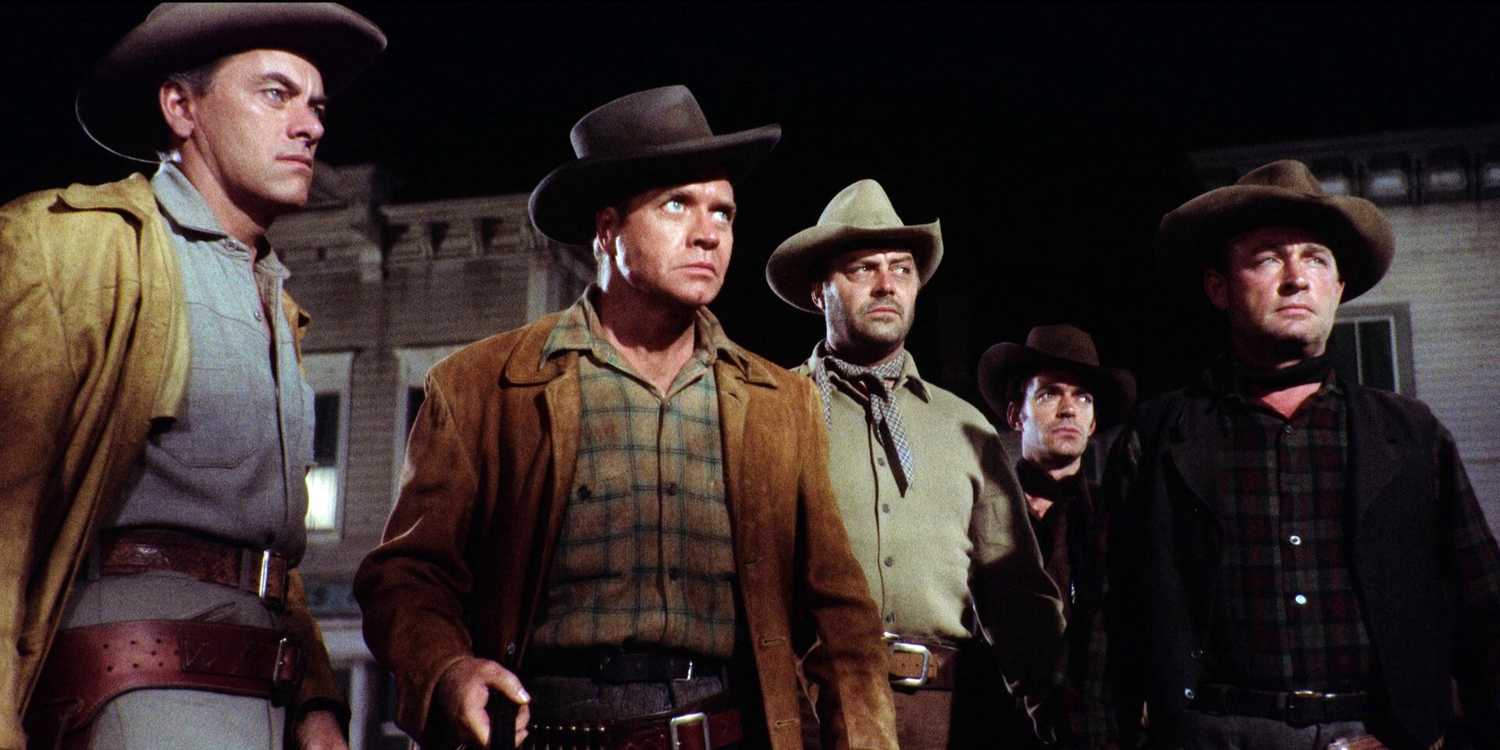
They walked toward the location where the Cowboys had gathered.
The group eventually arrived near the O.K. Corral, although the actual gunfight took place in a narrow vacant lot near the corral rather than inside the building itself.
Standing opposite the Earps and Holliday were Billy Clanton, Ike Clanton, Tom McLaury, and Frank McLaury.
What happened next remains one of the most debated moments in Western history.
According to the Earps, they approached the Cowboys intending to disarm them.
According to other accounts, the situation was far more confrontational from the beginning.
Words were exchanged.
Weapons were present.
And then the shooting began.
The gunfight lasted only around half a minute.
Yet in those few seconds, more than two dozen shots were fired.
Billy Clanton and Frank McLaury were killed.
Tom McLaury was also killed.
Virgil Earp was wounded.
Morgan Earp was wounded.
Doc Holliday was wounded.
Wyatt Earp survived without serious injury.
Ike Clanton survived as well.
The immediate violence was over almost as quickly as it had begun.
But the consequences would last much longer.
The gunfight did not end the conflict in Tombstone.
Instead, it intensified it.
The deaths of Billy Clanton and the McLaury brothers created a powerful desire for revenge among their friends and allies. The Earps, meanwhile, increasingly believed that their lives were in danger.
The famous “Earp Vendetta Ride” followed, with Wyatt Earp and his allies pursuing men they believed were responsible for attacks against them.
This transformed the original confrontation into something much larger.
It was no longer simply a dispute between lawmen and Cowboys.
It became a story about revenge.
And revenge is one of the defining themes of the American Western.
What makes the Gunfight at the O.K. Corral so fascinating is the uncertainty surrounding it.
Hollywood often presents the event as a simple battle between good and evil.
The brave lawmen stand on one side.
The dangerous outlaws stand on the other.
The guns are drawn.
The heroes survive.
The villains fall.
But the historical reality was considerably more complicated.
The men involved were not characters created for a movie script. They were real people living in a violent and unpredictable frontier society.
Their motives were complicated.
Their relationships were complicated.
And their version of events often depended on which side was telling the story.
That uncertainty helped transform the gunfight into a legend.
Over time, Wyatt Earp became one of the most famous lawmen in American history. His image grew far beyond the events of 1881.

Hollywood eventually turned him into a symbol of frontier justice.
Doc Holliday became equally legendary, remembered as the dangerous gambler and gunslinger who stood beside Earp during the confrontation.
Tombstone itself became part of the mythology.
Today, the name “Tombstone” immediately evokes images of dusty streets, revolvers, saloons, horses, and men facing each other under the unforgiving Arizona sun.
The real town was more complicated than the movie version.
But perhaps that is exactly why its history has endured.
The Gunfight at the O.K. Corral was not the biggest gunfight in the Old West.
It was not necessarily the bloodiest.
And it certainly did not last long.
Yet its combination of famous personalities, political tension, personal rivalry, violence, and revenge created the perfect ingredients for a legend.
More than a century later, the event continues to influence the way popular culture imagines the American frontier.
Movies and television have repeatedly returned to Wyatt Earp and Doc Holliday. Their confrontation with the Cowboys has been dramatized from countless perspectives, each one emphasizing different elements of courage, justice, loyalty, and revenge.
But perhaps the most fascinating part of the story is that the real event was much shorter than the legend it created.
Thirty seconds changed the history of Tombstone.
A handful of men became immortalized.
A dusty frontier town became a symbol of the Wild West.
And an ordinary afternoon confrontation became one of the most famous gunfights in American history.
The Gunfight at the O.K. Corral reminds us that history and legend are often separated by a very thin line.
The real men died.
The real town changed.
The real frontier disappeared.
But the story survived.
Every generation has created its own version of Wyatt Earp, Doc Holliday, and Tombstone. Each retelling adds another layer to the legend.
And perhaps that is why the story remains so powerful.
Because the Old West was never simply about guns.
It was about power.
It was about reputation.
It was about loyalty.
It was about fear.
And sometimes, it was about what happened when two groups of men decided that neither side was willing to back down.
https://www.youtube.com/watch?v=k8Oot1FArB0
