HOT – The Gunfight at the O.K. Corral: The Legendary Showdown That Turned Tombstone Into Western History
Few events have captured the imagination of Western fans quite like the Gunfight at the O.K. Corral. On October 26, 1881, a brief but deadly confrontation in Tombstone, Arizona Territory, transformed a local feud into one of the most enduring legends of the American Old West.
The names Wyatt Earp, Doc Holliday, Virgil Earp, Morgan Earp, and the Clanton-McLaury faction would eventually become part of Western folklore. Their confrontation lasted less than a minute, yet the story surrounding those few seconds has survived for more than a century.
Behind the familiar image of dusty streets, revolvers, and fearless gunslingers lies a far more complicated story of rivalry, law enforcement, personal grudges, and the struggle for control in a rapidly growing frontier town.
A TOWN BUILT ON SILVER AND CONFLICT

By the early 1880s, Tombstone had become a thriving mining town. Silver attracted fortune seekers, merchants, gamblers, ranchers, and adventurers hoping to build a better future. Businesses opened, money circulated, and the population grew rapidly.
But prosperity also brought trouble.
Tombstone was a place where disputes could escalate quickly, weapons were common, and the authority of local lawmen was frequently challenged. Cattle theft, stagecoach robberies, political rivalries, and disagreements over law enforcement contributed to an increasingly dangerous atmosphere.
Among the most influential figures were the Earp brothers. Virgil Earp served as town marshal, while Wyatt and Morgan became closely involved in local law enforcement. Wyatt, already known for his experience as a frontier lawman, developed a reputation for determination and toughness.
Their close associate was John Henry “Doc” Holliday, a gambler and former dentist whose sharp tongue and willingness to confront danger made him one of the most fascinating figures in Western history.
Opposing them were men associated with a loosely organized group known as the Cowboys, including Ike Clanton, Billy Clanton, and brothers Tom and Frank McLaury.
The word “Cowboys” carried a different meaning in this historical setting than the romantic image popularized by later Western films. Some members of the group were accused of cattle rustling and other criminal activities, although their relationships and motives varied.
As disagreements accumulated, the relationship between the two sides became increasingly hostile.
THE TENSION BEFORE THE SHOOTING

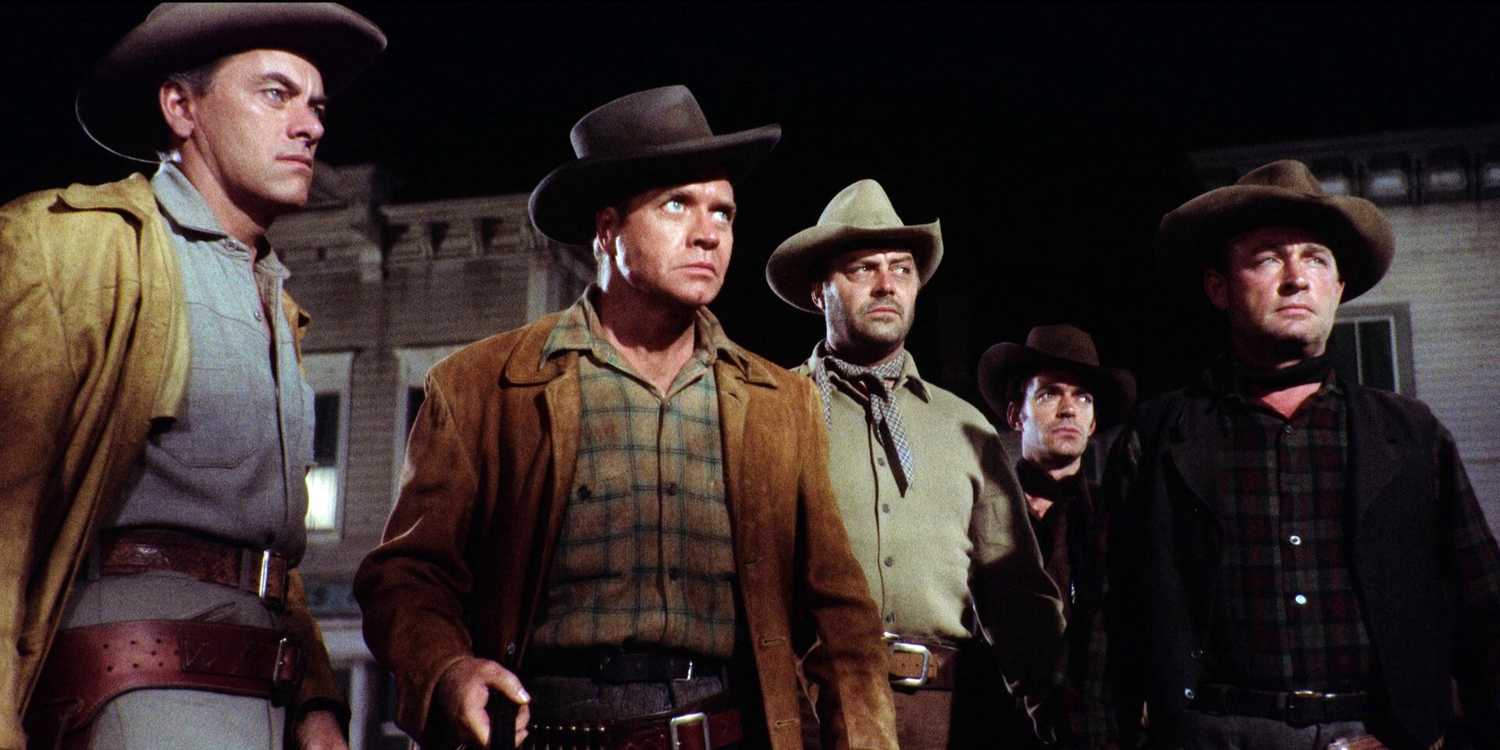
The confrontation did not emerge from a single argument. It followed months of growing distrust and several disputes involving suspected robberies, weapons, arrests, and threats.
Tombstone also had rules restricting the carrying of weapons within town limits. As marshal, Virgil Earp was responsible for enforcing those regulations.
On October 25, 1881, tensions intensified after disagreements involving Ike Clanton and Doc Holliday. The following day, further confrontations brought the rival groups closer to a violent encounter.
By the afternoon of October 26, several Cowboys were gathered near Fremont Street. Virgil Earp decided to confront them and attempt to disarm the men. Wyatt and Morgan accompanied him, while Doc Holliday joined the group.
The decision would have consequences far beyond anything the participants could have imagined.
The lawmen moved toward the Cowboys, who included Billy Clanton and the McLaury brothers. Ike Clanton was also involved in the confrontation, although accounts differ about the precise positions and actions of those present.
The two groups faced each other in a narrow vacant lot near the O.K. Corral.
Words were exchanged.
The tension was immediate.
And within moments, the confrontation erupted into gunfire.
THIRTY SECONDS THAT CHANGED HISTORY
The actual shooting was remarkably brief. Historical accounts commonly describe a gunfight lasting approximately thirty seconds, with around thirty shots fired.
When the shooting ended, three men were dead: Billy Clanton, Tom McLaury, and Frank McLaury.
Virgil Earp and Morgan Earp were wounded, while Doc Holliday also sustained an injury. Wyatt Earp emerged without a serious wound.
Ike Clanton survived.
The event became known as the Gunfight at the O.K. Corral, although the shooting did not actually take place inside the corral itself. The confrontation occurred in a nearby vacant lot along Fremont Street.
That detail illustrates how history and popular culture can gradually reshape an event. The name became famous, and the location became inseparable from the legend, even though the actual geography was different from what many people imagine.
Another important question remains unresolved: who fired the first shot?
Different witnesses and participants offered conflicting accounts. The Earps maintained that their actions were connected to enforcing the law and disarming armed men. Their opponents disputed that interpretation.
The uncertainty surrounding the confrontation has helped keep the story alive. Even today, the event cannot be reduced to a completely simple narrative of heroes confronting villains.
AFTER THE SMOKE CLEARED

The gunfight did not bring peace to Tombstone. Instead, it intensified the conflict.
Ike Clanton accused the Earps and Holliday of murder, prompting a preliminary hearing that examined the circumstances of the shooting. The proceedings attracted significant attention and exposed competing versions of what had happened.
Judge Wells Spicer ultimately ruled that the evidence did not justify sending the defendants to trial for murder. His decision did not eliminate the bitterness between the opposing factions.
Violence continued in the months that followed.
In December 1881, Virgil Earp was ambushed and seriously wounded. In March 1882, Morgan Earp was shot and killed while playing billiards in Tombstone.
Wyatt Earp believed his brother’s death was part of the continuing conflict. He subsequently pursued men he suspected of involvement in the attacks, beginning the series of events commonly associated with the Earp Vendetta Ride.
These developments transformed the O.K. Corral confrontation from an isolated gunfight into part of a much larger story of retaliation.
The consequences reached beyond the men who had stood in the vacant lot that October afternoon. Families were affected, alliances fractured, and the town’s reputation became permanently linked to violence.
FROM HISTORICAL CONFRONTATION TO WESTERN LEGEND
The lasting fame of the O.K. Corral gunfight owes much to the way its participants were remembered.
Wyatt Earp became an enduring symbol of frontier law enforcement. Doc Holliday developed a reputation as the dangerous gambler who stood beside him. Their contrasting personalities created a compelling combination: Earp, the determined lawman, and Holliday, the unpredictable gunfighter.
Books, newspaper accounts, biographies, and Hollywood films gradually transformed the historical events into a dramatic Western saga.
The 1993 film Tombstone, starring Kurt Russell as Wyatt Earp and Val Kilmer as Doc Holliday, introduced the story to a new generation. Other productions, including Gunfight at the O.K. Corral and Wyatt Earp, offered their own interpretations of the events.
These adaptations helped preserve the legend, but they also encouraged audiences to see the confrontation through familiar cinematic ideas about justice, courage, loyalty, and revenge.
The historical reality was more complicated.
The Earps were real people, not flawless heroes. The Cowboys were not simply interchangeable villains. Each side operated within a frontier society shaped by competing interests, personal relationships, and uncertain authority.
That complexity makes the story more interesting, not less.
WHY TOMBSTONE STILL MATTERS

More than 140 years later, the Gunfight at the O.K. Corral remains one of the defining episodes of the American West.
Its appeal comes from more than the shooting itself. The story contains nearly everything that makes Western history compelling: a rough frontier town, rival factions, famous personalities, disputed motives, sudden violence, and a feud that continued long after the first confrontation ended.
It also reminds us how quickly a brief event can become larger than life.
The gunfight lasted less than a minute. Its participants could not have known that their names would be remembered around the world or that their confrontation would inspire generations of filmmakers and storytellers.
Yet the legend endured because it raises questions that remain relevant to every generation.
What separates justice from revenge? How much can reputation distort the truth? And when two sides believe they are justified, is violence ever truly the end of the conflict?
Tombstone became famous because of a gunfight, but its place in history rests on a much bigger story about human ambition, loyalty, conflict, and the consequences of choices.
