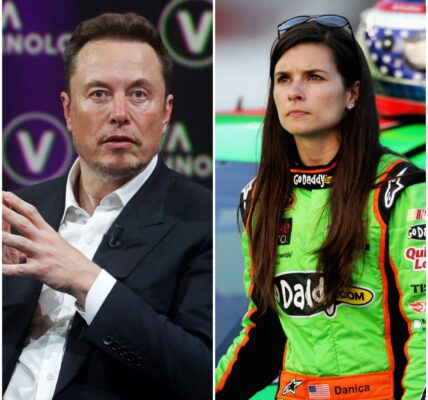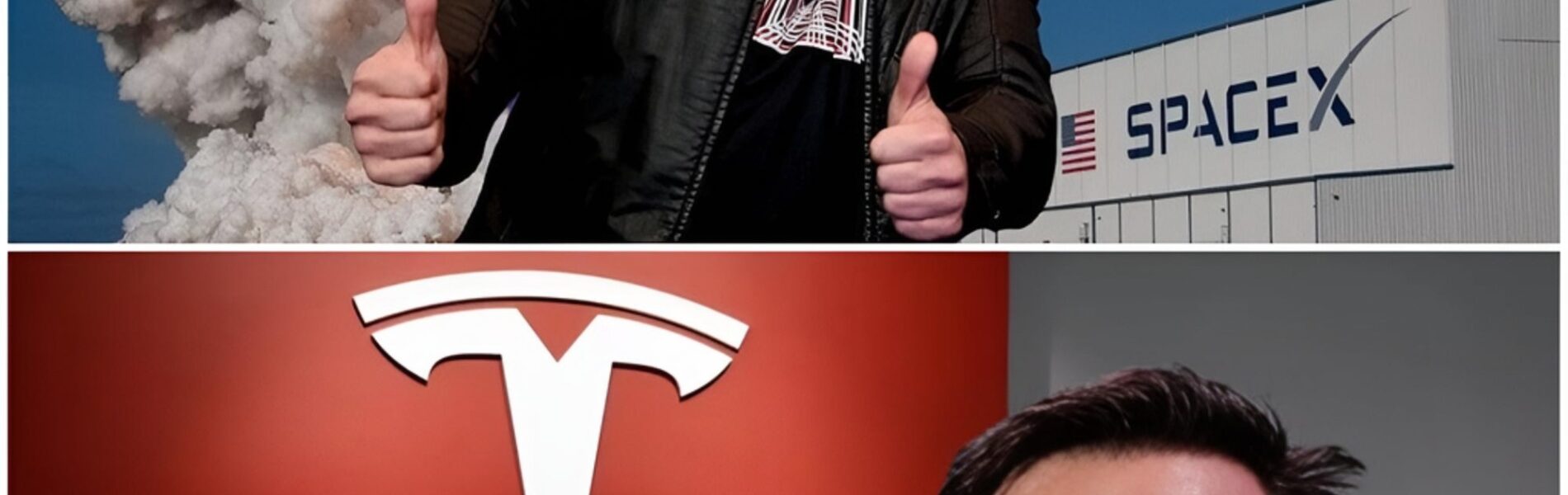

Elon Musk has crossed a threshold no human in history has ever reached. The world’s richest man has officially become the first individual with a net worth exceeding $600 billion, marking a moment that once belonged only to science fiction. According to Forbes, Musk’s fortune now stands at approximately $677 billion, while Bloomberg Billionaires Index estimates it closer to $638 billion.
Either way, the message is the same: Elon Musk has entered a financial realm that redefines what wealth means in the modern technological age.
What makes this milestone even more extraordinary is its speed. Just two months earlier, in October, Musk had crossed the $500 billion mark. The acceleration since then has been staggering, positioning him closer than ever to becoming the world’s first trillionaire—a concept once dismissed as mathematically impossible.
SpaceX: The Core Engine of Musk’s Wealth Explosion
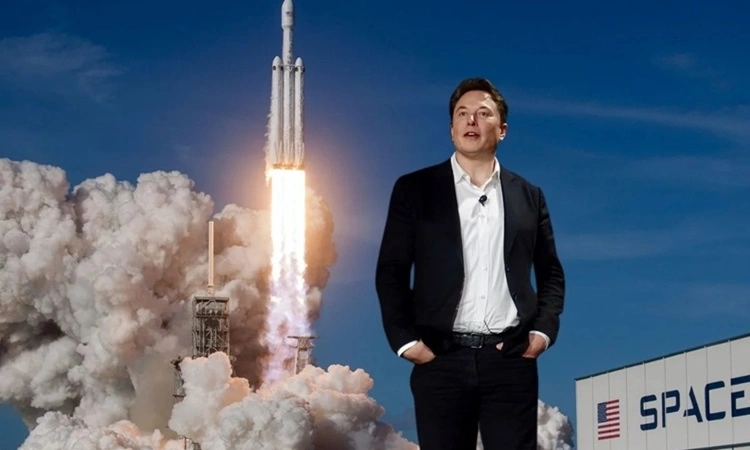
The primary force behind Musk’s historic surge is SpaceX, the private aerospace company he founded to revolutionize space travel. Through a recent internal share sale involving employees and existing investors, SpaceX’s valuation surged to $800 billion, doubling from $400 billion only months earlier.
With Musk owning roughly 42% of the company, this single revaluation added an estimated $168 billion to his personal net worth in a matter of days. SpaceX has now overtaken Tesla as Musk’s most valuable asset.
Looking ahead, SpaceX is widely expected to pursue what could become the largest IPO in history in 2026. Insiders and investors suggest a potential valuation between $1 trillion and $1.5 trillion. If that happens, SpaceX alone could propel Musk past the trillion-dollar net worth threshold—without factoring in any of his other ventures.
Beyond valuation metrics, SpaceX controls assets that few companies on Earth can rival: the Starship rocket program, the rapidly expanding Starlink satellite network, and long-term government and commercial launch contracts that anchor its future revenues.
Tesla’s Reinvention: From Automaker to AI & Robotics Giant

While SpaceX dominates headlines, Tesla is quietly undergoing one of the most ambitious transformations in corporate history. Musk has repeatedly stated that Tesla should no longer be viewed as a car company, but as an AI and robotics platform.
In December 2025, Tesla shares closed at a record $489.88, pushing the company’s market capitalization to approximately $1.63 trillion. This came despite slowing electric vehicle sales earlier in the year due to intensified competition from Chinese manufacturers such as BYD and Xiaomi.
What investors are betting on is not vehicle volume—but autonomy.
Tesla is now testing fully driverless robotaxis in Austin, Texas, with no safety driver or human supervision. This represents a critical leap beyond earlier assisted-driving trials. Analysts believe that if full self-driving scales successfully, Tesla could convert millions of existing vehicles into autonomous revenue-generating assets almost overnight.
Several major firms have raised Tesla’s price targets above $530, citing the massive potential of robotaxi networks. In November 2025, Tesla shareholders also approved a compensation package for Musk that could be worth up to $1 trillion, contingent on hitting aggressive milestones tied to AI, robotics, profitability, and market capitalization.
xAI, Grok, and the AI Arms Race
Musk’s ambitions extend far beyond cars and rockets. His artificial intelligence startup, xAI, is currently raising up to $15 billion at a reported valuation of $230 billion. Its flagship AI model, Grok, is positioned as a direct competitor to OpenAI’s ChatGPT.
What differentiates xAI is its integration across Musk’s ecosystem. Grok draws data from X (formerly Twitter), supports Tesla’s Full Self-Driving development, and contributes to optimization in SpaceX engineering systems. Unlike standalone AI firms, xAI is embedded within a multi-industry feedback loop.
This deep integration allows Musk to leverage real-world data at a scale few AI companies can match—vehicles, satellites, communications platforms, and eventually even human neural interfaces.
The Musk Ecosystem: Where Everything Connects
What truly sets Musk apart from every billionaire before him is not any single company—but the interconnected system he has built.
In this ecosystem:
-
xAI serves as the cognitive engine for Tesla’s autonomy, Optimus humanoid robots, and SpaceX’s navigation systems.
-
Starlink provides high-speed connectivity to Tesla vehicles and robotaxi networks, even in remote regions.
-
Tesla’s vehicle data feeds AI training models at massive scale.
-
Neuralink opens future pathways between human cognition and machines.
-
Engineering talent flows freely across companies, accelerating innovation.
This convergence creates a compounding effect, where progress in one company amplifies the value of all others. Investors are not valuing Musk’s businesses in isolation—they are betting on the architecture of a future technological civilization.
More Than Money: Reshaping the Human Future
Musk’s wealth is largely illiquid, tied to equity rather than cash. He owns relatively little real estate and maintains minimal personal liquidity compared to his net worth. Yet the influence his assets represent is unprecedented.
From autonomous transportation and humanoid robots to interplanetary colonization and brain–computer interfaces, Musk’s companies are shaping what life may look like in the coming decades.
This is why markets are willing to assign valuations once considered absurd. Investors are not just buying companies—they are buying into a vision of convergence, where AI, space, robotics, energy, and human augmentation merge into a single technological trajectory.
The Road to a Trillion Dollars
Whether Musk officially becomes the world’s first trillionaire will depend on execution, market conditions, and regulatory landscapes. SpaceX’s IPO, Tesla’s autonomy rollout, and the AI race will all play decisive roles.
But one fact is already clear: history has entered a new chapter.
The question is no longer if a trillionaire will exist—but whether the future Musk is building will arrive faster than anyone imagined.
And if it does, Elon Musk will not just be the richest man in history—he may become the architect of the next technological era.