BLEDISLOE CUP OFFICIATING BOMBSHELL: Wallabies’ Crushing 50–19 Defeat to All Blacks Ignites Fierce Debate Over Refereeing, Discipline and Australia’s Rugby Future
AUCKLAND, NEW ZEALAND — The final scoreboard told a brutal story: New Zealand All Blacks 50, Australia Wallabies 19.
But beyond the crushing 31-point defeat at Eden Park on October 10, 2026, another conversation has emerged surrounding the consistency of officiating, the interpretation of crucial decisions, and whether Australia’s hopes of challenging their greatest rivals were damaged by more than their own mistakes.
The Bledisloe Cup showdown was supposed to represent another opportunity for Australia to challenge New Zealand’s dominance.
Instead, it ended in disappointment, frustration, and difficult questions about the Wallabies’ ability to compete against elite international opposition.
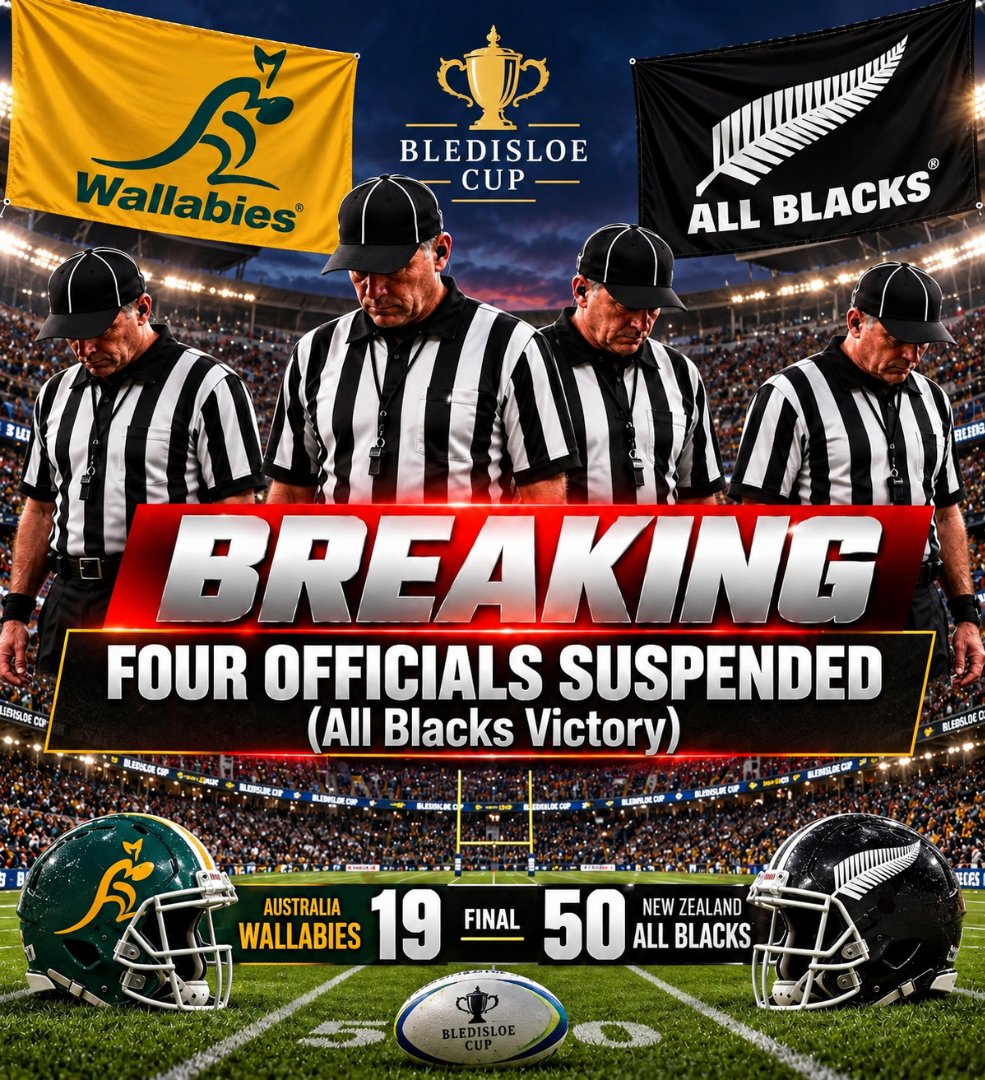
While online discussion has included dramatic claims about possible disciplinary action against match officials, there is no verified confirmation that four officials were suspended following this match.
Any suggestion of an official suspension or investigation must therefore be treated as unsubstantiated.
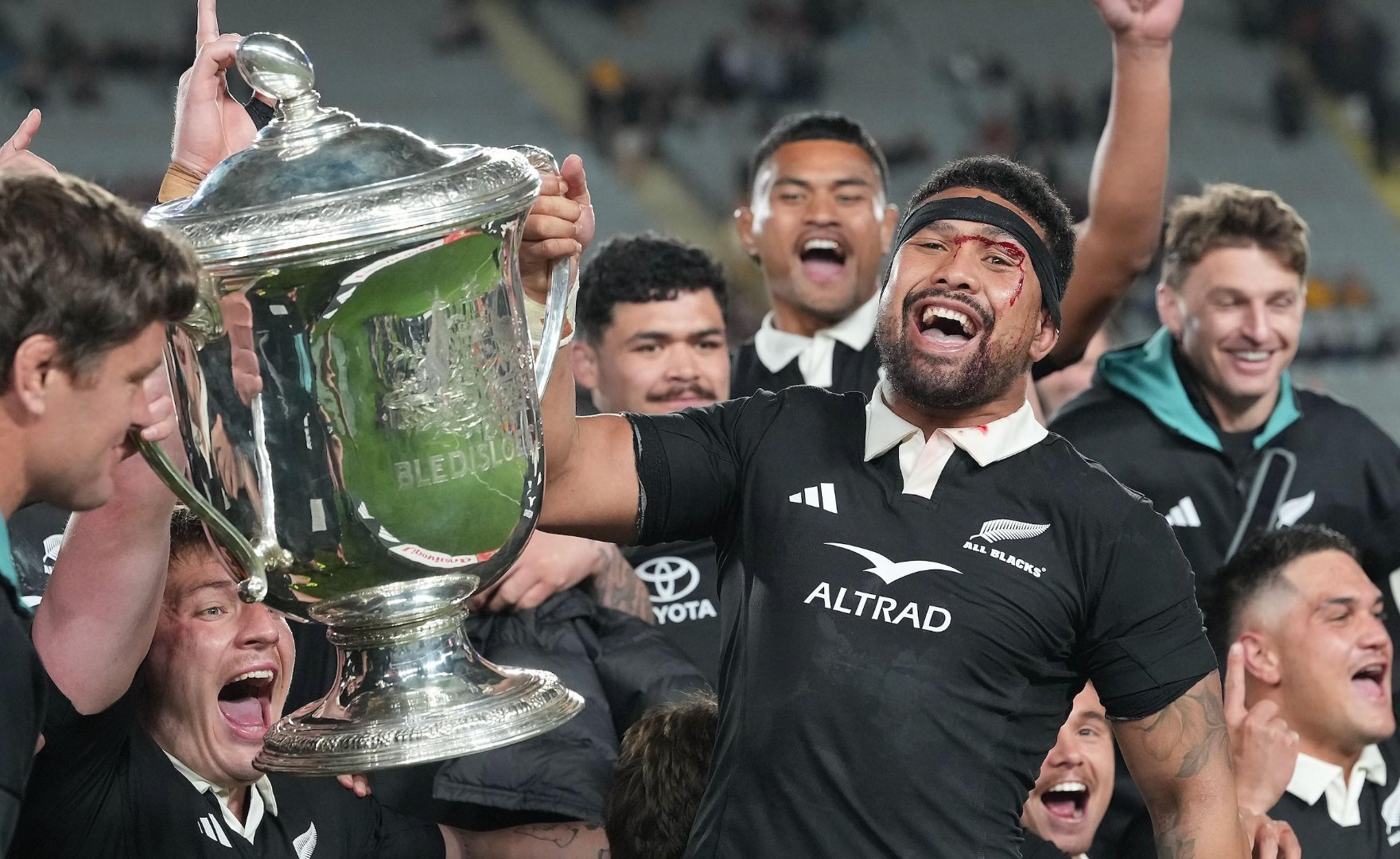
Nevertheless, the scale of Australia’s collapse has provided plenty of legitimate reasons for rugby supporters to demand answers.
A Competitive First Half That Promised Something Special
For the opening 40 minutes, Australia looked capable of producing a memorable performance.
Tom Wright’s early try gave the Wallabies a confidence-building start, demonstrating their willingness to attack New Zealand rather than simply absorb pressure.
The All Blacks responded through Peter Lakai and Tupou Vaa’i, showcasing the physicality and attacking precision that have made them one of international rugby’s most feared teams.
Damian McKenzie’s accurate kicking helped New Zealand establish a 17–7 advantage, but Australia refused to surrender.
Captain Harry Wilson delivered an important try before halftime, narrowing the deficit to 17–14 and keeping the contest alive.
At that moment, Australia had every reason to believe an upset remained possible.
The visitors had demonstrated attacking ambition, defensive resilience, and enough physical intensity to trouble the hosts.
However, the second half would expose a completely different reality.
The Turning Point That Changed Everything
One of the most significant moments arrived shortly after halftime, when Australia earned an attacking lineout close to New Zealand’s try line.
With the Wallabies trailing by only three points, the opportunity presented a potential turning point.
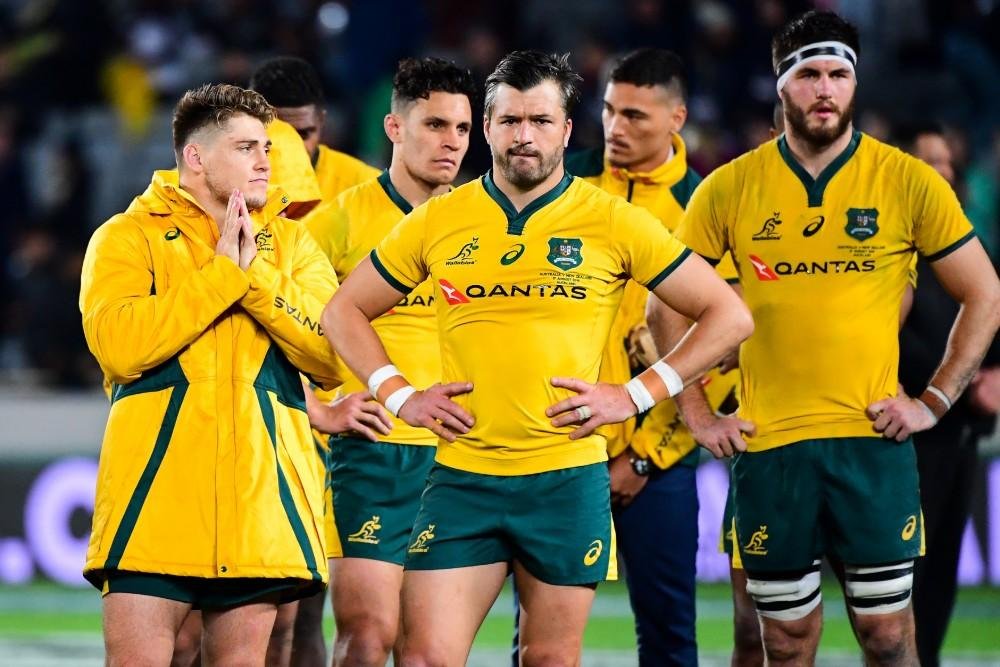
Instead, an infringement during the attacking maul resulted in Australia losing possession and surrendering valuable territory.
The decision immediately shifted momentum toward New Zealand.
For supporters examining the officiating, moments like this naturally attract attention because penalties can dramatically influence possession, field position, and attacking opportunities.
However, an unfavorable decision does not automatically establish refereeing misconduct or bias.
The more significant issue for Australia was what happened afterward.
Rather than recovering their composure, the Wallabies struggled to contain New Zealand’s accelerating attack.
Cam Roigard crossed for a crucial try, opening the floodgates for an extraordinary second-half performance.
Codie Taylor, Leroy Carter, Josh Moorby, and Will Jordan contributed to the All Blacks’ attacking dominance as Australia increasingly lost control.
By the final whistle, the contest had transformed from a three-point halftime battle into a 50–19 demolition.
Officiating Questions Enter the Spotlight
In high-stakes international rugby, refereeing decisions inevitably become part of the postmatch discussion.
Supporters regularly scrutinize breakdown interpretations, scrum penalties, lineout infringements, offside calls, and the consistency of disciplinary decisions.
The All Blacks–Wallabies rivalry is no exception.
With the emotional significance of the Bledisloe Cup, even a single controversial whistle can become a major talking point.
Yet it is important to distinguish legitimate questions about officiating consistency from allegations of wrongdoing.
There is currently no substantiated evidence establishing that officials deliberately favored New Zealand, manipulated the result, or faced suspensions because of their performance.
A formal refereeing review, if conducted, would need to examine individual incidents using match footage, the applicable laws, and official assessments.
Until such findings are publicly established, accusations of deliberate misconduct remain speculation.
For Australia, focusing exclusively on refereeing would also risk overlooking the technical and tactical weaknesses that contributed to the defeat.
Why Australia’s Defense Collapsed
The Wallabies’ second-half defensive performance was arguably the most alarming aspect of the match.
New Zealand repeatedly gained territory through intelligent tactical kicking and effective aerial contests.
The All Blacks also accelerated their attacking tempo, forcing Australian defenders into increasingly difficult situations.
As possession and territorial pressure accumulated, the Wallabies struggled to reorganize their defensive structure.
Missed opportunities to relieve pressure allowed New Zealand to maintain momentum.
The absence of injured personnel further complicated Australia’s task, particularly after Len Ikitau was forced from the contest.
Meanwhile, New Zealand demonstrated exceptional efficiency when opportunities emerged.
Their ability to convert sustained pressure into tries ultimately separated the two teams.
The final margin reflected more than isolated refereeing decisions. It revealed a substantial difference in execution, discipline, and second-half composure.
Les Kiss Faces Difficult Questions
For Wallabies head coach Les Kiss, the defeat creates immediate challenges.
Australia had entered the contest hoping to demonstrate progress against one of rugby’s strongest international opponents.
For 40 minutes, that ambition appeared realistic.
But the subsequent collapse raises serious questions about tactical adjustments, physical endurance, and the team’s ability to withstand sustained pressure.
Kiss must now determine why Australia struggled to respond when New Zealand increased the intensity.
Was the defensive system too vulnerable to quick attacking transitions?
Did the Wallabies fail to manage territory effectively?
Or did repeated errors undermine their confidence during the decisive period?
These are questions that require urgent attention before the next encounter.
Dave Rennie’s All Blacks Deliver a Powerful Statement
For New Zealand head coach Dave Rennie, the result represents a significant demonstration of his team’s attacking potential.
The All Blacks showed patience when Australia challenged them early, then ruthlessly exploited their opponents’ weaknesses after halftime.
Their tactical kicking, support running, and ability to capitalize on broken defensive structures proved decisive.
The victory also reinforced New Zealand’s long-standing dominance in the Bledisloe Cup rivalry.
While Australia searches for solutions, the All Blacks can approach the next meeting with considerable confidence.
What Happens Next?
The two rivals are scheduled to meet again in Sydney on October 17, giving Australia an immediate opportunity to respond.
For the Wallabies, the priority must be restoring defensive organization, improving aerial contests, and maintaining concentration throughout the entire 80 minutes.
Any legitimate officiating concerns should be addressed through established rugby review procedures rather than unsupported accusations.
New Zealand, meanwhile, will look to reproduce the intensity and attacking precision that overwhelmed Australia at Eden Park.
The final verdict is unmistakable: Australia did not simply lose a rugby match.
They suffered a painful reminder of the distance separating them from their greatest rivals.
The 50–19 scoreline will remain the defining fact of this encounter.
But the questions surrounding Australia’s discipline, defensive collapse, and ability to recover could prove even more important as the Bledisloe Cup rivalry continues.
One thing is certain: when the Wallabies and All Blacks meet again, the rugby world will be watching to see whether Australia can finally deliver a response worthy of this historic rivalry.
