Johnny Depp, Scrooge, and the Dark Christmas Reckoning Hollywood Didn’t Expect

Johnny Depp, Scrooge, and the Dark Christmas Reckoning Hollywood Didn’t Expect
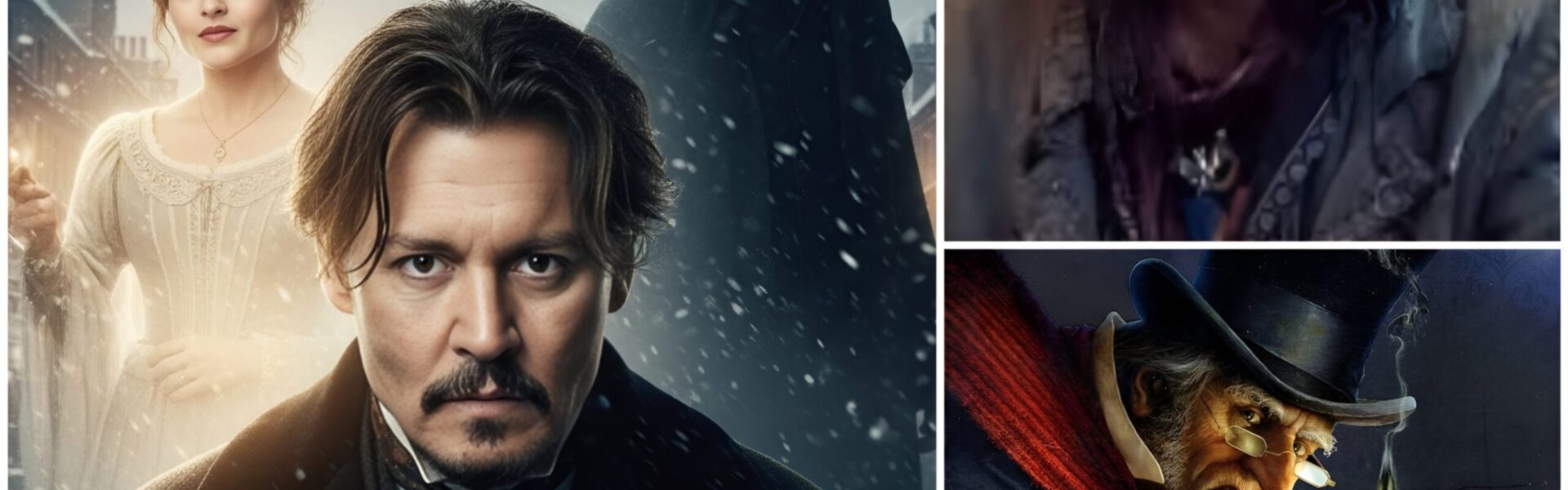
Hollywood has long been accustomed to Johnny Depp’s transformations. From eccentric pirates to haunted outsiders, his career has been built on characters that live somewhere between myth and madness. But his latest return—portraying a radically reimagined Scrooge under horror director Ti West—has sent a different kind of shockwave through the industry. This time, the unease isn’t just about makeup, performance, or genre. It’s about how closely the role appears to brush against Depp’s own lived experience.

When early footage began circulating among insiders, reactions were immediate and visceral. This was not the playful eccentricity audiences had come to expect, nor the gothic romance of Depp’s earlier collaborations. What viewers described instead was something raw, stripped of irony, and unsettlingly intimate. The performance didn’t feel like an actor pretending to unravel—it felt like a man allowing the camera to witness something deeply personal.
According to those close to the production, Depp himself referred to the role as tapping into a “dark alter ego,” a phrase that instantly ignited speculation. In Hollywood, such language is usually dismissed as marketing flourish. Yet in this case, the tone surrounding the project suggests something heavier. There is a sense that this Scrooge is less a character and more a confrontation—one that blurs the line between art and confession.
Ti West’s involvement only deepens the intrigue. Known for psychological horror that lingers long after the screen fades to black, West has built a reputation on exploring guilt, repression, and the slow erosion of the self. His films are not jump-scare spectacles; they are examinations of inner decay. Pairing him with Depp—a performer whose public life has unfolded under intense scrutiny—feels deliberate, even inevitable.
This version of A Christmas Carol reportedly abandons sentimentality altogether. Gone are the cozy Victorian aesthetics and gentle moral lessons. In their place is a cold, claustrophobic atmosphere where memory becomes a weapon rather than a guide. Scrooge’s ghosts are not whimsical visitors but relentless manifestations of regret, forcing the character to relive moments he would rather erase. It is here that Depp’s performance is said to feel almost uncomfortably authentic.
Industry insiders describe scenes in which Depp barely raises his voice, yet radiates emotional exhaustion. His Scrooge does not rage against the past; he appears crushed beneath it. The stillness, the long silences, and the haunted expressions have led some viewers to describe the film as less of an adaptation and more of an exorcism. It is this quality that has fueled whispers of a “real-life reckoning” embedded within the performance.
For Depp, the timing of the project is impossible to ignore. In recent years, his personal struggles have played out on a global stage, turning his name into a battleground for debate, judgment, and narrative warfare. Whether one views him as redeemed, damaged, or misunderstood, few would argue that he has emerged unchanged. This context gives his portrayal of a man consumed by memory an added layer of resonance.

Yet those close to Depp caution against reading the film as a literal autobiography. They emphasize that the actor has always drawn from emotional truth, using fragments of personal experience to enrich his characters. What makes this performance different, they say, is not that it reveals a specific secret, but that it allows vulnerability without disguise. There is no mask of humor, no flourish of theatrical excess. Just exposure.
Hollywood’s reaction has been unusually tense. Studios and awards strategists are watching closely, unsure how to frame a performance that feels so emotionally naked. Is it a triumphant artistic comeback? A risky act of self-exploration? Or something that resists categorization altogether? Early reactions suggest it may be all three at once.
Critics who have seen early cuts reportedly struggle to describe the film using traditional metrics. Some praise its courage, calling it a rare example of an actor allowing himself to be truly uncomfortable on screen. Others admit the film is difficult to watch—not because it is shocking, but because it feels intrusive, as though the audience is witnessing something they were not meant to see.
This discomfort may be precisely the point. Dickens’ original story was always about reckoning: with one’s past, one’s choices, and one’s capacity for change. In Depp and West’s hands, that reckoning becomes brutal rather than uplifting. Redemption is not guaranteed; it must be earned, and even then, it comes at a cost.
What makes this project particularly striking is how it reframes the idea of a “Christmas film.” Traditionally associated with warmth and reassurance, this adaptation instead leans into the unease of reflection. It asks what happens when nostalgia fails, when memory does not heal but haunts. In doing so, it challenges audiences to reconsider why stories like A Christmas Carol endure in the first place.

For Depp, the film represents a pivotal moment. Not because it seeks to rewrite his public narrative, but because it refuses to engage with it directly. There is no apology embedded in the performance, no attempt at justification. Instead, there is acknowledgment—of pain, of damage, of the impossibility of erasing the past. It is this honesty that has left such a strong impression on those who have seen it.
As the release approaches, speculation will inevitably intensify. Viewers will search for clues, symbols, and parallels, eager to decode what the film “really” says about Depp. Yet the most powerful aspect of the project may be its resistance to easy interpretation. It does not offer answers. It offers confrontation.
Whether this Scrooge ultimately reshapes Depp’s legacy remains to be seen. What is clear, however, is that it marks a departure from safe performances and comfortable narratives. In embracing discomfort, Depp and West have created something that feels less like entertainment and more like a reckoning—one that invites audiences to sit with unease rather than escape it.
In a season typically defined by comfort and cheer, Johnny Depp’s Scrooge arrives as a stark reminder that some stories are meant to unsettle. And in doing so, it may become one of the most talked-about—and divisive—holiday films in recent memory.