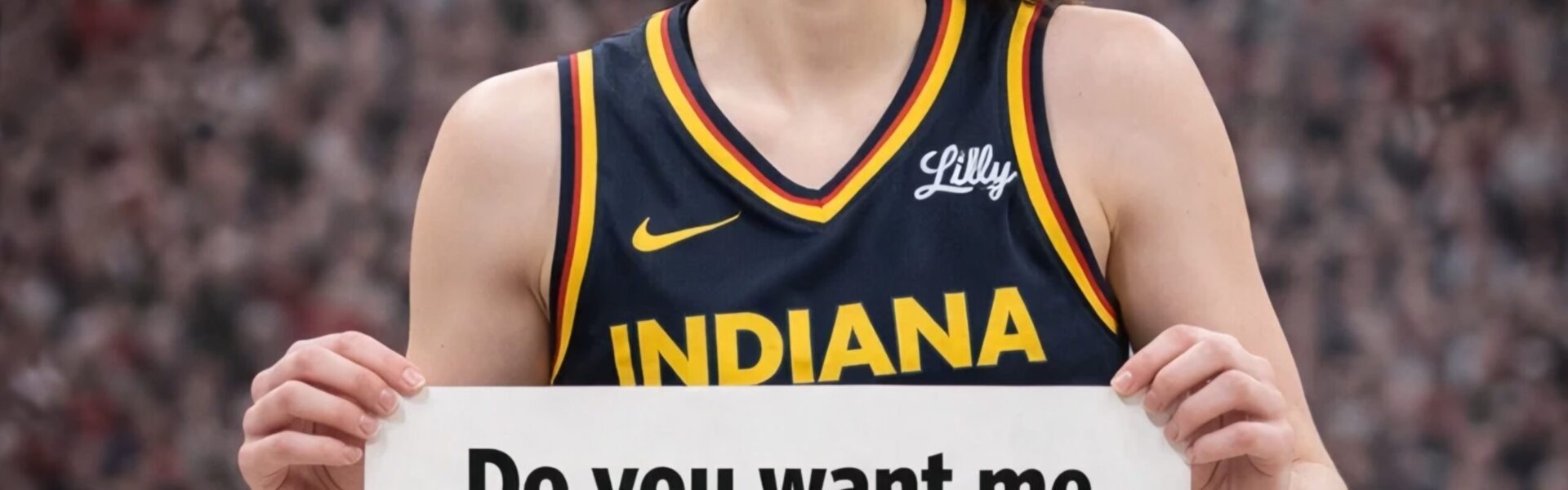

It sounds like a simple question. Almost playful. Almost harmless. But beneath it lies one of the most revealing tensions in modern sports culture—a tension Caitlin Clark didn’t create, but now perfectly exposes.
At face value, the question feels like humor. A superstar athlete enjoying her offseason, swinging a golf club, smiling for the camera. But to millions of fans, critics, analysts, and league insiders, it lands like a challenge. Because Caitlin Clark isn’t really asking about basketball versus golf. She’s asking something far more uncomfortable:
Do you actually want greatness—when it disrupts everything?
The Subtext Everyone Pretends Not to See
Caitlin Clark’s career has been defined by contradiction. She is the most watched player in women’s basketball, yet constantly scrutinized. She drives ratings, sells out arenas, moves merchandise at historic levels—yet somehow remains at the center of endless debates about “fit,” “tone,” and “impact.”
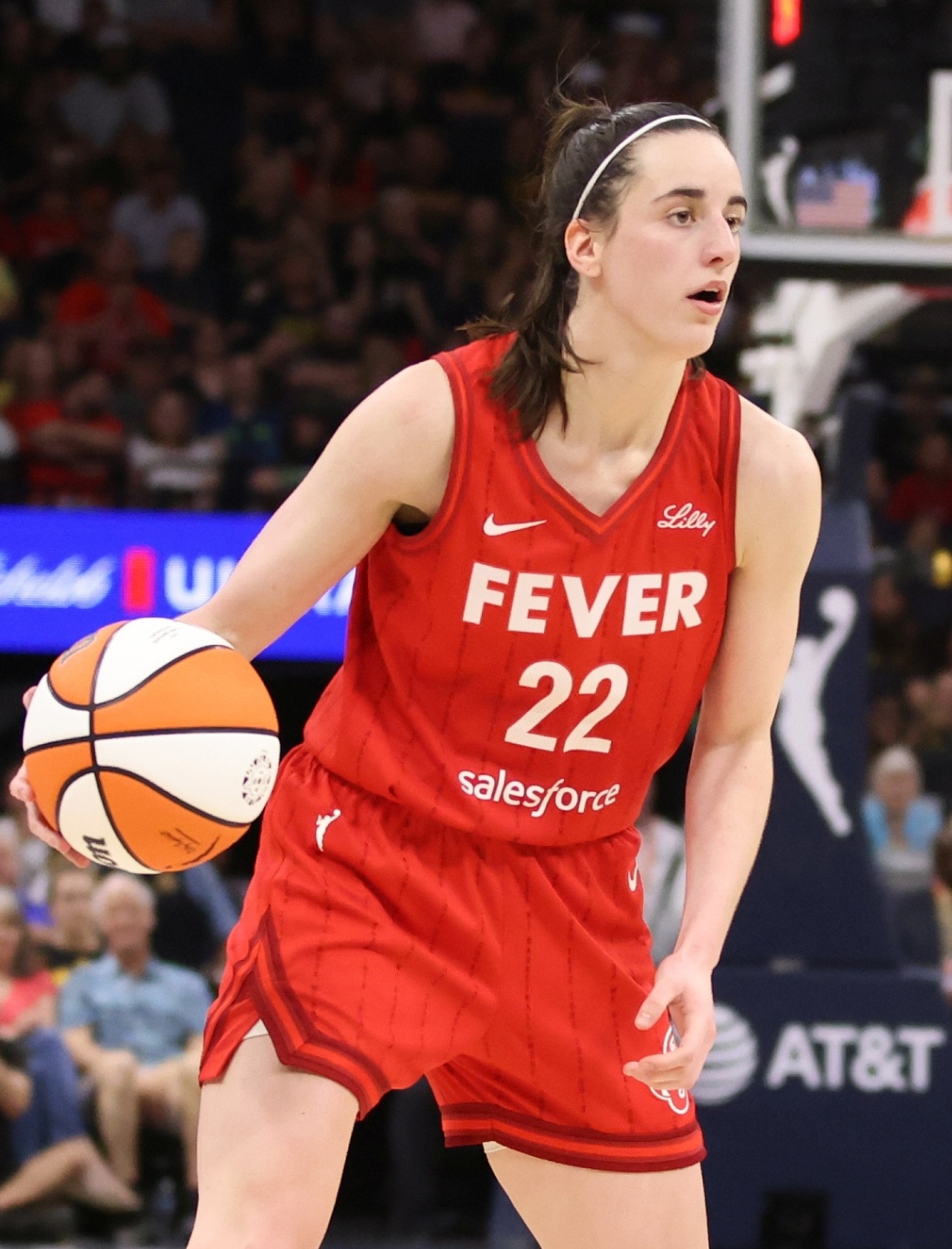
So when she asks whether people want her back in basketball or prefer her quietly playing golf, it exposes a truth many won’t admit:
Some people love women’s basketball growing—until it grows around one person.
Golf, in this context, represents something safe. Quiet. Non-threatening. No headlines about rotations, team chemistry, or hierarchy. No uncomfortable comparisons. No pressure on systems that were never built for a player who bends the game to her will.
Basketball, on the other hand, is loud. Demanding. Unignorable.
And Caitlin Clark has never been ignorable.
Why the Question Hits So Hard
The reason this line resonates isn’t because fans doubt her love for the game. It’s because it mirrors the way elite women athletes are often treated when they become too powerful, too visible, too central.
When Clark dominates, the conversation shifts. It’s no longer just about wins and losses. It becomes about style, about influence, about whether the league should adapt to her—or whether she should adapt to the league.
That’s an unfair burden to place on any athlete, let alone one who has already proven everything on the court.
The irony is sharp:
The same people who demand growth, relevance, and attention for women’s sports often bristle when one player actually delivers all three.
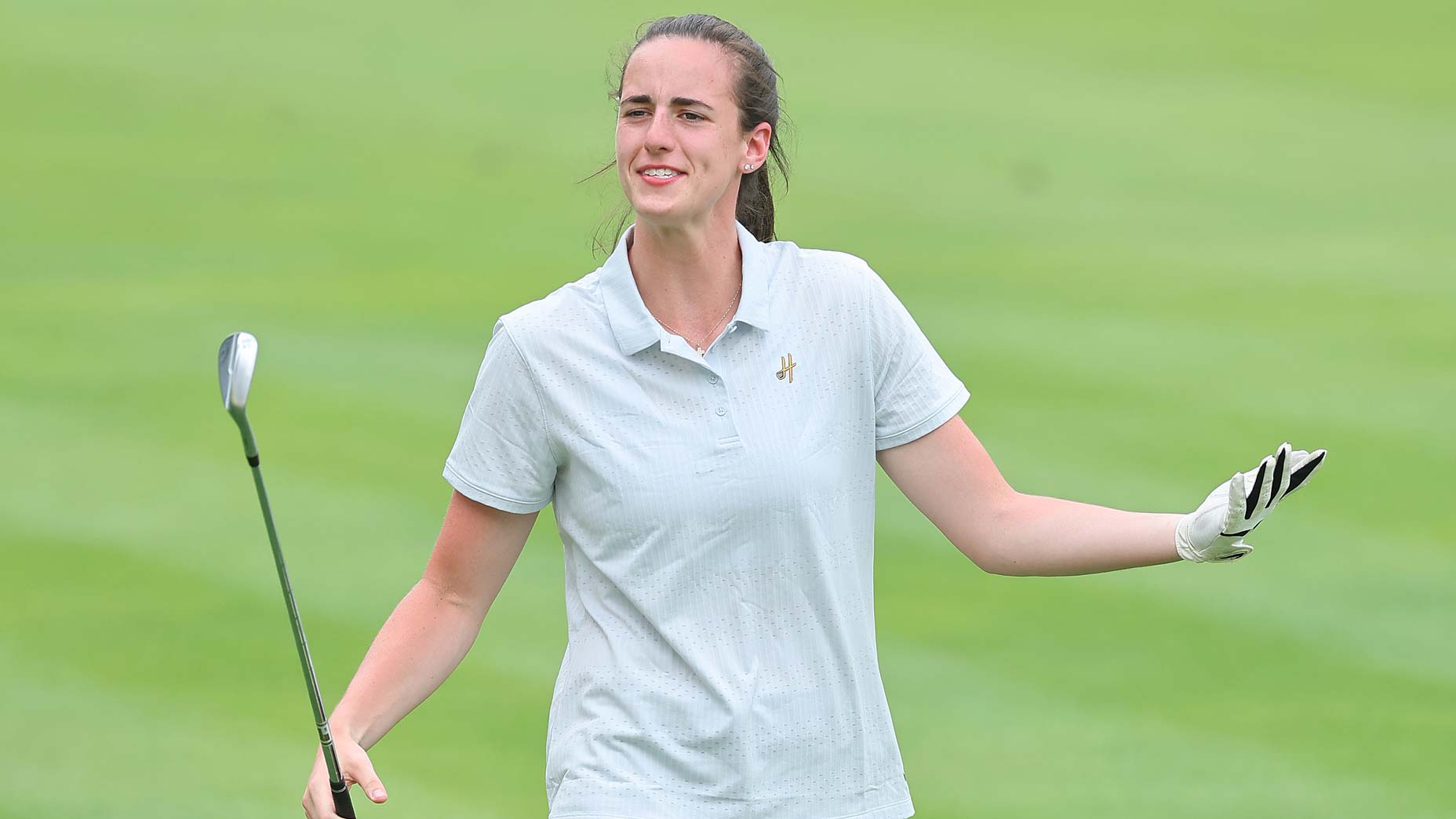
Golf as a Metaphor
Golf is individual. Basketball is communal.
Golf asks nothing of teammates. Basketball demands everyone adjust.
When Clark thrives in basketball, systems have to change. Teammates must move faster. Coaches must rethink spacing. Veterans must accept new roles. The game accelerates.
That kind of transformation makes people uncomfortable.
So when she jokes about sticking to golf, it feels like a mirror held up to the sport itself:
Is it easier when I’m not forcing you to evolve?
The Unspoken Double Standard
Male superstars are rarely asked to shrink themselves. When they redefine pace or style, the league celebrates it as innovation. With Clark, the response is often caution—sometimes disguised as concern, sometimes as critique.
Too flashy.
Too central.
Too much attention.
And yet, without her, the attention disappears.
This is the contradiction her question exposes. Not aggressively. Not angrily. Just honestly.
Why Fans Feel Seen by This Moment
For fans, especially younger ones, Clark’s question feels relatable. It reflects a broader experience: being encouraged to excel, but only up to a point. To shine, but not outshine. To lead, but not disrupt.
That’s why the line resonates far beyond sports. It taps into a cultural frustration many recognize.
When Clark asks whether people want her back in basketball, she’s not fishing for validation. She’s highlighting the absurdity of having to ask at all.
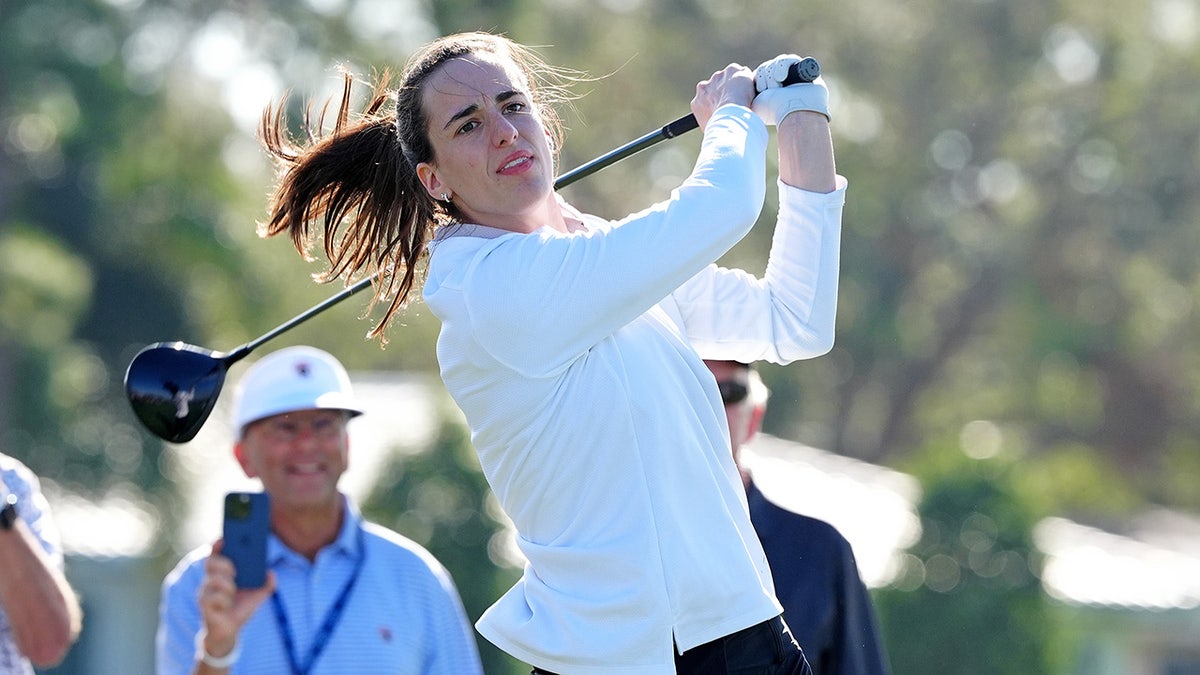
The Answer She Already Knows
Here’s the truth:
Caitlin Clark doesn’t need permission to return to basketball.
She also doesn’t need to abandon joy, rest, or curiosity in other pursuits like golf. Athletes are allowed to be multidimensional. But the suggestion that her presence in basketball is optional—something that can be traded for silence—reveals more about the system than about her.
The fans who truly love the game already know the answer.
They don’t want her hidden.
They don’t want her muted.
They don’t want her reduced to a novelty or a problem to be managed.
They want her exactly where she belongs—on the court, changing the game in real time.
Basketball or Golf? The False Choice
Ultimately, the question presents a false choice. Caitlin Clark isn’t deciding between basketball and golf. She’s reminding everyone that greatness doesn’t exist on others’ terms.
Basketball doesn’t need her to be smaller.
The league doesn’t need her to be quieter.
The game doesn’t need her to slow down.
It needs honesty. And evolution.
So when she asks, “Do you want me back in basketball… or should I stick to golf?”
The real answer is clear—even if not everyone is ready to say it out loud.
Basketball needs her.
Whether it’s comfortable or not.
And that’s exactly why she belongs there.