Eagles–Commanders Brawl Explodes as Tyler Steen Defends Teammate After Sideline Chaos

Tempers boiled over late Saturday night as the Philadelphia Eagles’ NFC East–clinching win over the Washington Commanders turned chippy in the fourth quarter, culminating in a full-on sideline brawl that led to three ejections and overshadowed the final minutes of a decisive division showdown.
The altercation erupted with 4:26 remaining in the fourth quarter, moments after Eagles running back Tank Bigsby broke loose around the left edge for a 22-yard touchdown. Philadelphia then opted to go for two, with Saquon Barkley powering into the end zone to stretch the lead to 29–10, a decision that immediately raised tensions on the field.
After the game, Eagles head coach Nick Sirianni explained the choice to attempt the two-point conversion, framing it strictly as a strategic call rather than a message. “We did the math and said, ‘Hey, we want to make sure we’re up 19,’” Sirianni said. “That way they could only tie you with a field goal and two touchdowns and two-point conversions. We wanted to make sure we were up three scores, just in case. That’s what the numbers told us, and that’s what we executed.”

Washington head coach Dan Quinn was asked whether he felt the decision crossed a line. He declined to criticize Philadelphia directly but made it clear the moment would not be forgotten. “I can only answer for myself, what I would do,” Quinn said. “But if that’s how they want to get down, then all good. We play them again in two weeks.”
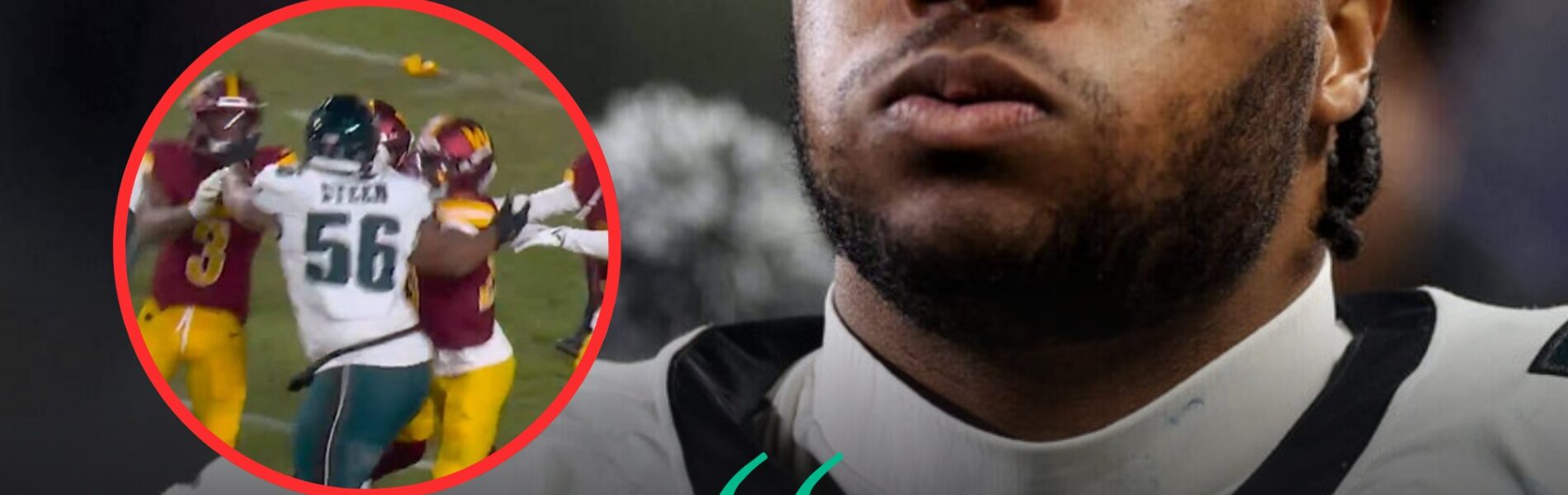
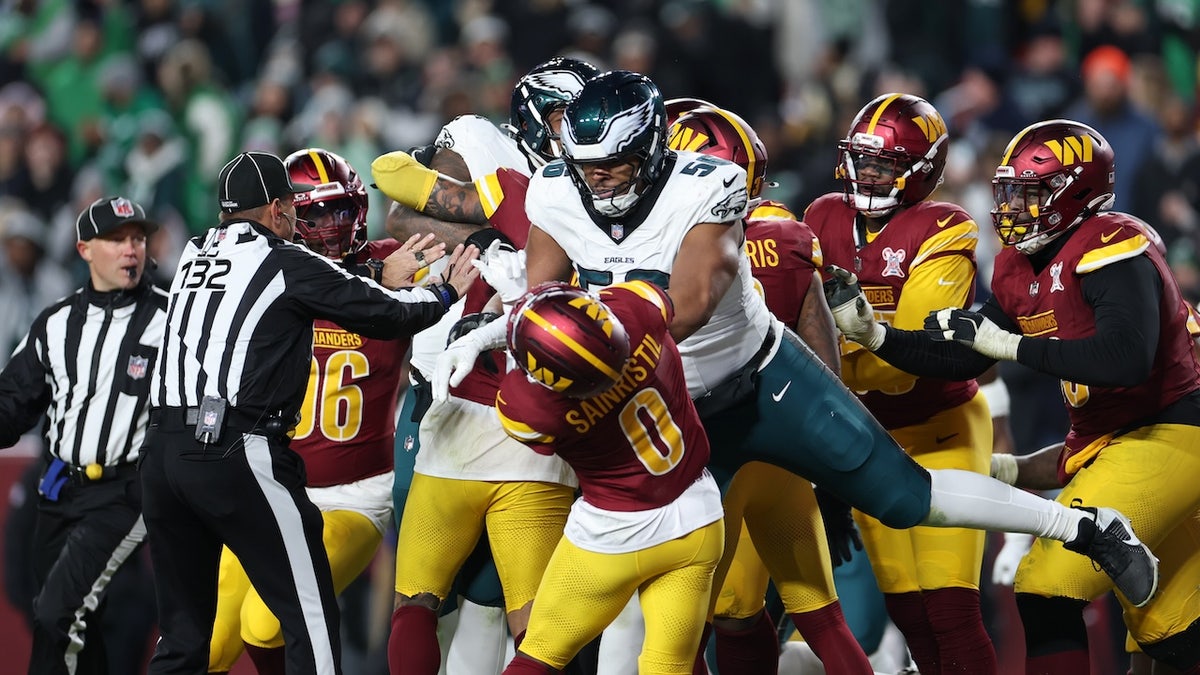
The frustration soon spilled beyond words. Philadelphia right guard Tyler Steen became involved in a heated confrontation with Washington defensive tackle Javon Kinlaw and safety Quan Martin. Punches were thrown as players from both sidelines rushed into the fracas, forcing officials and team personnel to intervene. All three players were ejected for unnecessary roughness as the situation escalated near midfield.
Saquon Barkley later acknowledged the emotional edge of the rivalry, while emphasizing the need for restraint. “Bobby Wagner did a really good job of making it make sense to me in that moment,” Barkley said. “You get two or three punches at a helmet, hopefully you don’t break a hand just to say you’re a tough guy. It’s not really worth it. And you lose a lot of money too. We’ve got to be better there.”
The scene reflected the long-standing animosity between the two NFC East rivals, something Barkley did not shy away from addressing. “It’s chippy out there, and we have a lot of history with this team,” he said. “They don’t like us. That’s the truth. We don’t like them either. But we’ve got to keep it football.”
Quarterback Jalen Hurts echoed that sentiment while walking alongside Steen as he was escorted down the sideline following his ejection. “I understand the emotions that a game can bring,” Hurts said. “There’s a bigger picture in all of it. In every moment, you want to be the example you want others to follow. We’ve got a lot of ball in front of us. Today was a great accomplishment.”
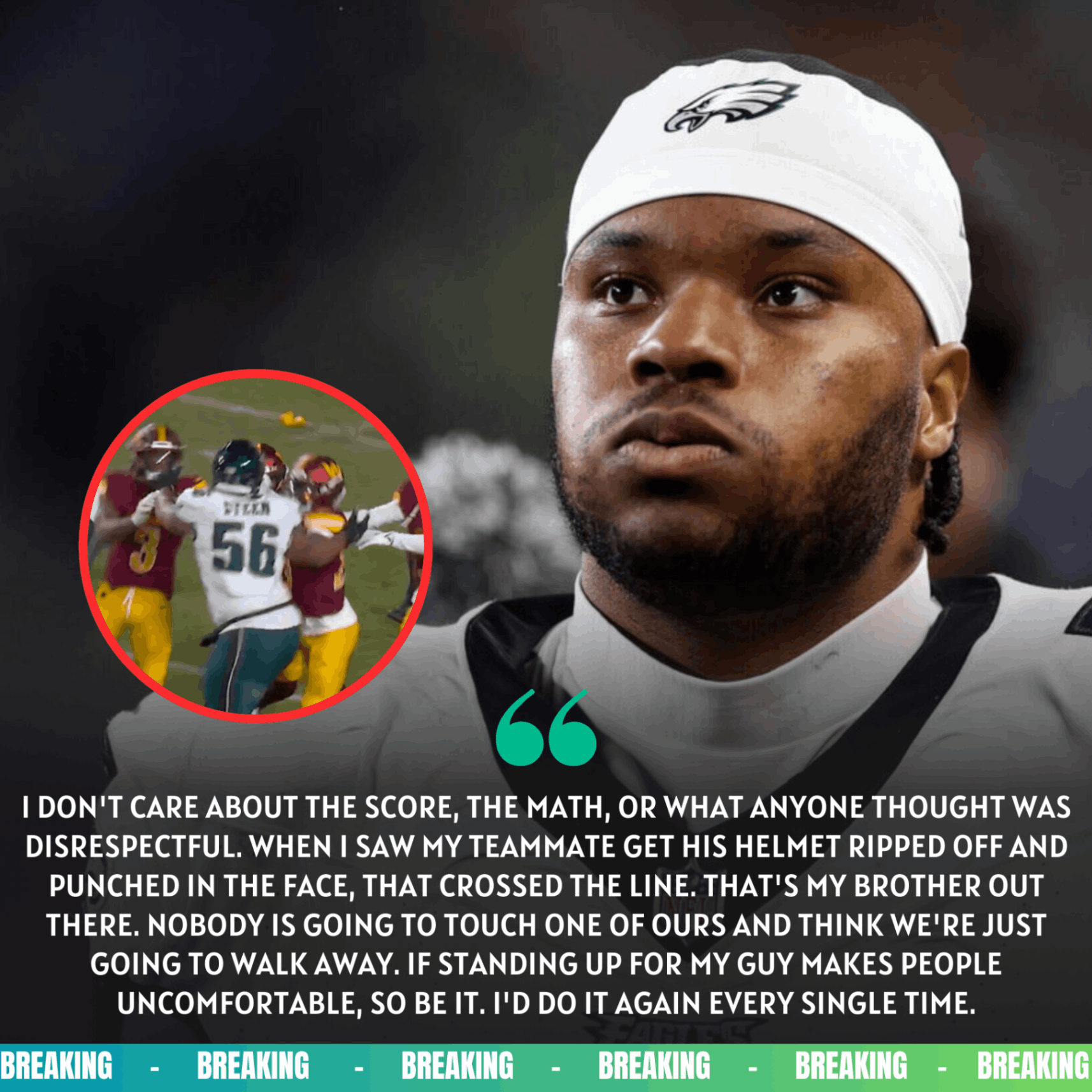
Near the end of the game, additional context emerged surrounding Steen’s role in the fight. According to the Eagles lineman, his reaction stemmed from seeing a teammate under attack. Steen said he stepped in to protect Darius Cooper after witnessing Will Harris rip Cooper’s helmet off and strike him in the face during the scrum. Steen added that words were exchanged as well, claiming Kinlaw accused the Eagles of “disrespecting” and “humiliating” the Commanders by going for two late in the game.
Steen maintained that his intent was never to escalate the situation but to stand up for a teammate he believed was being targeted:
“I don’t care about the score, the math, or what anyone thought was disrespectful. When I saw my teammate get his helmet ripped off and punched in the face, that crossed the line. That’s my brother out there. Nobody is going to touch one of ours and think we’re just going to walk away. If standing up for my guy makes people uncomfortable, so be it. I’d do it again every single time.”
That explanation adds another layer to a chaotic sequence that will likely draw further scrutiny from the league office in the coming days.
Philadelphia ultimately closed out a 29–18 victory, clinching the NFC East and officially eliminating the Dallas Cowboys from playoff contention. But as the Eagles celebrated another division title, the closing moments served as a reminder that rivalries in December can still ignite quickly, even in games that appear decided on the scoreboard.
The Philadelphia Eagles have wrestled with inconsistency in the return game throughout the season, cycling through multiple options without ever fully stabilizing the position. Despite various lineup tweaks and short-term fixes, the coaching staff never found a long-term answer, leaving special teams as one of the few lingering question marks on an otherwise playoff-ready roster.
That uncertainty opened the door for a swift and decisive move. Just one day after a surprise roster decision in Atlanta, Philadelphia acted quickly, signaling urgency as the postseason approaches. With field position becoming increasingly valuable in cold-weather games, the Eagles clearly felt the need to inject proven experience into the return unit rather than continue experimenting.
The release itself raised eyebrows around the league. According to NFL Network’s Mike Garafolo, Atlanta moved on from a veteran return specialist despite his consistent production this season. Ball security issues reportedly played a role in the decision, but the timing suggested an opportunity for a contender willing to bet on upside and pedigree.
Philadelphia saw that opportunity immediately. Over the past few weeks, the Eagles had relied on internal options to steady the return game, and while there were flashes of improvement, the ceiling remained limited. The front office instead chose to swing for experience, prioritizing a player with a track record of flipping momentum in tight games.
A former First-Team All-Pro and Pro Bowl returner, Jamal Agnew brings instant credibility to the Eagles’ special teams unit. Even during a turbulent season in Atlanta, he produced solid kickoff numbers and showed the same burst that once made him one of the league’s most feared return men. His career résumé includes multiple return touchdowns and years of consistently elite field-position impact.

The Eagles had previously rotated through Tank Bigsby and Xavier Gipson earlier in the year, but ball-handling issues and costly mistakes prevented either from locking down the role. Britain Covey’s return helped stabilize the unit recently, yet Philadelphia still lacked a true game-changing presence who could alter momentum with a single touch.
By adding Agnew, the Eagles are clearly aiming higher than stability. They are chasing explosiveness. As playoff football tightens margins and weather turns hostile, one return can be the difference between a stalled drive and a scoring opportunity. Philadelphia understands that reality, and this signing reflects a team preparing for January details.
With Super Bowl aspirations still firmly in focus, the Eagles wasted no time capitalizing on a rare late-season opportunity. Sometimes, the smallest roster move can carry outsized postseason consequences — and Philadelphia is betting that this one does exactly that.