“Black Ink, Broken Law: Jasmine Crockett Unleashes a Scathing Rebuke of Trump’s DOJ and the Illusion of Transparency”

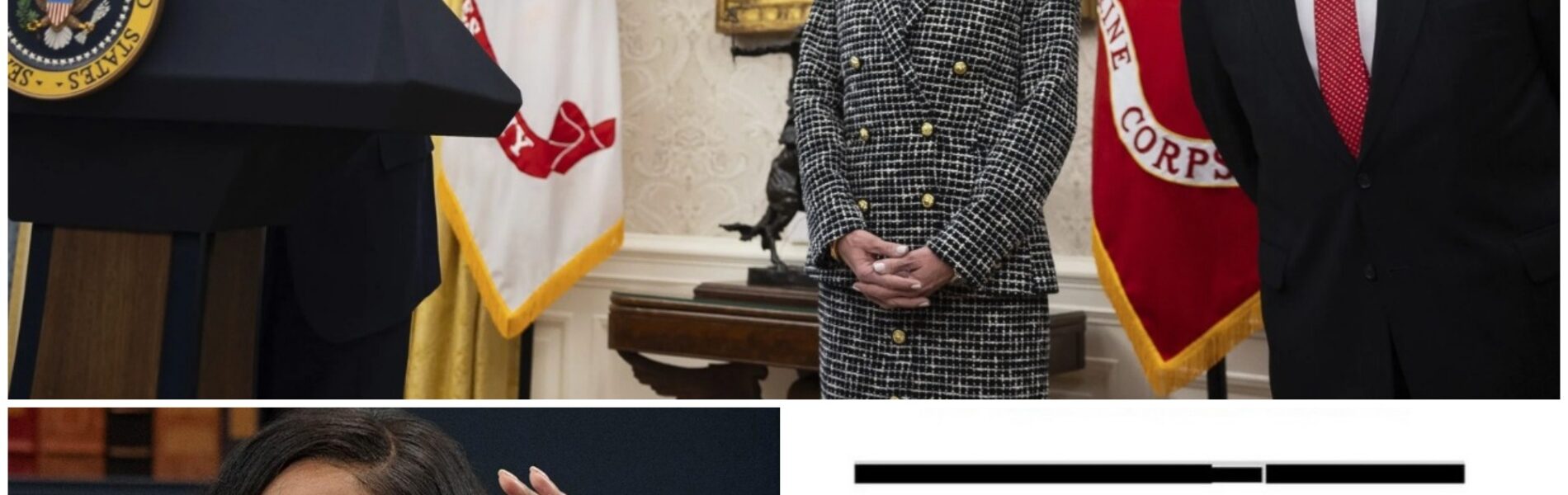
When the Department of Justice finally released what it described as compliance with a lawful congressional subpoena, the result was not clarity — it was contempt. Hundreds of pages were delivered, but they arrived stripped of meaning: entire sections drowned in black ink, names erased, context obliterated. What was missing most of all was accountability.
For Congresswoman Jasmine Crockett, the moment was not merely disappointing. It was infuriating.

“Do they really think dumping hundreds of heavily redacted pages counts as complying with the law?” she asked, cutting through the noise with surgical precision. This was no rhetorical flourish. It was a direct challenge to an institution she believes has abandoned its most fundamental obligation: telling the truth.
What followed was not a polite rebuke. It was a blistering indictment of what Crockett described as a Department of Justice hollowed out by loyalty, cowardice, and deliberate obstruction. In her view, this was not transparency — it was theater.
She accused the DOJ of sidestepping a lawful subpoena not through open defiance, but through mockery. By recycling documents already in the public domain. By flooding Congress with pages so aggressively redacted they conveyed nothing of substance. By pretending that volume could replace honesty.
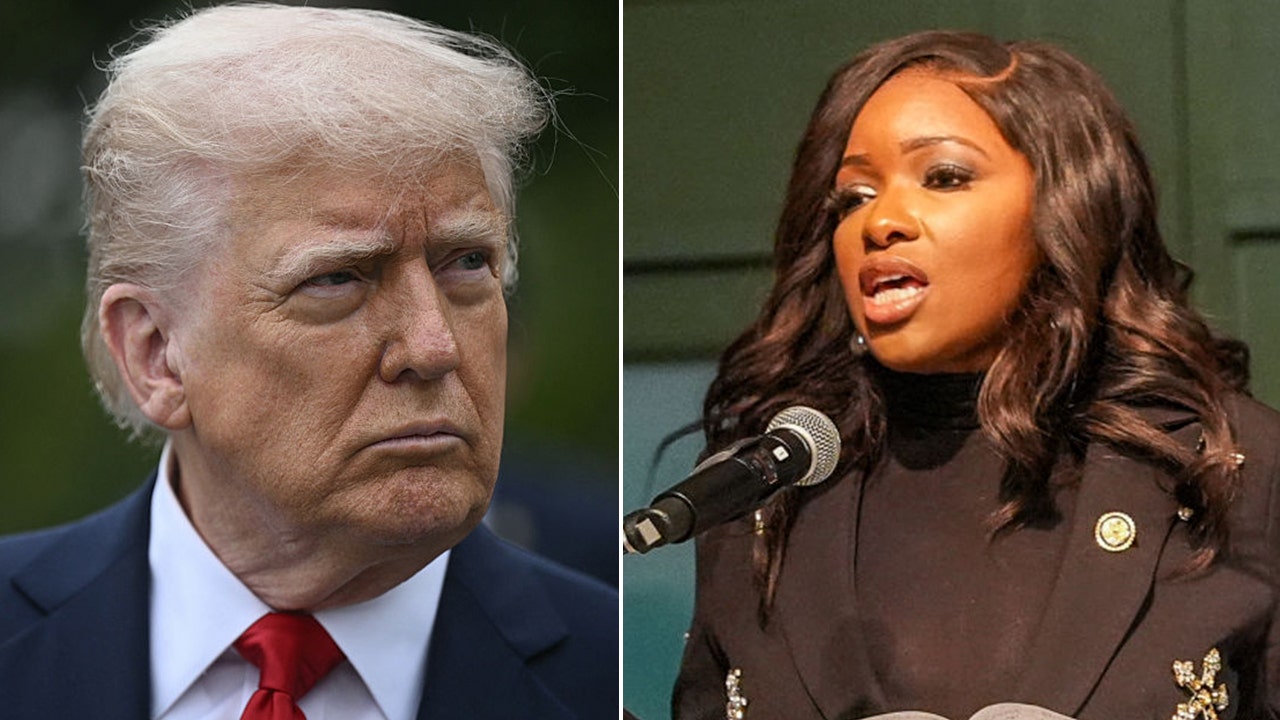
“This is next-level,” Crockett said, pointing to what she believes is a calculated strategy: overwhelm the process with paper while starving it of truth.
At the center of her outrage lies a single, glaring absence — one she argues speaks louder than any blacked-out paragraph: Donald Trump himself.
“They conveniently left out Donald Trump,” Crockett stated plainly.
Not a footnote. Not an oversight. Not a coincidence.
To her, it was the clearest proof that this was never about compliance. It was about protection.
Crockett did not mince words about where she believes responsibility lies. She described the Trump-era Department of Justice as staffed by “unqualified people with no backbone” — officials who, in her account, chose loyalty over law and silence over accountability. People who knew precisely what the law required, and chose to evade it anyway.
What makes the situation especially alarming, Crockett argued, is not only what was withheld, but what the act itself represents.
A subpoena is not a suggestion. It is not a polite request. It is the law.
And when the Department of Justice treats it as optional, the damage extends far beyond a single investigation.

“This is not transparency,” she emphasized. “This is obstruction dressed up as cooperation.”
In Crockett’s framing, the blacked-out pages become a symbol — of a justice system distorted to serve power rather than restrain it. Of institutions that hide moral failure behind technical compliance. Of a government that demands public trust while actively concealing the truth.
She warned that this behavior sets a dangerous precedent. If the DOJ can ignore Congress without consequence, what message does that send to every other federal agency? To whistleblowers? To ordinary citizens who still believe the law applies equally?
The implications, she argued, are chilling.
Because this is not just about Donald Trump.
It is about whether the justice system can be bent to shield the powerful — and whether anyone will be held accountable when it is.
Crockett’s tone carried not only anger, but urgency. She framed the moment as a crossroads: either the country demands real accountability, or it accepts a future in which transparency is reduced to performance art.

“You don’t comply with the law by hiding behind black ink,” her message implied. “You comply by telling the truth — even when it’s uncomfortable. Especially when it’s uncomfortable.”
That message resonates beyond partisan lines because it taps into a deeper, widely shared frustration: the sense that there is one set of rules for ordinary people, and another for those at the top.
In the end, Crockett made one thing clear. She will not allow the issue to fade quietly away. Redactions will not silence her. Bureaucratic games will not exhaust her. And performative compliance will not be allowed to pass as justice.
Because democracy cannot survive on blacked-out pages and broken promises.
And the law cannot function when those sworn to uphold it decide they are above it.