There are moments in history when time seems to stop, and the entire world breathes in unison. One such moment occurred on April 12, 2020. The setting was the Piazza del Duomo in Milan, Italy—a place usually teeming with thousands of tourists, street performers, and the vibrant chaos of Italian life. But on that Easter Sunday, the square was deathly silent. Italy, and indeed the entire globe, was in the iron grip of the first wave of the COVID-19 pandemic. Millions were locked in their homes, fear was the dominant global currency, and a profound sense of grief hung over the empty streets.
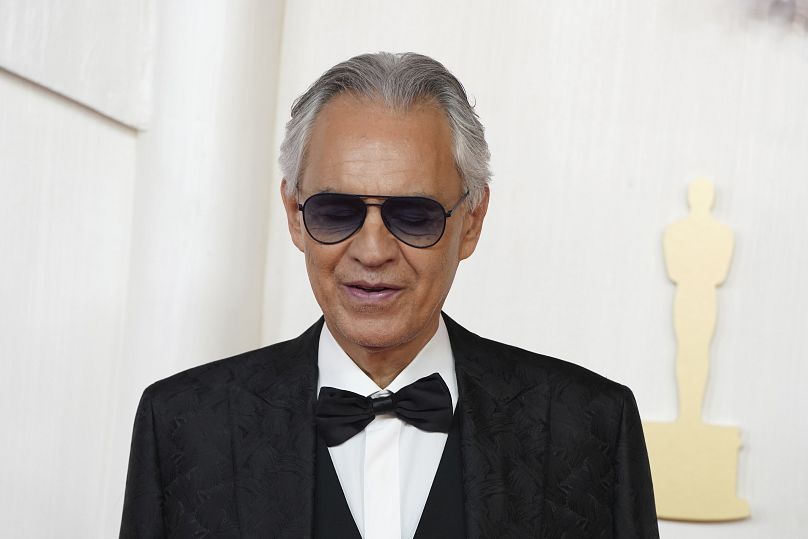
Into this eerie silence stepped one man: Andrea Bocelli. Without an audience, without a choir, and with only the accompaniment of an organist, he delivered a performance titled “Music for Hope.” It would go on to become the most-watched classical live stream in history, but its impact wasn’t measured in views—it was measured in the healing it provided to a trembling world.
A Stage of Solitude
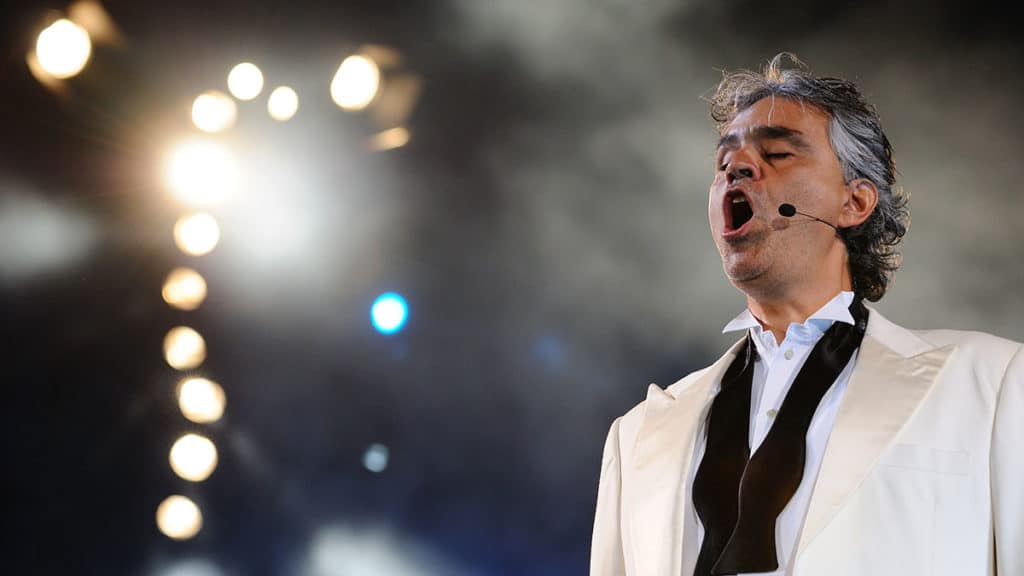
The visual imagery of that day remains etched in the collective memory of humanity. The cameras panned across the deserted streets of Milan, Paris, London, and New York—cities that had been brought to their knees by an invisible enemy. When the doors of the magnificent Duomo di Milano opened, they didn’t reveal a grand ceremony. Instead, they revealed a lone figure in a tuxedo, his eyes closed, standing in the vast, echoing cavern of the cathedral.
This was not a concert in the traditional sense. There was no applause, no flashbulbs, no standing ovations. Bocelli stood there as a representative of us all—vulnerable yet dignified. By choosing to perform in an empty cathedral, he turned the isolation we were all feeling into something sacred. He showed the world that even when we are physically apart, we can be spiritually united through the language of music.
The “Amazing Grace” That Shook the World
The climax of the performance happened outside. Bocelli walked slowly onto the steps of the Duomo, facing the empty piazza. Without a microphone, he began to sing “Amazing Grace” a cappella. His voice, stripped of all electronic enhancement, traveled across the empty stones of Milan and out into the digital screens of over 28 million people watching live.
In that moment, the song transcended religion and politics. It became a primal cry for resilience. As he reached the final notes, the camera showed drone footage of the world’s most famous landmarks, all silent and abandoned. The contrast between the fragile human voice and the massive, empty architecture of civilization was overwhelming. It reminded us that while our structures and systems could be shut down, the human spirit remained unyielding.
The Science and Soul of Healing
Why did this specific performance have such a profound psychological impact? Why did millions of people, many of whom had never listened to opera before, find themselves weeping at their kitchen tables?
Psychologists and musicologists suggest that Bocelli’s voice possesses a unique “healing power” (healing frequency). His timbre—a rare blend of warmth, vibrato, and a slight, characteristic “crack” or rasp—mimics the frequencies of human comfort. In music therapy, certain vocal textures are known to lower cortisol levels and trigger the release of oxytocin. Bocelli’s voice, which carries the weight of his own personal journey through darkness, resonated as an “honest” sound. It didn’t try to hide the pain of the moment; it acknowledged the pain and offered a hand to hold.

Furthermore, for a world feeling “blind” to the future, Bocelli was the perfect messenger. Having lived most of his life without sight, he has spent decades navigating a world he cannot see through faith and sound. He was a living metaphor for the pandemic: we couldn’t see the exit, we couldn’t see the enemy, but we could still move forward if we listened to the right voice.
Music as a Spiritual Bridge
During the performance, Bocelli sang a selection of sacred pieces, including Ave Maria and Sancta Maria. For those who were religious, it was a profound Easter service. For those who were not, it was a meditation on human continuity. He bypassed the intellect and spoke directly to the soul.
In his own words, Bocelli didn’t view the event as a “show.” He said, “I believe in the strength of praying together; I believe in the Christian Easter, a universal symbol of rebirth that everyone—whether they are believers or not—truly needs right now.” This universality was key. In that hour, there were no borders. A person in a high-rise in Shanghai was feeling the exact same shiver down their spine as a person in a farmhouse in Kansas. He used his gift to build a bridge across the canyons of our shared fear.
The Legacy of the Miracle
The 2020 Easter Miracle proved that art is not a luxury; it is a necessity. When the world was stripped of its commerce, its travel, and its social gatherings, it turned to a blind tenor from Tuscany to find its way back to hope.
The performance remains a digital monument to a time of global crisis. Today, when we re-watch the footage of Bocelli standing alone in the Piazza del Duomo, it serves as a reminder of how far we have come. It reminds us that even in our darkest hours, the human voice has the power to shatter the silence. It reminds us that we are never truly alone as long as we have a song to share.
Andrea Bocelli did more than just sing that day; he administered a global dose of medicine. He took a broken, terrified world and, for twenty minutes, made it feel whole again. That is the true miracle of the Duomo.