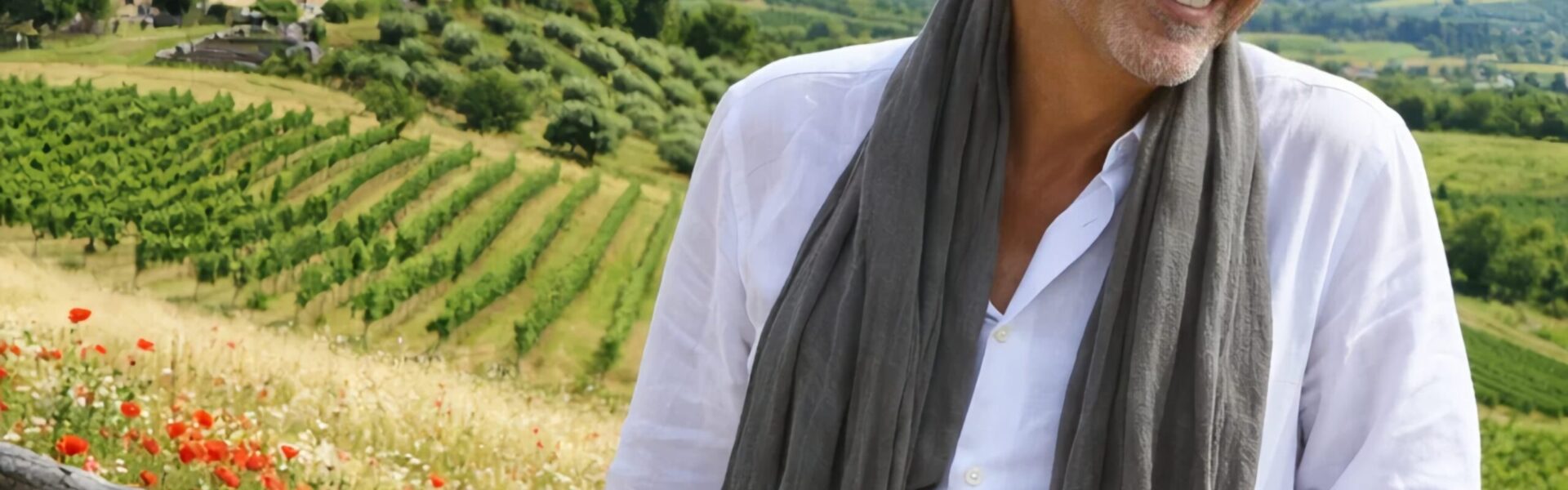

To the world, Andrea Bocelli is a titan of the stage, a man whose voice fills the most prestigious opera houses and stadiums from London to New York. But when the tuxedo is hung up and the final standing ovation fades, the Maestro returns to a place where he isn’t a global icon, but a son of the soil. This is the Tuscany of Andrea Bocelli—a landscape of rolling golden hills, ancient cypress trees, and the earthy scent of ripening grapes.
To understand the man, one must understand his “Private Tuscany.” It is here, among the sunsets and sunflowers, that Bocelli finds the silence he needs to sing, the family bonds that ground him, and the connection to nature that fuels his soul.
The Roots of Lajatico
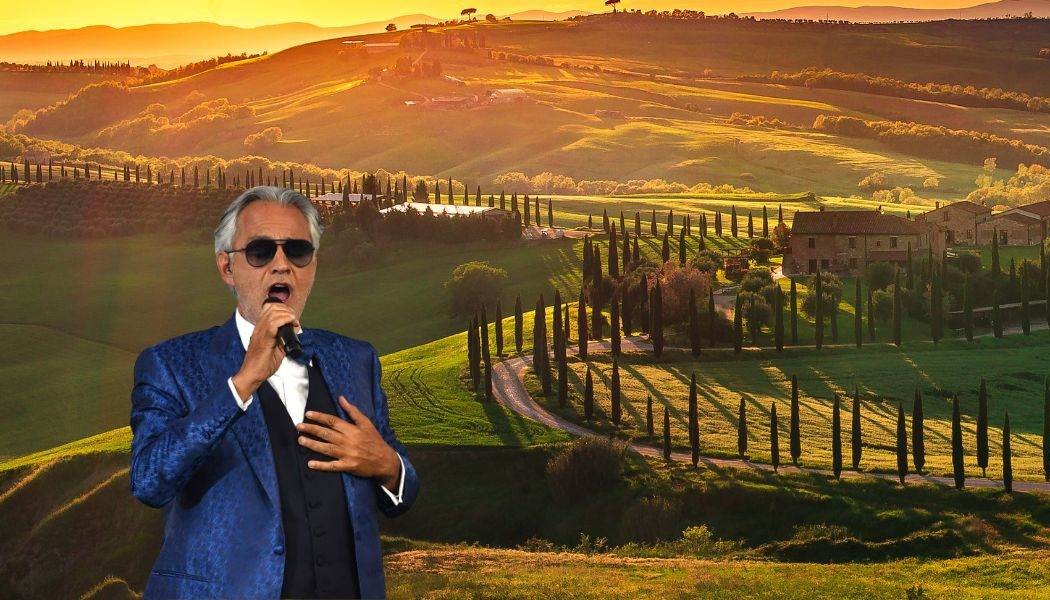
Andrea Bocelli was born and raised in Lajatico, a small village in the province of Pisa that seems to have been painted by the Renaissance masters. Unlike many stars who move to glamorous hubs like Los Angeles or London, Bocelli chose to build his life exactly where his ancestors did. His estate, located in the heart of the Val d’Era, is not just a house; it is a sanctuary.
Life here moves at a different pace. The morning air is filled with the sound of cicadas and the distant clip-clop of hooves. Bocelli often speaks of the “honesty” of the Tuscan landscape. For a man who cannot see the colors of the sunset, he describes them through the warmth of the light on his skin and the specific fragrance of the Tuscan evening—a mix of rosemary, dry grass, and wild jasmine. In Lajatico, he is not “The Tenor”; he is Andrea, a neighbor and a countryman.
The Art of the Vine: Bocelli Family Wines
One of the most intimate parts of Bocelli’s private life is his deep involvement in the family’s wine-making tradition. For over 180 years, the Bocelli family has produced wine on their small estate. While Andrea’s career took him to the heights of fame, his brother Alberto and their families have kept the soil alive.
The Bocelli Family Wines are not a mere celebrity branding exercise; they are a labor of love. Visitors to the region often catch glimpses of the family during harvest season, a time of communal joy. Andrea himself is deeply connected to the process. He often spends time in the vineyards, walking between the rows of Sangiovese and Cabernet grapes. He enjoys the sensory experience of the winery—the cool dampness of the cellar, the oaky aroma of the barrels, and the “singing” of the fermenting wine. For him, a bottle of wine is like a song: it requires patience, the right conditions, and a soul to give it character.
A Man and His Horses
Perhaps the most iconic image of Bocelli’s Tuscan life is that of him galloping across a field on a powerful white horse. Horses have been his passion since childhood, providing him with a sense of freedom and mobility that his blindness might otherwise deny him.
His stables are home to several magnificent specimens, including his beloved Andalusians. Bocelli doesn’t just ride; he communicates with these animals. In the silence of the Tuscan hills, he relies on the horse’s instincts, creating a partnership built on absolute trust. “When I am on a horse, I feel the wind and the space around me in a way that is liberating,” he has said. These solo rides through pine forests and sunflower fields are his form of meditation, a way to recharge away from the scrutiny of the public eye.
The Music of the Home: A Piano and a View
Inside his villa, the atmosphere is one of “elegant simplicity.” The centerpiece of the home is undoubtedly the grand piano. It sits in a room with high ceilings and large windows that overlook the rolling hills. Here, Bocelli spends hours practicing, but also playing for pleasure.
There is a profound beauty in imagining the Maestro sitting at a wooden piano in the middle of a quiet afternoon, playing a simple melody while his children, Matteo or Virginia, sing along. These are the moments the public never sees—the unrehearsed, raw beauty of a family united by music. The home is often filled with the laughter of his wife, Veronica, and the bustling energy of a traditional Italian household. There is no pretense here; lunch is a long affair of homemade pasta, fresh olive oil from their own trees, and lively conversation.
The Teatro del Silenzio (Theater of Silence)
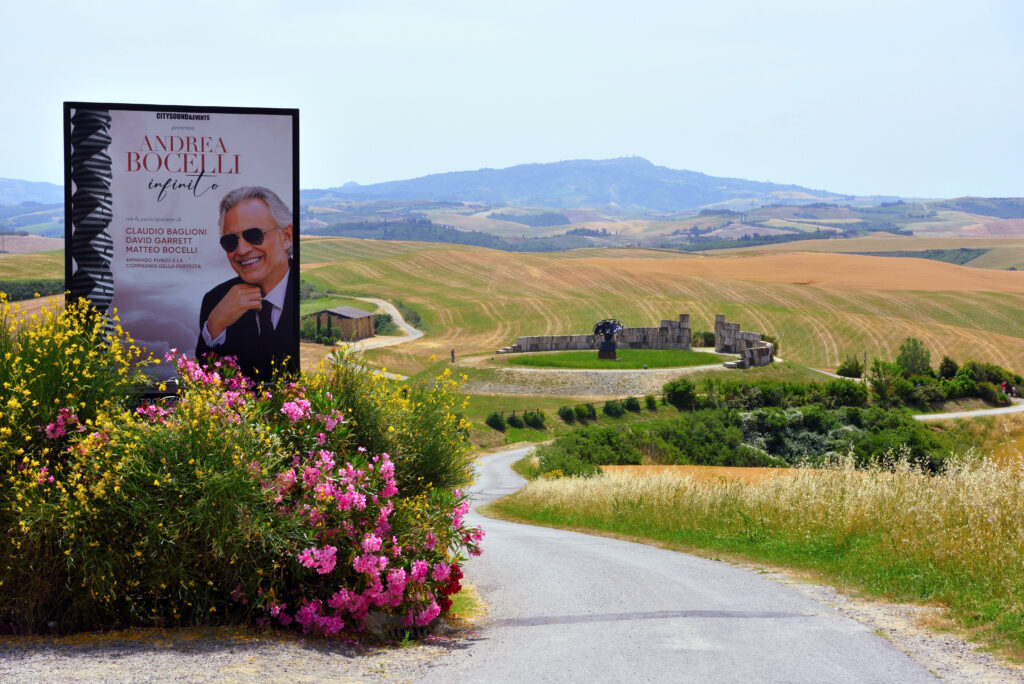
One cannot discuss Bocelli’s Tuscan life without mentioning the Teatro del Silenzio. Built in 2006 in his hometown of Lajatico, this open-air amphitheater is unique: it remains silent for 364 days a year. Only for one night in July does it come alive with music, as Bocelli invites his world-famous friends to perform under the Tuscan stars.
This theater is the ultimate tribute to his homeland. It sits in a natural depression in the hills, with no permanent structures, allowing the landscape to remain pristine. For Bocelli, this is his “giving back” to the soil that raised him. It is a place where the grandeur of opera meets the humility of the earth.
Why Tuscany Matters
For the millions who follow him, Bocelli’s Tuscan life offers a lesson in values. In an age of digital distraction and fleeting fame, he chooses the permanent and the slow. He chooses the sunsets over the neon lights. He chooses the sunflower fields over the red carpet.
His love for his homeland is the secret ingredient in his voice. When he sings of love or longing, he is drawing from the well of his experiences in these hills. The grit of the soil, the salt of the Mediterranean breeze, and the warmth of the Italian sun are all present in his vibrato. Tuscany is not just where he lives; it is who he is.
As the sun sets over the Val d’Era, casting long shadows across the olive groves, Andrea Bocelli finds his peace. The world may clamor for his voice, but here, in the silence of his private estate, he finds his song.
https://www.youtube.com/watch/-iduS4T5_9c