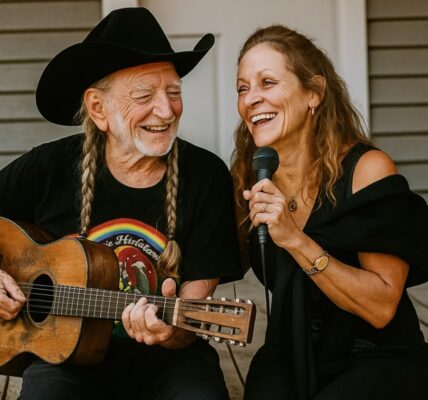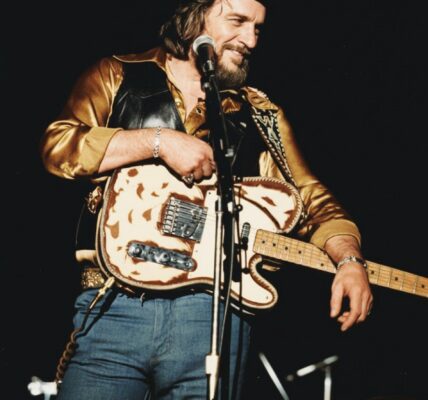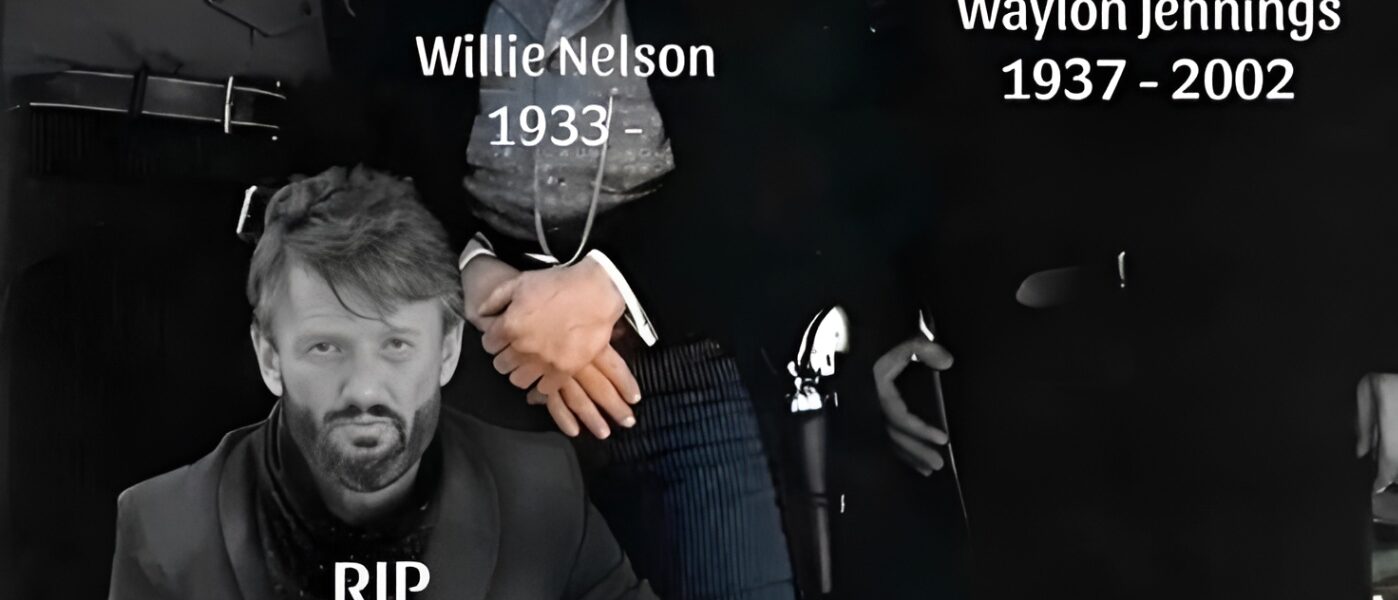
FOUR LEGENDS. ONE STILL BREATHING. Some photos don’t need explaining. One look is enough to make your chest tighten.

Four Legends. One Still Breathing.
Some photographs don’t ask for interpretation. They don’t need captions or context. One look is enough to slow your breath, to tighten your chest in a way that feels both heavy and grateful. They carry the weight of time without saying a word.
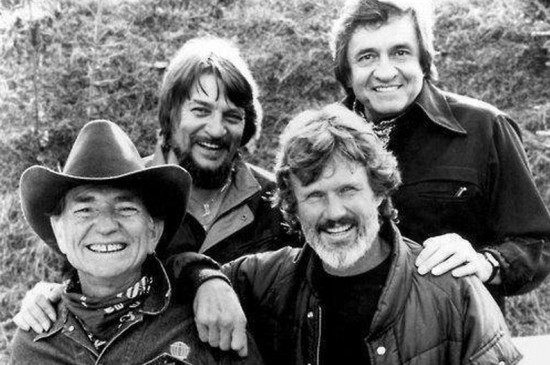
There is such a photo of four men who once stood side by side—four voices that shaped not only a genre of music, but an era of American storytelling. At the time the photo was taken, they were simply alive together, sharing space, sharing smoke-filled rooms, shared stages, shared roads. No one thought of them as history yet. They were just men making songs.
Now, three of them have crossed quietly into time.
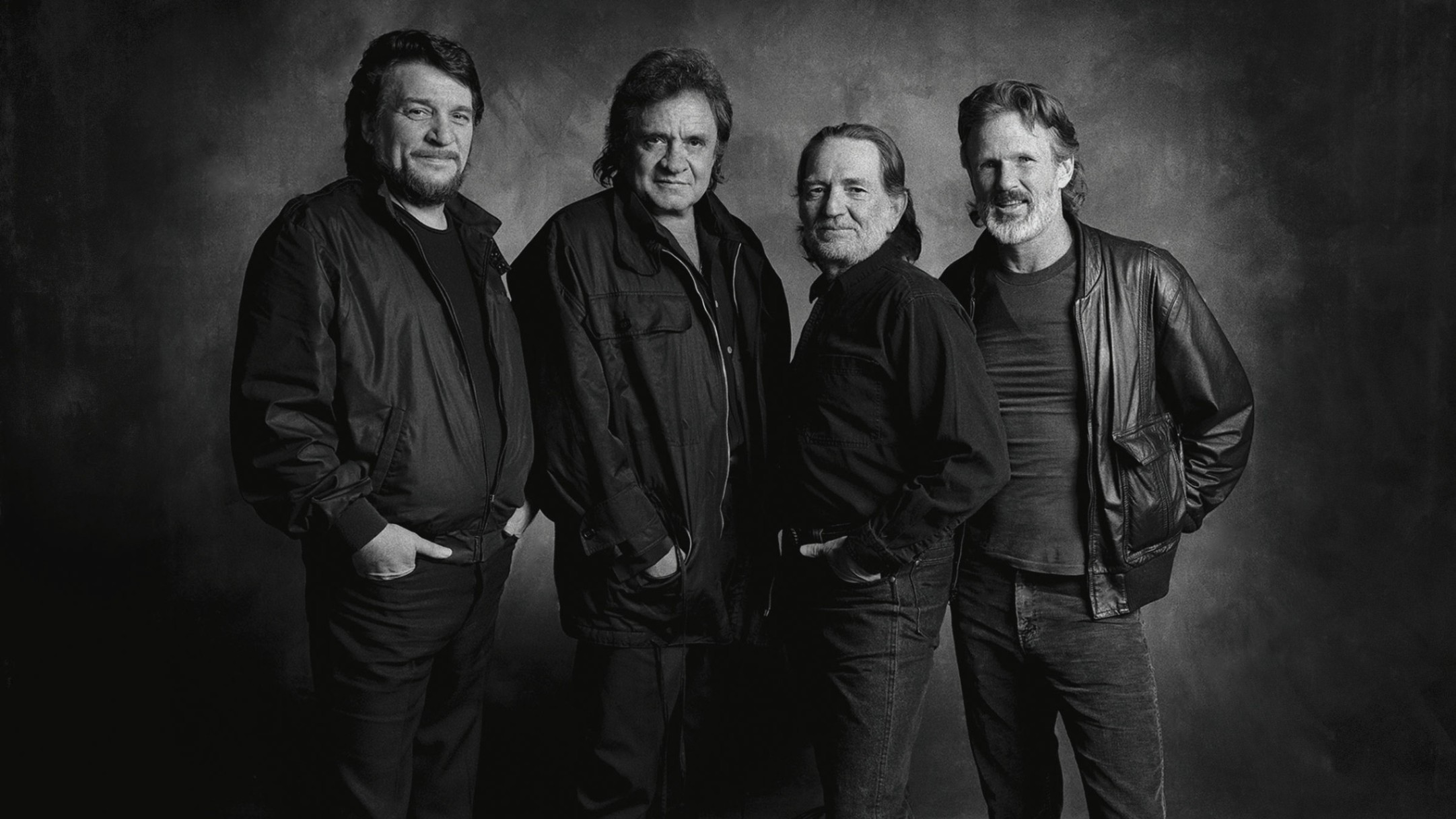
Johnny Cash.
Waylon Jennings.
Kris Kristofferson.
Each name feels like a chapter that has gently closed, not slammed shut, but laid down with care. Their voices still play on radios and playlists, still echo through old vinyl and cracked speakers, but the men themselves have slipped into memory. What remains is legacy—etched not in marble, but in melody.
And then there is Willie Nelson.
Ninety-one years old. Still breathing. Still here.
Not untouched by time, but carrying it. Not racing forward, but moving slowly, deliberately, with the awareness of someone who understands exactly how fragile and precious each step is. Willie is not frozen in that photograph; he continues beyond it, into days the others never saw.
He carries the dust of old highways—literal dust from thousands of miles traveled in vans and buses, and symbolic dust from a life lived on the margins and in the spotlight at the same time. He carries the weight of long nights, of songs written after midnight, of conversations that stretched until dawn, of losses that never fully fade.
He also carries the memory of an America that no longer exists.
An America where radio DJs broke artists because they believed in them, not because an algorithm told them to. An America where music didn’t need polish to be honest, where imperfections were proof of truth. An America where outlaw wasn’t a brand, but a refusal to bend.
Johnny Cash carried that America in his thunder and his mercy. His voice sounded like judgment and forgiveness at once, reminding listeners that redemption was always possible, even when the road was dark.
Waylon Jennings carried it in defiance. In his refusal to play by Nashville’s rules. In his insistence that artists deserved control over their own sound, their own stories. He sang like a man who knew freedom came with consequences and chose it anyway.
Kris Kristofferson carried it in poetry. In words that cut deeper than hooks ever could. He wrote about broken people with tenderness, about love that hurt and faith that wavered. He proved that country music could be literature, that three minutes could hold a lifetime.
And Willie Nelson carries all of them.
He carries their laughter, their arguments, their shared stages and shared silence. He carries the memory of nights when all four were alive at once, unaware that one day he would be the last witness to those moments.
The photograph stays still. Time does not.
Every year that passes sharpens the image. It turns the photo from a snapshot into a symbol. It reminds us that legacies don’t disappear when people do—they consolidate. They gather. They rest, sometimes, in the hands of the one who remains.
There is something profoundly human about being the last one standing. It is not a victory. It is a responsibility.
Willie doesn’t just represent himself anymore. He represents an entire lineage of sound, rebellion, vulnerability, and truth. When he steps onto a stage now, he brings ghosts with him—not haunting ones, but guiding ones. The kind that whisper, Remember this. Don’t let them forget.
He is careful now. Not because he is afraid, but because he understands the weight of continuation. Each breath, each lyric, each appearance becomes a form of storytelling by presence alone.
And yet, Willie has never spoken like a curator of history. He doesn’t announce himself as a survivor. He just keeps playing. Keeps singing. Keeps showing up. That, perhaps, is the most honest tribute he can offer.

The question, though, refuses to stay quiet.
When the last one is standing, who will tell the story for us?
Who will remember not just the songs, but the spaces between them? The moments before fame solidified, when everything still felt uncertain and possible at the same time? Who will remember what it felt like when country music wasn’t chasing trends, but chasing truth?
Stories don’t disappear when the people who lived them do—but they change. They rely on listeners. On caretakers. On those willing to sit with an old photograph and feel something instead of scrolling past it.
Maybe that’s why this image matters so much. It reminds us that legends are not eternal by default. They survive because someone remembers. Someone listens. Someone asks the question instead of avoiding it.
Willie Nelson is still breathing. Still here. Still carrying the weight.
But one day, that photo will hold four men who are all gone.
When that day comes, the responsibility shifts—to us.
To remember them not as myths, but as men. To keep the songs alive not as nostalgia, but as living truths. To tell the story carefully, honestly, without sanding down the rough edges that made it real.
Some photos don’t need explaining.
But they do need remembering.
And as long as Willie Nelson is still breathing, the story is still being told—one slow step, one worn lyric, one remaining voice at a time.
:max_bytes(150000):strip_icc():focal(999x0:1001x2)/the-highwaymen-093024-8-075b9529202046ceb5b036e3cce60962.jpg)