❄️🔫 IN THE FROZEN WILDERNESS, EVERY FOOTPRINT TELLS A STORY.
SHADOWS ON THE SNOW: Why Taylor Sheridan’s Wind River Remains a Devastating, Essential Neo-Western Masterpiece
By Staff Writers
Published: October 21, 2026
LOS ANGELES — Few modern films capture the stark, suffocating isolation of the American frontier with the visceral intensity of Taylor Sheridan’s 2017 neo-Western thriller, Wind River. Serving as the thematic culmination of Sheridan’s acclaimed “American Frontier” trilogy—following Sicario (2015) and Hell or High Water (2016)—the film shifts its lens away from the sun-scorched borderlands of the Southwest to the freezing, snow-covered expanse of the Wind River Indian Reservation in Wyoming.
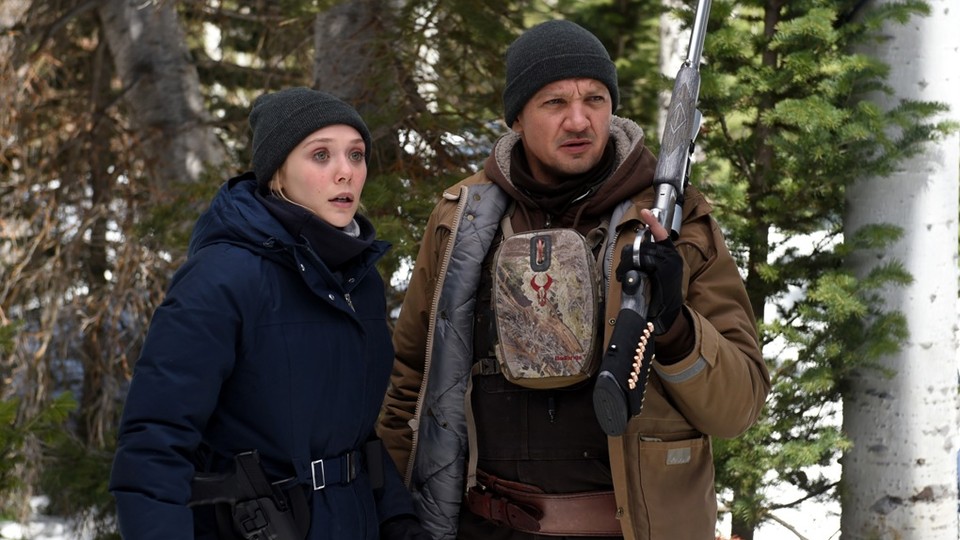
Part gripping murder mystery, part haunting social commentary, Wind River is a cinematic punch to the gut. It exposes a chilling, often overlooked reality of modern America: the systemic neglect, historical trauma, and epidemic of violence surrounding Indigenous women living on tribal lands.
The Silent Wilderness and the Finding of Natalie
The narrative opens with a haunting image: a barefoot young woman running through sub-zero snow in the dead of night, coughing blood into the freezing air before collapsing into the silent wilderness.
The body is discovered miles from civilization by Cory Lambert (Jeremy Renner), a tracker for the U.S. Fish and Wildlife Service whose daily job involves hunting mountain lions and wolves that prey on local livestock. The victim is eighteen-year-old Natalie Hanson (Kelsey Asbille), a local Native American woman whose death by pulmonary hemorrhage—caused by inhaling sub-zero air while running in terror—instantly signals foul play.
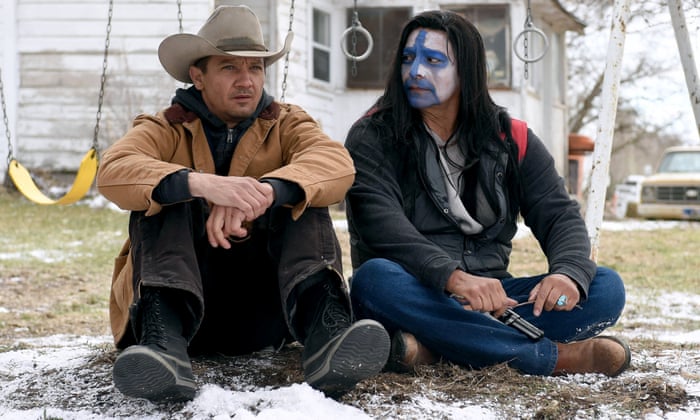
Because the crime occurred on an Indian reservation, jurisdictional complexities immediately stall the investigation. Enter Jane Banner (Elizabeth Olsen), a green, under-equipped FBI rookie dispatched from Las Vegas simply because she was the closest agent available. Unprepared for the brutal Wyoming winter and unfamiliar with local tribal dynamics, Banner quickly realizes she is out of her depth. She enlists Lambert, whose intimate knowledge of the terrain, tracking skills, and personal ties to the community make him an indispensable ally.
Jeremy Renner’s Career-Best Performance
At the heart of Wind River lies Jeremy Renner’s most nuanced, emotionally resonant performance to date. Cory Lambert is not a typical bulletproof action hero; he is a man hollowed out by grief. Years prior, his own teenage daughter—who was half-Native American—died under mysteriously similar, unresolved circumstances on the reservation.
Renner portrays Lambert with a quiet, stoic dignity that hides an ocean of pain. He understands the brutal laws of nature better than anyone:
-
The Rule of the Wild: In the freezing wilderness, nature does not negotiate. Luck and preparation dictate survival, and predators do not feel remorse.

-
Grief as a Companion: In a poignant scene with Natalie’s grieving father, Martin (a heartbreaking performance by Gil Birmingham), Lambert offers no hollow platitude or false comfort. Instead, he delivers a grounded truth: grief never leaves, but accepting it is the only way to honor those who were lost.
Opposite Renner, Elizabeth Olsen delivers a standout turn as Agent Banner. Far from a helpless outsider, Banner possesses grit, professional discipline, and a willingness to listen—traits that earn her the trust of a community deeply skeptical of federal law enforcement.
The Anatomy of Violence: A Masterclass in Tension
Taylor Sheridan’s direction relies on slow-burning atmospheric dread, punctuated by sudden, explosive violence. Unlike traditional Hollywood thrillers where action is stylized and sanitized, the violence in Wind River is heavy, chaotic, and terrifyingly realistic.
This dynamic culminates in a climactic standoff at a remote oil drilling camp tucked away in the mountains. The confrontation between local tribal police, FBI agents, and private security contractors builds with unbearable tension, eventually exploding into a close-quarters gunfight where every gunshot carries thunderous, bone-shattering weight.
When the truth behind Natalie’s murder is finally revealed through a painful flashback, it highlights human depravity at its worst. The killers are not criminal mastermind villains; they are bored, isolated, and entitled men who used the geographic and legal lawlessness of the reservation to commit an act of unspeakable cruelty.
The Political and Social Core: A Forgotten Tragedy
What elevates Wind River from a standard crime thriller into a lasting piece of cinema is its unyielding commitment to social truth.
Throughout the film, Sheridan highlights the systemic inequities faced by Native American communities:
-
Jurisdictional Void: Tribal police forces are severely underfunded and understaffed, forced to cover vast territories with minimal resources while federal agencies treat reservation crimes as secondary priorities.

-
The Invisible Epidemic: The film confronts the alarming real-world statistic regarding missing and murdered Indigenous women (MMIW). On many reservations, Indigenous women face murder rates more than ten times the national average, often without proper tracking or investigation by law enforcement.
The film’s closing title card delivers a stark, sobering reality check to the audience: While missing person statistics are compiled for every other demographic in the United States, no such record exists for Native American women.
A Modern Classic of American Cinema
Supported by Nick Cave and Warren Ellis’s haunting, minimalistic musical score and Ben Richardson’s breathtaking cinematography—which frames the pristine white landscapes of Wyoming as both stunningly beautiful and indifferent to human survival—Wind River stands as a monumental work.
It is a film that refuses to offer neat, comforting answers. Instead, it leaves viewers with a profound sense of quiet reverence for those who endure in the coldest corners of the world, reminding us that while snow may cover the tracks of a crime, the truth demands to be hunted down.
https://www.youtube.com/watch?v=ZgZVHqr6L9U
