Caitlin Clark Stands Her Ground as Kelsey Plum Calls for a Harder Mentality — A Defining Moment for the WNBA

The conversation didn’t begin with raised voices or dramatic ultimatums. It started, as many pivotal moments in sports do, with a difference in tone.
On one side stood Caitlin Clark — the league’s most visible star, a player whose value is inseparable from packed arenas, soaring ratings, and a generation of fans discovering women’s basketball for the first time. On the other stood Kelsey Plum — a champion, a veteran, and a prominent voice in labor discussions, urging players to toughen up, hold the line, and prepare for sacrifice.
What sounded like a disagreement about mentality quickly revealed itself as something far larger: a philosophical split over how the WNBA should fight for its future.

Two Voices, Two Perspectives
Clark’s stance has been consistent, even if it’s often misunderstood. She has emphasized urgency, momentum, and the importance of keeping the game on the floor. In her view, visibility is power. Growth is leverage. And every missed game is not just a bargaining chip lost, but a fan who might never come back.
Plum’s message, by contrast, has been sharper. Her comments — interpreted by many as a call for a “stronger mindset” — reflect a belief that meaningful change only comes when players are willing to endure discomfort. If that means tension, public criticism, or even a lost season, then so be it. Rights, in this framework, are not requested. They are forced.
Neither position is reckless. Neither is naïve. But they point in different directions.
The Shadow of the CBA
Hovering over the debate is the unresolved Collective Bargaining Agreement, the most consequential labor moment the WNBA has faced in years. Proposals involving higher average salaries, expanded revenue sharing, and improved benefits have stalled. The word “lockout” — once unthinkable — is now part of the conversation.
For veteran leaders like Plum, this is familiar territory. Progress in women’s sports has rarely come easily, and patience has often meant postponement. From that lens, pushing hard feels not only justified, but necessary.
Clark, however, represents a new variable — one the league has never truly had before. Her presence has shifted the economic equation in real time. Attendance spikes. Merchandise sells out. Broadcast numbers surge. The league isn’t just growing; it’s accelerating.
That’s why her caution resonates with so many rank-and-file players.
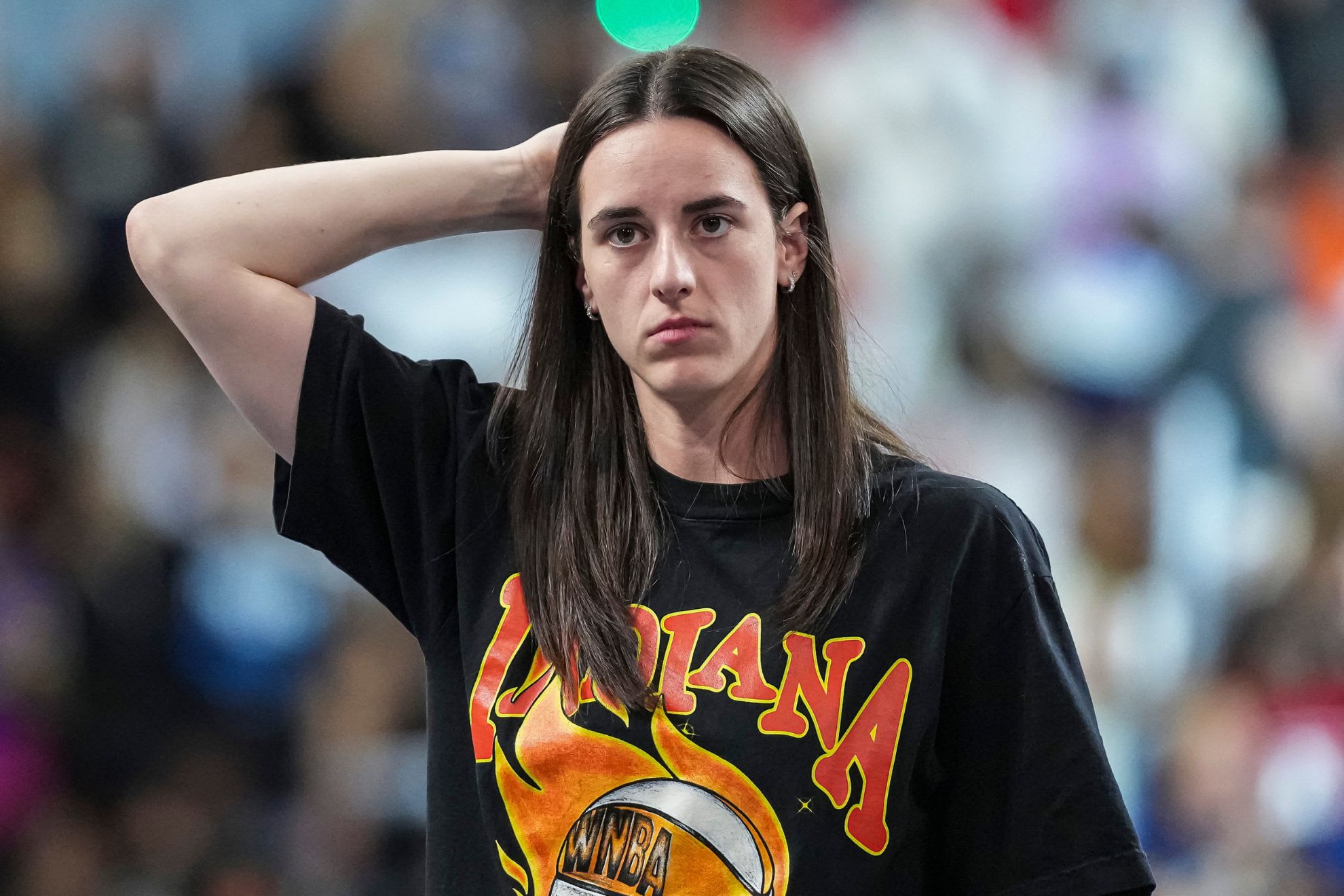
What the Cameras Don’t Show
Behind closed doors, the divide is less dramatic than social media suggests. Sources close to players describe not factions, but anxieties. For stars with endorsements and alternative income streams, a shutdown is survivable. For players on minimum contracts or fighting for roster spots, it’s existential.
This is where Clark’s voice carries unusual weight. She doesn’t speak like a negotiator. She speaks like a competitor who understands timing.
“Momentum,” she has said in different ways, “is fragile.”
That idea unsettles traditional labor playbooks. But it also reflects reality in a league still fighting for mainstream stability. Women’s basketball is finally commanding attention beyond highlight clips — and Clark knows how easily that attention can drift.
Mental Toughness vs. Strategic Patience
Plum’s challenge to adopt a tougher mentality wasn’t a personal attack, but it landed that way for some. The implication — that hesitation equals weakness — rubbed against Clark’s message of calculated urgency.
Yet toughness comes in more than one form.
There is the toughness of withholding labor.
And there is the toughness of staying visible while demanding change.
Clark embodies the latter. She absorbs criticism, shoulders expectations, and understands that her value grows every time she plays — not just for herself, but for the league as a whole. Her confidence isn’t loud, but it’s unyielding.
“She’s not backing down,” one league insider noted. “She’s just choosing a different battlefield.”

A League at a Crossroads
This moment feels heavier because it isn’t theoretical. The 2026 season looms as a real casualty if talks collapse. Expansion teams are preparing. Sponsors are watching. Fans — many of them new — are forming habits that could last decades or disappear overnight.
In that context, leadership isn’t about who speaks the hardest. It’s about who sees the whole board.
Plum sees history. Clark sees trajectory.
The tension between those views is uncomfortable, but it may also be productive. For the first time, the WNBA’s internal debates are happening in public, fueled by relevance rather than neglect. That alone marks progress.
What Happens Next?
No one wins if the league fractures. No one wins if players are pitted against players. And no one wins if a season disappears at the exact moment the sport is breaking through.
The path forward likely won’t look like a victory for one side over the other. It will look like compromise shaped by pressure — pressure from fans, from finances, and from the undeniable reality that women’s basketball is finally too valuable to ignore.
Caitlin Clark standing tall doesn’t mean Kelsey Plum is wrong.
Kelsey Plum pushing harder doesn’t mean Clark lacks resolve.
It means the league has entered a new phase — one where ideas matter as much as demands, and where mentality isn’t measured by how much you’re willing to lose, but by how carefully you protect what you’ve built.
The debate isn’t over toughness.
It’s over timing.
And the future of the WNBA may depend on whether it can balance both.
https://www.youtube.com/watch/87lWaalzNaM