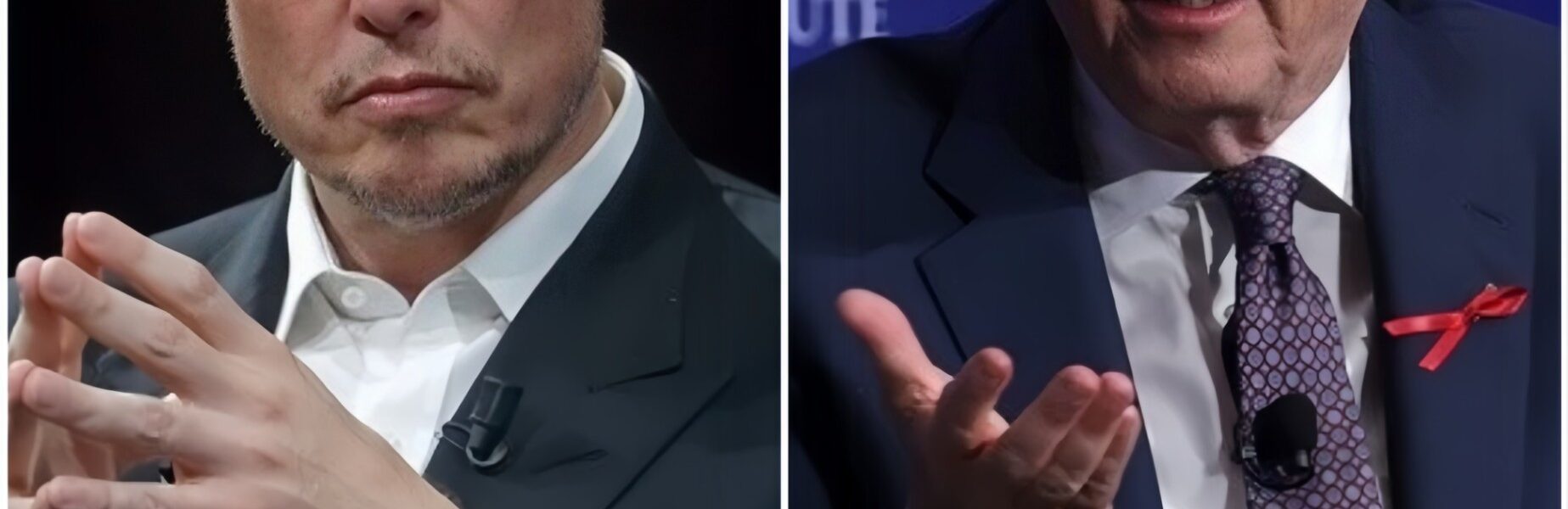
Elon Musk strikes again! Tesla CEO Elon Musk publicly calls out Bill Gates for shorting Tesla and selling off Microsoft shares, claiming these moves cost Gates billions and even the chance to become the first trillionaire!

In the ever-turbulent world of tech billionaires and high-stakes investments, Elon Musk has once again taken aim at Bill Gates, highlighting what he describes as a costly miscalculation on the Microsoft co-founder’s part.
The Tesla CEO publicly called out Gates for maintaining a significant short position against Tesla stock, a bet that Musk claims has already cost Gates billions and potentially derailed his path to becoming the world’s first trillionaire.
This latest salvo, delivered via Musk’s platform X in mid-December 2025, reignited a long-standing feud between two of the most influential figures in technology and philanthropy.

The exchange began when an X user, Michael A.
Arouet, posted a provocative “fun fact”: if Bill Gates had ignored Warren Buffett’s advice to diversify and held onto his massive Microsoft shares instead of selling them off over the years, he would today be the planet’s first trillionaire, with a net worth roughly double that of Elon Musk.
The post, accompanied by charts illustrating Microsoft’s explosive growth, quickly garnered attention, prompting Musk to respond directly.
“Bill Gates placed a massive short bet against Tesla of ~1% of our total shares, which might have cost him over $10B by now,” Musk wrote, turning the conversation toward Gates’ alleged wager against Tesla’s success.
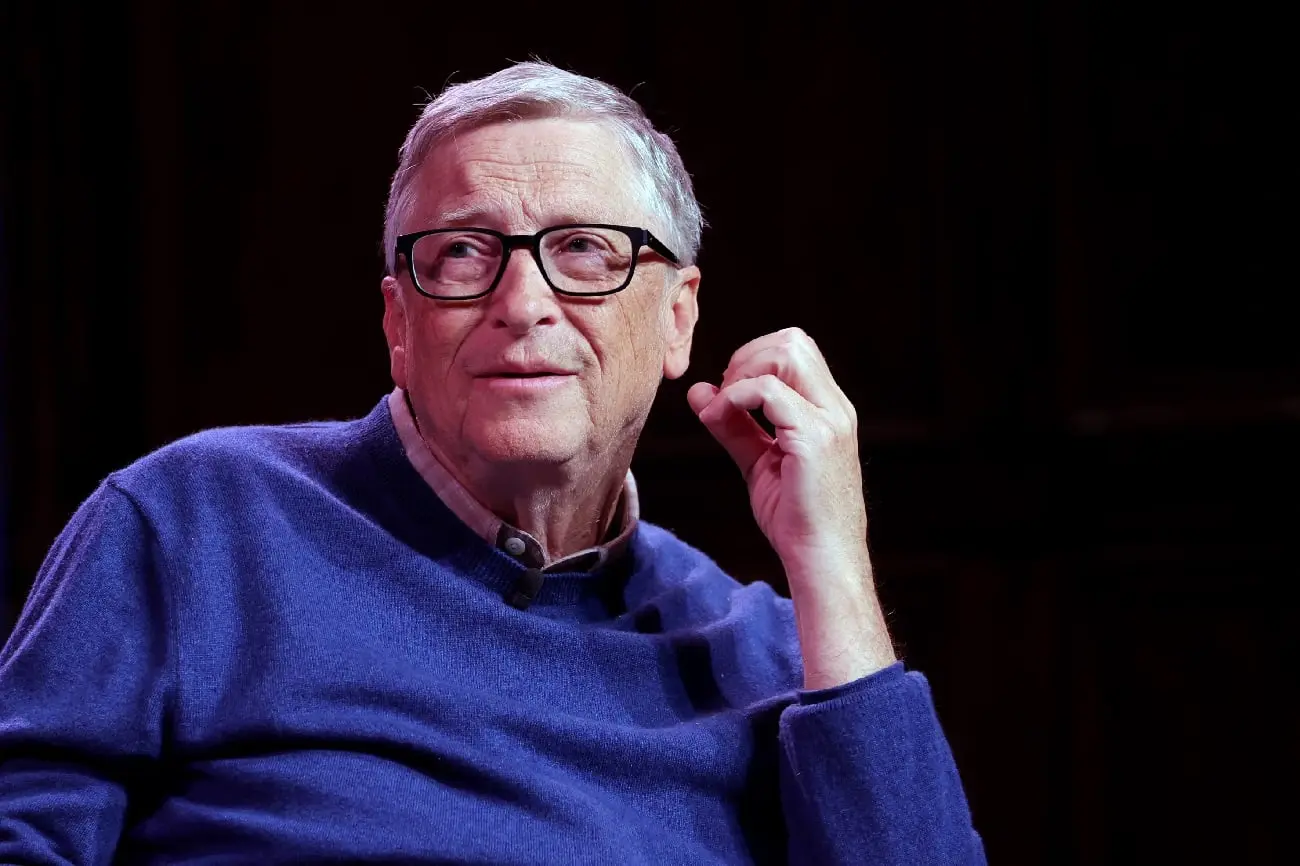
Shorting a stock involves borrowing shares and selling them with the expectation that the price will fall, allowing the investor to buy them back cheaper and pocket the difference.
It’s a high-risk strategy that profits from a company’s decline—and in Tesla’s case, one that has proven disastrous for many skeptics over the years.
Musk’s claim echoes earlier accusations dating back to 2022, when leaked text messages revealed Gates admitting to a substantial short position on Tesla, reportedly around half a billion dollars at the time.
Musk has repeatedly framed this as a personal betrayal, especially given Gates’ public advocacy for climate action, arguing that betting against Tesla—the company leading the electric vehicle revolution—undermines efforts to combat global warming.
The roots of this rivalry trace back several years, fueled by differing visions on everything from electric vehicles to philanthropy and pandemic response.
Gates, through interviews and his biography insights from Walter Isaacson, has described Musk as “super mean” after learning of the short position, noting that it soured potential collaborations on climate initiatives.
Musk, in turn, has accused Gates of hypocrisy: how can someone champion environmental causes while profiting from the potential failure of the foremost EV manufacturer? In one memorable 2022 exchange, Musk texted Gates rejecting joint philanthropic work, stating he couldn’t take Gates’ climate philanthropy seriously amid the short bet.

By 2025, Tesla’s stock has continued its volatile but upward trajectory, rewarding long-term believers while punishing shorts.
Musk’s recent comment suggests the losses from Gates’ position have ballooned to over $10 billion, a figure based on Tesla’s market cap growth and the scale of the alleged short—equivalent to about 1% of outstanding shares at the time it was reportedly opened.
This isn’t mere speculation; Musk has referenced it multiple times, including in November 2025 when he warned Gates to close out the “crazy short position” he’d held for nearly eight years, implying further pain if Tesla’s valuation surges even higher with advancements in autonomy, robotics like Optimus, and energy storage.
What makes this jab particularly stinging is the context of Gates’ wealth management decisions. Over decades, Gates heeded Buffett’s counsel to diversify away from Microsoft concentration, channeling billions into the Bill & Melinda Gates Foundation and other ventures.
This prudent strategy built one of the world’s largest philanthropic empires but capped his personal fortune. As of late 2025, Gates’ net worth hovers around $100-130 billion, far below what it could have been had he retained more Microsoft equity amid the AI boom and cloud computing dominance.
Analysts and observers have calculated that undivided loyalty to Microsoft shares could indeed have propelled him past the trillion-dollar mark, especially with the company’s stock multiplying manifold since the early 2000s.
Musk, currently the world’s richest individual with a fortune tied heavily to Tesla and SpaceX, often positions himself as the antithesis to traditional wealth preservation. His all-in bets on revolutionary technologies—electric cars, reusable rockets, neural interfaces—have yielded astronomical returns but also near-bankruptcy scares for Tesla in the past.
The irony Musk highlights is palpable: while Gates diversified to mitigate risk and fund global health initiatives, his side bet against Tesla backfired spectacularly as the company defied doubters, achieving profitability, mass production scale, and leadership in sustainable transport.
This isn’t the first time Musk has used Gates’ short as ammunition. In earlier posts, he warned that persistent shorts could face obliteration once Tesla fully cracks full self-driving and humanoid robotics.
He even suggested in 2024 that a soaring Tesla valuation could theoretically bankrupt even someone as wealthy as Gates if the position remained open. Gates has rarely commented directly on the ongoing barbs, maintaining that his investments are diversified and not personal attacks.
In past statements, he’s clarified that shorting Tesla was a financial hedge, unrelated to his support for electric vehicles or climate solutions—he’s invested in other EV players and green tech broadly.
Yet the public perception battle rages on. Supporters of Musk view Gates’ short as emblematic of establishment skepticism toward disruptors, while Gates’ defenders see Musk’s relentless attacks as petty and distracting from larger issues like global inequality and disease eradication.
The feud underscores broader tensions in the billionaire class: visionaries betting on paradigm shifts versus cautious stewards of legacy fortunes.
Tesla’s journey from near-collapse in 2018—when short interest peaked amid production hell for the Model 3—to becoming one of the most valuable automakers has been a vindication for Musk.
Short sellers collectively lost tens of billions during the 2020-2021 squeeze, and lingering positions continue to bleed as the stock reflects optimism around Robotaxi, energy megaprojects, and AI integration.
Musk’s December 2025 remark serves as both a victory lap and a warning shot: betting against Tesla’s mission has proven foolhardy for many, and Gates, in Musk’s view, is the prime example.
Beyond the personal drama, this episode offers lessons for investors. Shorting innovative companies in transformative industries carries asymmetric risks—limited upside if wrong, unlimited downside if the vision materializes. Tesla’s proponents argue it’s not just a car company but a tech platform poised to dominate autonomy and renewable energy.
Skeptics, including presumably Gates at one point, saw overvaluation and execution risks. Time has favored the bulls, with Tesla’s market cap eclipsing traditional giants.
As 2025 draws to a close, Musk’s net worth fluctuates with Tesla’s performance, often pushing him toward potential trillionaire status himself if growth trajectories hold. Gates, meanwhile, focuses on foundation work, recently divesting more Microsoft shares while facing scrutiny over aid policies and investments.
Whether Gates has fully covered the short remains unconfirmed publicly, but Musk’s persistent reminders ensure it stays in the spotlight.
In the end, this billionaire beef encapsulates the high drama of modern capitalism: bold bets, bruised egos, and billions on the line. Musk strikes again, not with rockets or EVs, but with pointed words that remind the world of past misjudgments.
For investors watching from the sidelines, it’s a stark reminder— in the clash between diversification and conviction, the latter has handsomely rewarded those who believed in Tesla’s improbable rise. As Tesla pushes boundaries further, the cost of doubting it only grows.
(Word count: 1528)