Jeremiah Johnson (1972): Robert Redford Faces Two Brutal Crow Warrior Attacks in a Fight for Survival
A Mountain Man’s Search for Peace Turns Into a Deadly Battle in the Wilderness
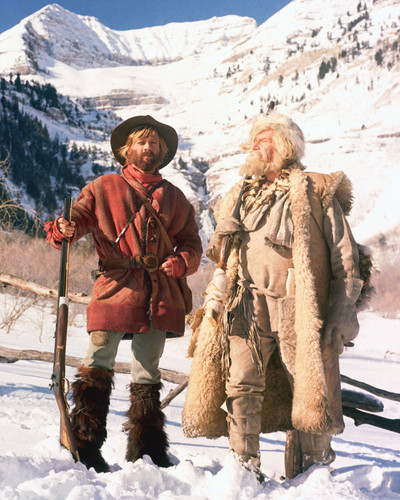
Few Western films capture the brutality, loneliness, and emotional consequences of frontier survival quite like Jeremiah Johnson (1972). Directed by Sydney Pollack and starring Robert Redford, this unforgettable wilderness drama follows a former soldier who abandons civilization in search of a simpler, more peaceful existence in the Rocky Mountains.
But the mountains offer no guarantees of safety. In one of the film’s most intense sequences, Jeremiah Johnson faces two attacks by Crow warriors, forcing him into desperate confrontations that demonstrate just how far his life has drifted from the peace he originally sought.
These encounters are more than thrilling Western action scenes. They represent the tragic transformation of a man who entered the wilderness hoping to escape human conflict, only to discover that violence can follow him even into the most isolated landscapes.
Robert Redford’s Jeremiah Johnson: A Man Against the Wilderness
Set around 1850, Jeremiah Johnson tells the story of a former soldier who turns his back on society and attempts to build a new life as a mountain man.
Johnson believes the wilderness will provide the freedom that civilization has denied him. However, his early experiences quickly expose his lack of preparation for such an unforgiving environment.

He struggles with hunting, surviving harsh weather, and understanding the dangers surrounding him.
His fortunes begin to change when he encounters an experienced mountain man named Bear Claws, portrayed by Will Geer. Under Bear Claws’ guidance, Jeremiah gradually learns the skills necessary to survive.
He becomes a capable hunter, develops confidence in the mountains, and begins to understand that survival demands patience, observation, and respect for the natural world.
Yet the greatest threats Johnson encounters are not always wild animals or freezing temperatures.
They come from conflicts between human beings.
Two Crow Warrior Attacks That Define Jeremiah Johnson’s Journey
One of the film’s most memorable elements is the escalating confrontation between Jeremiah Johnson and Crow warriors.
The tension surrounding these encounters grows from an earlier incident involving a sacred Crow burial ground.
When a military expedition requests Jeremiah’s assistance in crossing dangerous mountain territory to rescue stranded settlers, he finds himself caught between competing obligations.
The expedition’s chosen route passes through burial grounds regarded as sacred by the Crow. Jeremiah understands the danger of violating this place, but the pressure to continue leads to a decision with devastating consequences.
The Crow retaliate by attacking Johnson’s home and killing his family.
What follows changes him forever.
The man who once wanted nothing more than isolation and peace becomes consumed by grief, anger, and the instinct to survive.
As Crow warriors pursue him, Johnson must repeatedly defend himself in violent encounters.
The two attacks highlighted in the clip illustrate the intensity of this continuing conflict.
Rather than presenting a simple showdown between heroes and villains, these confrontations emphasize the consequences of a cycle of retaliation that neither side can easily escape.
Each attack brings Jeremiah closer to becoming the legendary figure feared throughout the mountains.

The First Attack: Survival Becomes a Matter of Instinct
The first confrontation demonstrates how dramatically Jeremiah has changed since his inexperienced early days in the wilderness.
He is no longer the uncertain newcomer who struggled to hunt and find shelter.
By this point, he understands the terrain, recognizes danger, and possesses the fighting abilities necessary to survive an unexpected encounter.
The tension comes from the knowledge that even a skilled mountain man remains vulnerable.
Isolation offers him no protection against an armed opponent, and every confrontation can become fatal.
Robert Redford delivers much of the scene’s emotional force through physical performance rather than dialogue.
His controlled movements, focused expressions, and determination communicate the instincts of a man who has learned to live under constant threat.
The attack also highlights one of the film’s central contradictions: Jeremiah’s survival skills have made him more capable, but they have not brought him the peaceful life he imagined.
Instead, they have allowed him to endure a conflict that continues to consume him.
The Second Attack: The Making of a Mountain Legend
The second attack reinforces the relentless nature of the vendetta.
Jeremiah’s enemies have not forgotten the conflict, and the mountains that once symbolized freedom have become a dangerous battleground.
Each new confrontation adds another chapter to his growing reputation.
For Johnson, however, survival brings little satisfaction.
The violence has already cost him the people who gave his solitary existence meaning.
His adopted son and wife had transformed his mountain shelter into something resembling a home. Their deaths destroyed that fragile happiness.
Now, even when he emerges alive from an attack, the victory cannot restore what he has lost.
This emotional complexity separates Jeremiah Johnson from more conventional Western adventures.
Rather than celebrating every successful fight, the film encourages viewers to consider the personal cost of violence.
Johnson’s growing legend is inseparable from his grief.
The more formidable he becomes, the further he moves from the man who originally entered the wilderness.
Sydney Pollack’s Powerful Vision of the American Frontier

Director Sydney Pollack gives the film a distinctive atmosphere by allowing the natural environment to shape the story.
Shot extensively in Utah, the movie features spectacular mountain landscapes, snow-covered forests, rocky valleys, and remote wilderness settings.
These locations are not simply attractive backgrounds.
They emphasize the enormous physical world surrounding Jeremiah and the small place human conflict occupies within it.
At times, the mountains appear peaceful and inviting. At others, they seem cold, indifferent, and threatening.
This contrast makes the violent encounters particularly memorable.
The wilderness itself remains unchanged by Jeremiah’s suffering, even as his personal world collapses.
Pollack also avoids turning Johnson into an invincible action hero.
He is capable and determined, but he is still human.
His journey involves mistakes, emotional vulnerability, and moral uncertainty.
The result is a Western that feels more reflective than triumphant.
Why Jeremiah Johnson Remains a Classic Western
Released in 1972, Jeremiah Johnson arrived during a period when American filmmakers were increasingly questioning the traditional myths of the frontier.
Earlier Westerns often portrayed expansion into the wilderness as an unquestionable achievement.
Pollack’s film presents a more complicated vision.
Jeremiah’s experience raises questions about cultural conflict, military authority, personal freedom, and the destructive consequences of territorial intrusion.
The Crow are central to this conflict, although the film’s portrayal is shaped by the storytelling conventions and limitations of its era.
The narrative also examines how a man seeking to escape civilization can become trapped in another cycle of violence.
Redford’s understated performance gives the story much of its emotional power.
He rarely needs dramatic speeches to communicate Jeremiah’s isolation, determination, or sorrow.
Instead, the audience follows his transformation through the choices he makes and the hardships he survives.
A Legendary Western That Questions the Price of Revenge
The two Crow warrior attacks featured in Jeremiah Johnson are memorable because they combine physical danger with a much deeper emotional struggle.
They are not simply battles for survival. They are reminders of the tragedy that has reshaped Johnson’s entire existence.
His original dream was to live independently, peacefully, and far from the demands of civilization.
But his attempt to escape society ultimately leads him into a devastating conflict over family, territory, and revenge.
As the film approaches its conclusion, it moves beyond the familiar Western idea that every conflict must end with another killing.
Instead, it offers the possibility of recognition, restraint, and a final measure of grace.
That complexity is why Jeremiah Johnson (1972) continues to resonate with fans of classic Western cinema.
With Robert Redford’s compelling performance, Sydney Pollack’s atmospheric direction, and unforgettable scenes of survival in the Rocky Mountains, the film remains a powerful exploration of what happens when a man’s pursuit of freedom becomes a lifelong struggle against violence.
Jeremiah Johnson entered the mountains searching for peace. What he found was survival, heartbreak, and a legend he never intended to create.
