
The Origin Story: From Back-Porch Blues to Outlaw Anthem
“I’m A Ramblin’ Man” carries the voice of a wanderer, but its journey began long before Waylon Jennings made it a chart-topping hit. The song was originally written in the mid-1950s by Ray Pennington, a Kentucky songwriter working at King Records in Cincinnati. Pennington described the earliest shape of the tune as “back-porch blues,” heavily inspired by the laid-back R&B groove of Jimmy Reed. At the time, Ray wasn’t writing for stardom—he wrote the song for a band he played with on the side while moonlighting.
Pennington once explained that when radio stations lacked fresh material, he would simply sit down and write something himself. For “I’m A Ramblin’ Man,” he intentionally sprinkled in references to cities and regions he personally loved. West Virginia made the cut because he admired the state’s beauty. Cincinnati was included because it was his home at the time. And Chicago? In his eyes, it was the ultimate “swinging place”—a city buzzing with music, movement, and excitement. The geography wasn’t random—it was a roadmap of his own heart.

1967: The Warning First Heard
Pennington recorded his own version of the song and released it on Capitol Records in 1967. It broke into the country Top 30, gaining recognition for its storytelling and charm. The song, even in its earliest public form, was less a love letter and more a warning: don’t fall for a man who can’t be tied down.
1974: A Deal Made in Studio A
On February 8, 1974, Pennington and Waylon Jennings crossed paths inside RCA’s legendary Studio A in Nashville, preparing to record. Ray arrived with two songs in hand: “I’m A Ramblin’ Man” and another track called “Oklahoma Sunshine.”
Waylon connected more deeply with “Oklahoma Sunshine,” so he made a pact with Ray: if Pennington let him record “Oklahoma Sunshine,” Waylon would also cut “I’m A Ramblin’ Man” and allow Pennington to produce it. Ray agreed. That same day, both songs were recorded—marking a key moment in Jennings’ evolution as an artist taking stronger creative control over his work.
The Outlaw Movement: Fighting for Freedom in Sound

Just months before the session, Jennings had shaken the industry by recording his previous album “This Time” at Tompall Glaser’s studio, instead of RCA’s facilities. The label initially rejected the masters, arguing that the decision might trigger conflict with the electricians’ union.
But Waylon wasn’t backing down. RCA eventually resolved the issue and not only accepted “This Time,” but also allowed him to record most of his next album, “Ramblin’ Man,” at Glaser Sound Studio, where his road band played on the record and the production leaned raw, real, and unfiltered. Ironically, though much of the album was recorded outside RCA, the song “I’m A Ramblin’ Man” itself was still tracked at RCA.
This era defined the outlaw country sound—a movement Waylon helped shape, driven by authenticity, personal expression, and rebellion against rigid industry expectations.
The Hit: No. 1 and Impossible to Contain
Released by RCA in July 1974 as the album’s lead single, “I’m A Ramblin’ Man” became Waylon Jennings’ second No. 1 country hit. The track soared with a strong shuffle beat, cutting Telecaster guitar leads, and very little over-polish. A major part of its personality came from Dave Kirby’s crisp lead guitar, which gave the song its unforgettable bite.
On September 28, 1974, it officially reached the top of the Billboard Hot Country Singles chart.
The CMA Clash: A Walk-Off That Became Legend

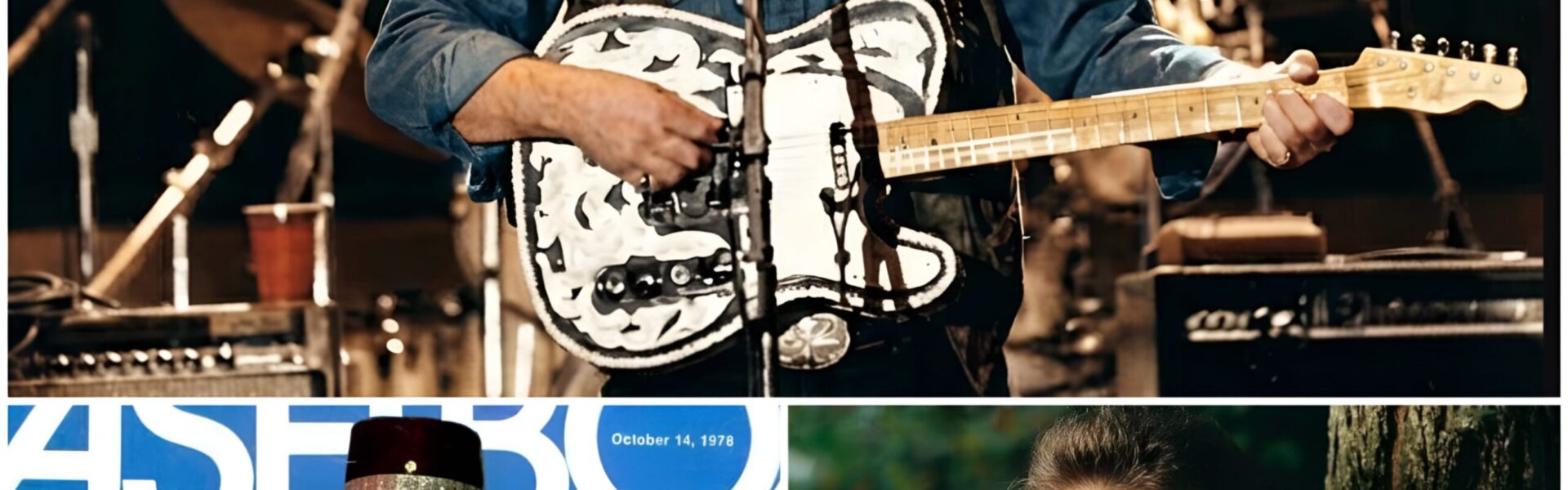
Success didn’t mean surrender. On October 14, 1974, Jennings was scheduled to perform the song live during the CMA Awards telecast, where he was also nominated for Male Vocalist of the Year.
The day of the broadcast, producers informed him that his performance would have to be trimmed to two minutes. Waylon refused. He believed that shortening the song would “damage” it artistically. Without offering further explanation, he walked off the set.
Critics later questioned the logic—after all, the song had already peaked at No. 1 weeks earlier. But logic was never the point. Waylon Jennings was fiercely protective of his music, stubborn by reputation, unpredictable by nature, and impossible to shape into something smaller than what he believed it deserved to be.
The Message of the Song: Love the Road, Not the Man

The lyrics mirror the real Jennings persona of the time—restless, bold, and brutally honest. He sings of leaving a girl in West Virginia, having another waiting in Cincinnati, playing shows from Mississippi to California, and carrying a reputation from Chicago to Alabama.
But woven into the melody is the same thread Pennington planted years before: this is not romance—it’s caution.
Don’t fall in love with someone who belongs to the highway.
Legacy: A Song That Keeps Walking
“I’m A Ramblin’ Man” remains one of the most iconic country songs of the 1970s, not just for its success but for what it represented—a genre bending toward rock, blues, and freedom, carried forward by an artist who refused to be edited, timed, or told how to sing his truth.
It wasn’t bubblegum.
It wasn’t blues.
It was Waylon.