“She Was an Adult. Barely.” — A Heartbreaking Conversation That Reveals the True Horror Behind a Young Woman’s Death
In the haunting world of Wind River (2017), some of the most devastating moments arrive without gunfire, violence, or dramatic confrontation. Instead, they emerge through quiet conversations, painful memories, and the unbearable silence of families struggling to understand why someone they loved will never return. One particularly powerful sequence brings FBI agent Jane Banner into the home of a grieving Native American family, where a seemingly ordinary conversation exposes the emotional devastation surrounding the death of a young woman.
Directed by Taylor Sheridan, Wind River is far more than a conventional crime thriller. Set against the frozen landscapes of Wyoming’s Wind River Indian Reservation, the film combines a murder investigation with a deeply affecting examination of grief, isolation, and the vulnerability of Indigenous women. Its emotional strength comes from the way Sheridan allows human suffering to exist beyond the mystery itself.
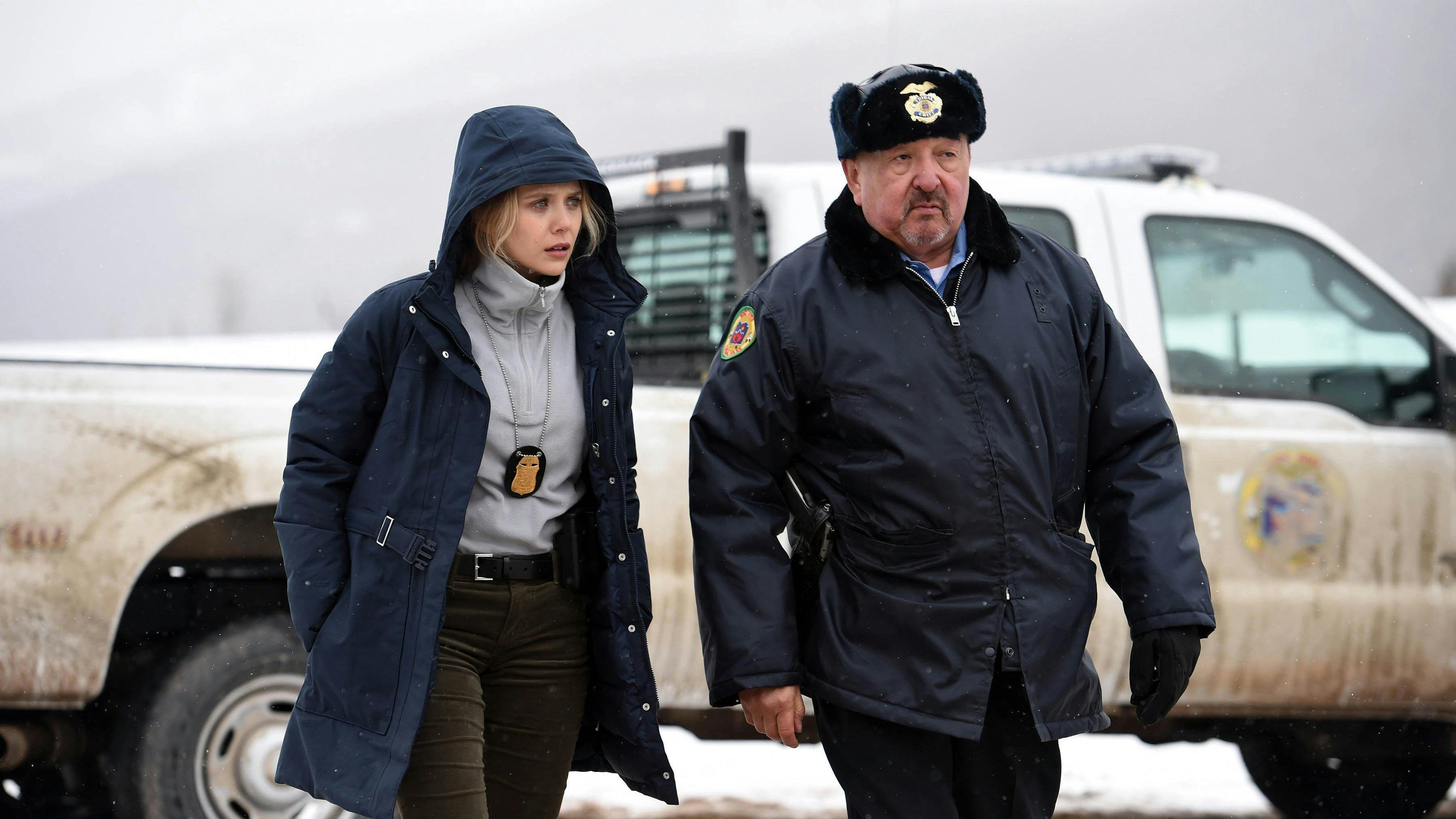
The scene featuring Jane Banner, portrayed by Elizabeth Olsen, demonstrates this approach with remarkable restraint.

A Young FBI Agent Confronts an Unimaginable Tragedy
Jane Banner arrives in Wyoming as an FBI agent assigned to investigate the mysterious death of Natalie Hanson, a young Native American woman whose body has been discovered in the snow.
Although she possesses the authority and determination expected of a federal investigator, Jane quickly discovers that this case is unlike anything she has previously experienced.
The freezing wilderness is unfamiliar territory. The local community carries its own history of suffering and distrust, and the people Jane encounters are not simply witnesses waiting to answer questions. They are individuals whose lives have been permanently changed by a tragedy they can barely comprehend.
When Jane enters the family home, the atmosphere immediately shifts away from the procedural mechanics of a criminal investigation.
The rooms are modest and quiet. The lighting is subdued, and the physical surroundings suggest the ordinary domestic life that existed before tragedy shattered it.
There is no dramatic musical announcement warning viewers that an emotional confrontation is approaching. Instead, the scene unfolds through restrained performances and uncomfortable pauses.
Jane attempts to gather information about Natalie, but every question carries an emotional weight that cannot be separated from the investigation.
What might appear to be routine police work becomes an intimate encounter with profound loss.
“She Was an Adult. Barely.”
One of the sequence’s most emotionally significant ideas concerns Natalie’s age and the difficult distinction between legal adulthood and genuine independence.
The observation that she was an adult, but barely, captures the tragedy at the center of the story.
Natalie was old enough to make decisions about her life, pursue relationships, and imagine a future beyond the world in which she had grown up. Yet she was also young enough to remain vulnerable, inexperienced, and dependent on the protection of those around her.
That contradiction becomes especially painful because the audience already knows that her future has been violently taken away.

She was not simply a victim identified in an investigative file. She was a daughter, a young woman with relationships, ambitions, and a life that extended far beyond the circumstances of her death.
The distinction matters because Wind River repeatedly challenges the tendency to reduce victims of violence to the details of how they died.
Natalie’s identity cannot be contained within a police report.
Her life existed before the investigation, and the emotional consequences of her death will continue long after the case reaches its conclusion.
Through the family’s grief, the film reminds viewers that every murder investigation begins with something far more personal than evidence: someone is missing from a home where they once belonged.
Elizabeth Olsen Delivers a Quietly Powerful Performance
Elizabeth Olsen’s portrayal of Jane Banner is one of the film’s most compelling elements.
Jane enters the investigation as a capable professional, but her experience in Wyoming forces her to recognize the limitations of conventional law-enforcement procedures.
During the conversation inside the family home, Olsen carefully balances professional determination with visible empathy.
Her facial expressions reveal an investigator attempting to process information while remaining sensitive to the people providing it.
She does not dominate the room or transform the conversation into a dramatic display of authority. Instead, she listens, observes, and gradually absorbs the emotional reality of what has happened.
This restraint makes the performance particularly effective.
Jane understands that she must obtain answers, but the people standing before her are not detached sources of information.
They are grieving relatives whose pain cannot be solved by the simple completion of an interview.
Olsen’s performance communicates that awareness without requiring elaborate dialogue.
Her character’s uncertainty also introduces an important contrast between federal authority and local experience.
Jane may represent the resources of the FBI, but she is entering a community whose challenges and history she is only beginning to understand.
The investigation requires more than determination. It demands humility, patience, and an understanding that justice can mean something very different to the people most directly affected.
The Importance of Cory Lambert
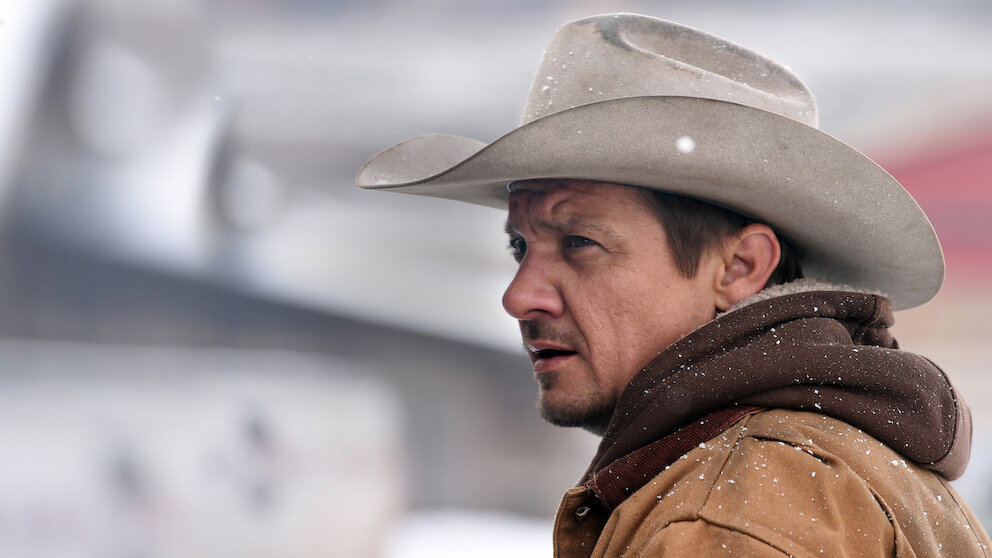
The presence of Cory Lambert, played by Jeremy Renner, provides an essential counterbalance to Jane’s unfamiliarity with the reservation.
Cory is a wildlife tracker who discovers Natalie’s body while investigating a predator in the snowy wilderness.
His knowledge of the terrain makes him indispensable to the investigation, but his emotional connection to the case is equally important.
Having endured a devastating personal loss, Cory understands grief in a way that few people around Jane can fully appreciate.
His quiet demeanor conceals an enormous amount of suffering.
Throughout Wind River, Renner portrays Cory as a man who has learned to survive through discipline, emotional restraint, and an intimate familiarity with the unforgiving landscape.
He does not offer easy reassurance or pretend that every tragedy can be explained.
Instead, he provides Jane with the practical knowledge and perspective needed to navigate a place where ordinary investigative assumptions frequently prove inadequate.
When the film moves between the family’s home and the frozen landscape outside, the contrast becomes especially meaningful.
Inside, grief is immediate and deeply personal.
Outside, the wilderness remains vast, silent, and indifferent.
Cory exists between those two worlds, carrying the knowledge that the landscape can preserve evidence while offering no comfort to the people searching for answers.
A Crime Thriller That Refuses to Forget Its Victim
One reason Wind River remains so emotionally affecting is its refusal to treat Natalie’s death merely as a device for creating suspense.
Many crime thrillers focus almost exclusively on identifying the perpetrator and bringing the investigation toward a dramatic conclusion.
Sheridan’s film takes a different approach.
The mystery remains important, but the emotional consequences of the crime are never pushed aside.
The story repeatedly returns to the people who knew Natalie, emphasizing that the investigation cannot restore the life that has been lost.
The conversation in the family home becomes a reminder of the human suffering hidden beneath the mechanics of criminal justice.
Even when investigators make progress, the family remains trapped in a reality that no arrest or conviction can fully repair.
That emotional truth gives the film much of its lasting power.
The story also draws attention to the dangers faced by Indigenous women and the difficulties that can complicate investigations in remote communities.
Rather than delivering a lengthy political speech, Sheridan incorporates these concerns into the characters’ experiences.
The result is a film whose broader social message emerges from the human story at its center.
Why This Scene Stays With Viewers

The most memorable aspect of the sequence is its simplicity.
There is no elaborate action choreography or spectacular visual effect.
The camera remains focused on people speaking, listening, and struggling to confront an unbearable reality.
Yet the emotional intensity is considerable.
Viewers are reminded that Natalie was young, that she had a family, and that her death represents the destruction of countless possibilities.
The restrained cinematography reinforces this feeling, allowing the characters’ expressions and the silence between their words to communicate what dialogue cannot.
For Jane, the encounter deepens her understanding of the responsibility she has accepted.
For the grieving family, the investigation represents a desperate search for answers that may never provide true peace.
For the audience, the scene transforms a murder mystery into something more disturbing and intimate.
It forces us to confront the difference between discovering how a person died and understanding everything that was lost when their life ended.
That distinction is central to Wind River.
Taylor Sheridan’s film succeeds not simply because it creates tension or delivers shocking revelations, but because it recognizes the emotional devastation that violent crime leaves behind.
And in a story surrounded by snow, isolation, and brutality, one quiet realization becomes almost impossible to forget.
Natalie Hanson had only just begun her adult life. She deserved the chance to experience everything that should have come next.
