John Wick: “HE DIDN’T SHOOT!” The Genius Final Duel That Turned John Wick’s Greatest Weakness Into His Ultimate Victory
In a franchise built on relentless gunfire, extraordinary combat skills, and seemingly impossible survival, one of the most unforgettable moments in John Wick: Chapter 4 (2023) arrives when its legendary assassin deliberately refuses to pull the trigger. After surviving countless enemies, brutal confrontations, and an exhausting journey through the criminal underworld, John Wick faces a final duel that will determine whether he can ever escape the control of the High Table.
But what appears to be a traditional contest of accuracy and courage becomes something far more sophisticated. In the film’s breathtaking final confrontation, John makes a decision that initially looks like a fatal mistake. He allows his opponent to fire while secretly preserving his own bullet.
The strategy ultimately transforms the outcome of the duel and delivers one of the franchise’s most satisfying reversals.

Directed by Chad Stahelski and starring Keanu Reeves, John Wick: Chapter 4 brings years of violence, loyalty, betrayal, and sacrifice to a dramatic conclusion. Its final duel is not simply about determining which assassin is faster. It is about understanding the rules of a deadly system well enough to turn them against the people who believe they control everything.
A Final Battle for Freedom
Throughout the film, John Wick is hunted by the High Table, the powerful organization governing the international criminal underworld.
After repeatedly defying its authority, John has become a symbol of resistance against a system that demands unquestioning obedience.
His determination to escape its reach has left a trail of destruction across several continents.
Yet despite his extraordinary fighting abilities, John understands that simply killing more enemies will never end the pursuit.
The High Table possesses enormous resources, and every defeated opponent can be replaced by another.
The only possible escape lies in challenging the organization through its own ancient traditions.
With the assistance of Winston, played by Ian McShane, John invokes the right to a formal duel against the Marquis Vincent de Gramont, portrayed by Bill Skarsgård.
The Marquis is a ruthless representative of the High Table who has been granted extensive authority to eliminate John.
Confident in his influence and convinced of his superiority, the Marquis believes he can manipulate the situation to guarantee victory.
Instead of confronting John personally, however, he chooses another man to fight on his behalf.
That decision introduces one of the film’s most emotionally complicated relationships.
Caine: The Opponent John Never Wanted to Kill
The Marquis selects Caine, a blind assassin played by Donnie Yen, to represent him in the duel.
Caine is not an ordinary enemy.
He is a former friend of John Wick, a highly skilled fighter whose own circumstances have forced him back into the criminal underworld.
The Marquis uses Caine’s daughter as leverage, threatening her safety to ensure his obedience.
This manipulation creates a tragic conflict.
Caine must defeat a man he once respected to protect the person he loves most.
John, meanwhile, understands that his opponent is not motivated by hatred or personal revenge.
Both men are trapped by the same oppressive system.
Their confrontation therefore carries emotional consequences that extend far beyond the result of a gunfight.
Caine fights for his daughter’s freedom.
John fights for the possibility of finally ending his own suffering.
Neither man truly wants the other to die.
That shared understanding becomes essential to the outcome.
A Sunrise Duel Above Paris

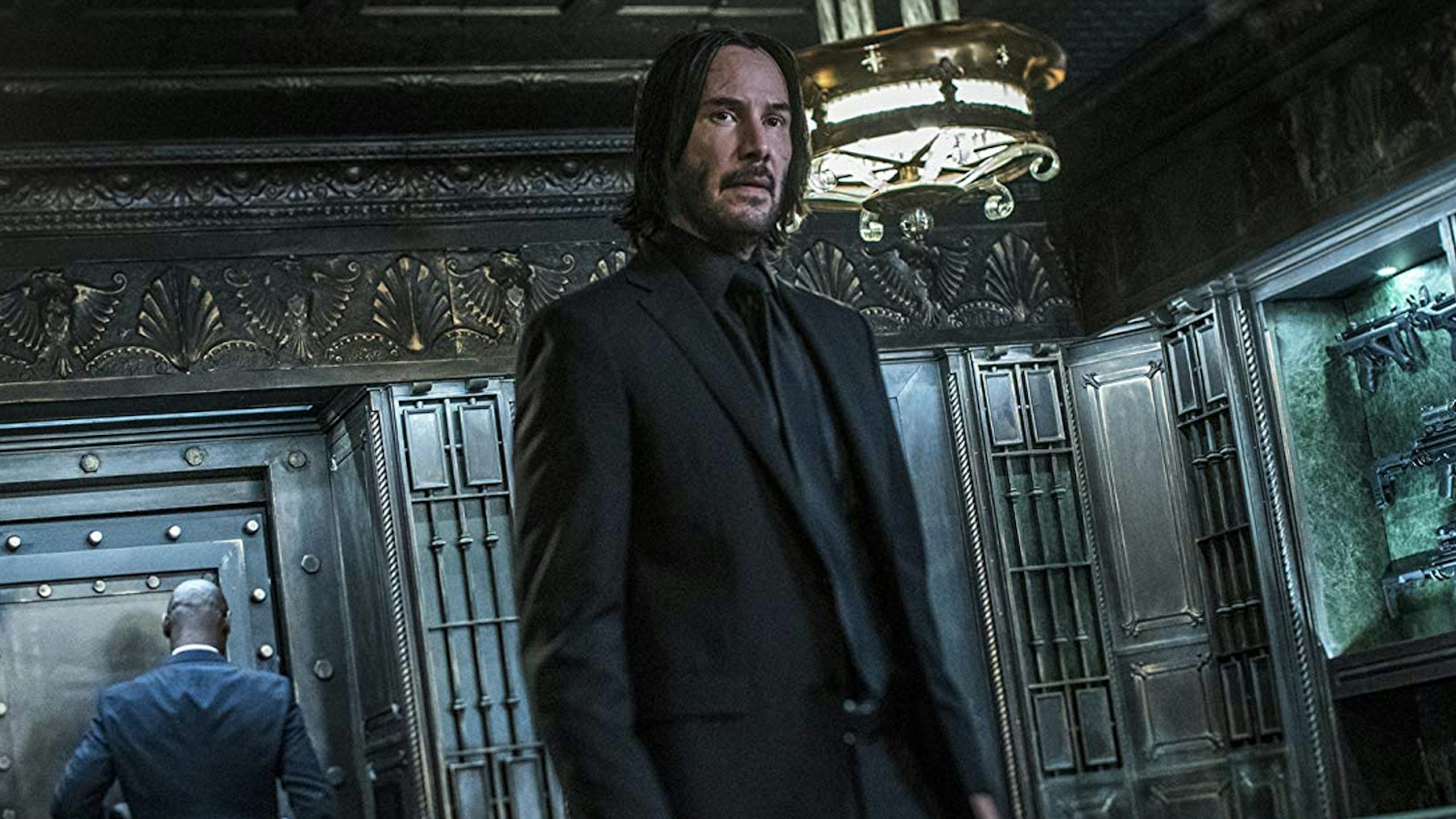
The final confrontation takes place near the Sacré-Cœur in Paris, where the approaching sunrise bathes the city in warm golden light.
After an exhausting battle through the streets of Paris and up the famous staircase, John arrives for the duel bruised, wounded, and physically drained.
The setting contrasts sharply with the chaotic violence that precedes it.
Instead of crowded nightclubs, speeding vehicles, and endless groups of assassins, the final confrontation unfolds in a relatively quiet, open space.
The combatants stand beneath the morning sky, surrounded by witnesses and representatives of the High Table.
The duel’s formal procedures create an atmosphere of almost ceremonial importance.
Both men are given traditional single-shot pistols, weapons that require careful preparation and precise timing.
The duel is conducted over successive rounds at decreasing distances.
Every shot matters.
Every movement carries the possibility of death.
And unlike the spectacular action sequences that dominate the earlier portions of the film, this confrontation depends on restraint rather than overwhelming firepower.
Three Rounds That Change Everything
The duel begins with John and Caine standing opposite each other, weapons ready.
The initial exchange demonstrates that both men remain dangerous despite their injuries and exhaustion.
Shots are fired, and the combatants endure further wounds as the distance between them decreases.
The atmosphere becomes increasingly tense.
John has survived battles against dozens of opponents, but his injuries are accumulating.
Caine, despite being blind, demonstrates extraordinary composure and skill.
Neither assassin is willing to surrender.
The Marquis watches with growing confidence, believing that the duel is unfolding in his favor.
As the final exchange approaches, John appears physically close to his limit.
His movements are heavy, and the effects of his injuries are unmistakable.
Then comes the moment that changes everything.
Caine fires his weapon.
John falls.
To the surrounding observers, the outcome seems obvious.
John Wick, the assassin who survived almost every imaginable threat, appears to have been defeated in a formal duel.
The Marquis sees the moment as the final confirmation of his victory.
But he has misunderstood what actually happened.
“He Didn’t Shoot!” — The Detail That Changes the Entire Ending


Believing John is helpless and the duel effectively won, the Marquis steps forward to claim the final act of killing him.
His arrogance becomes his undoing.
He wants more than John’s death.
He wants the personal satisfaction of finishing the legendary assassin himself, transforming the moment into a public demonstration of his own power.
But Winston recognizes something the Marquis has failed to notice.
John never fired his weapon during the final exchange.
His pistol still contains its bullet.
The distinction is devastating.
Under the rules governing the duel, John’s final shot remains available.
The Marquis has approached an opponent he believes is defenseless, only to discover that the most dangerous man in the criminal underworld is still armed.
With Winston drawing attention to the unfired shot, the situation changes instantly.
John raises his pistol.
The Marquis realizes his mistake too late.
A single shot brings his ambitions to a sudden end.
The man who attempted to control the outcome through manipulation, political influence, and cruelty is defeated by the very rules he believed would protect him.
It is a victory built not on superior firepower, but on patience and strategy.
Why John Wick’s Decision Was So Brilliant
What makes the final confrontation particularly remarkable is the way it overturns the audience’s expectations.
Throughout the franchise, John Wick is defined by his ability to respond to danger with extraordinary precision and speed.
His reflexes are legendary.
His marksmanship is almost unmatched.
His ability to improvise under pressure has allowed him to survive situations that would destroy virtually anyone else.
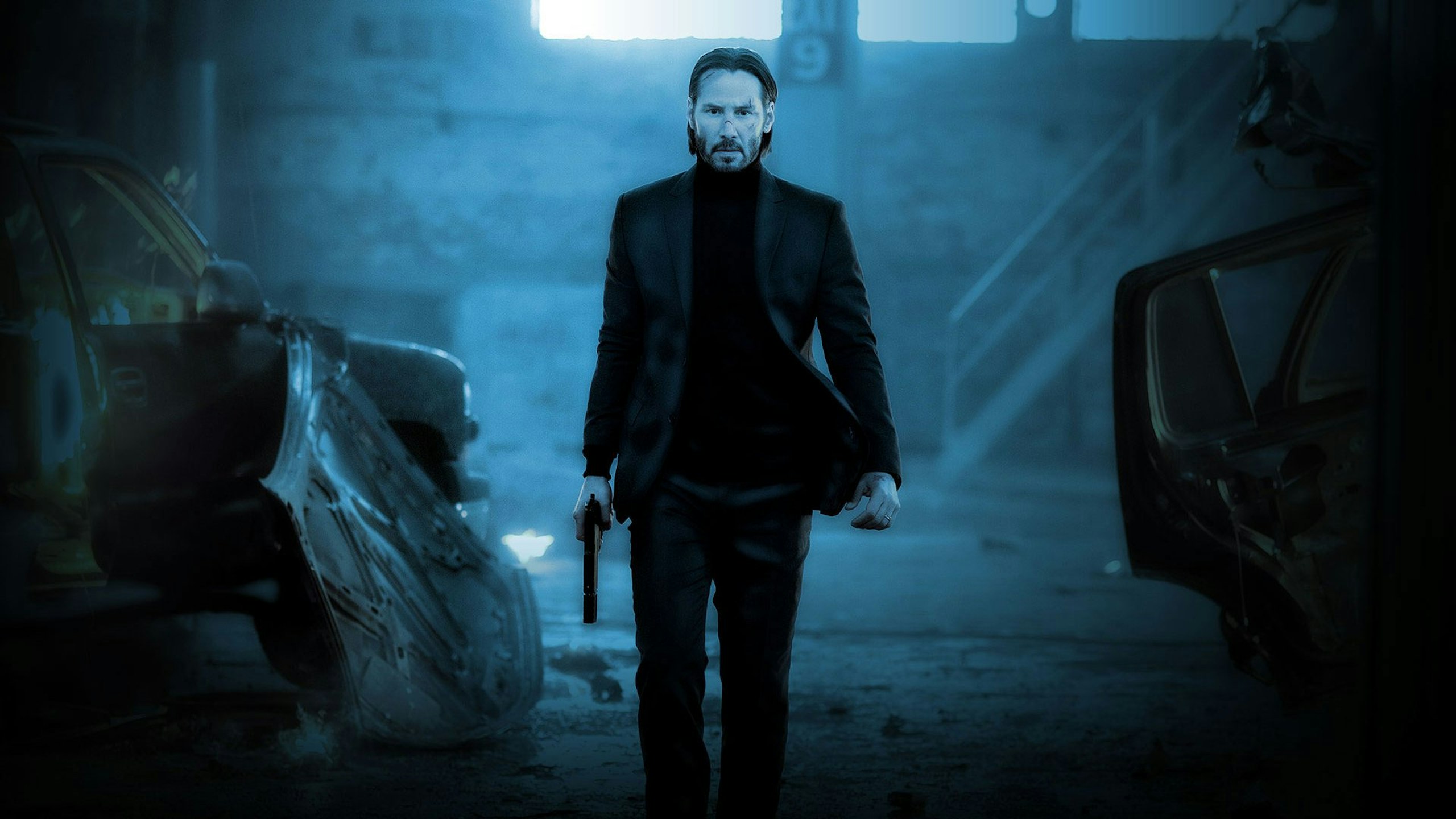
Yet in his most important confrontation, his greatest advantage is knowing when not to shoot.
By withholding his final bullet, John creates an opportunity that the Marquis never anticipates.
The decision also demonstrates how thoroughly John understands the nature of his enemy.
The Marquis is arrogant, impatient, and obsessed with establishing his superiority.
He expects his wealth and position to guarantee control over the proceedings.
John exploits that arrogance.
Rather than confronting the Marquis through a conventional exchange of violence, he allows the man’s ambition to bring him directly into danger.
The reversal is especially satisfying because it requires no elaborate trick weapon or unbelievable physical maneuver.
One unfired bullet is enough.
Donnie Yen and Keanu Reeves Deliver an Emotional Farewell
The sequence also succeeds because of the emotional connection between John and Caine.
Keanu Reeves portrays John as a man who has endured almost everything the world can inflict upon him.
His exhaustion is visible not merely through his injuries but through his expression and restrained movements.
This is no longer an assassin fighting for reputation or revenge.
He is a man desperately searching for peace.
Donnie Yen brings a similarly powerful emotional dimension to Caine.
Although he possesses extraordinary combat abilities, his primary concern is protecting his daughter.
Their conflict is tragic precisely because both characters understand each other’s motivations.
The final outcome allows Caine to escape the Marquis’s control without requiring John’s death at his hands.
It also gives John the opportunity to secure the freedom he has pursued throughout the film.
Their confrontation therefore becomes something more meaningful than a conventional battle between enemies.
It is the final act of two men trying to reclaim their lives from an organization that has exploited them.
The Price of Victory
After the Marquis is defeated, John is declared free of his obligations to the High Table.
Winston’s position is restored, and Caine is released from the arrangement that forced him into the duel.
The immediate conflict has finally ended.
But John’s victory comes at an enormous physical cost.

Wounded and exhausted, he makes his way toward the steps overlooking Paris.
As the sunlight spreads across the city, he reflects on the life he has lost and the woman he loved.
The film then presents what appears to be his death, followed by a graveside scene that leaves viewers contemplating the legendary assassin’s final fate.
It is a surprisingly quiet conclusion for a series famous for spectacular violence.
After years of relentless combat, the most important question is no longer how many enemies John can defeat.
It is whether he can finally find peace.
A Legendary Ending Built Around One Unfired Bullet
The final duel in John Wick: Chapter 4 stands among the franchise’s strongest sequences because it combines spectacular filmmaking with emotional closure and clever storytelling.
The location, cinematography, music, performances, and carefully constructed rules all contribute to the confrontation’s impact.
But its greatest achievement lies in one deceptively simple decision.
John Wick, a man who has spent years surviving by shooting first and fighting harder, wins his final battle by refusing to fire when everyone expects him to.
The Marquis believes that power guarantees victory.
John proves that experience, patience, and understanding can be far more dangerous.
And when Winston reveals the truth, the entire confrontation is transformed.
John Wick didn’t miss. He didn’t hesitate. He deliberately saved his last bullet for the man who believed he had already won.
