BREAKINGNEWS: Chris Spielman and the standard that still defines Ohio State defense

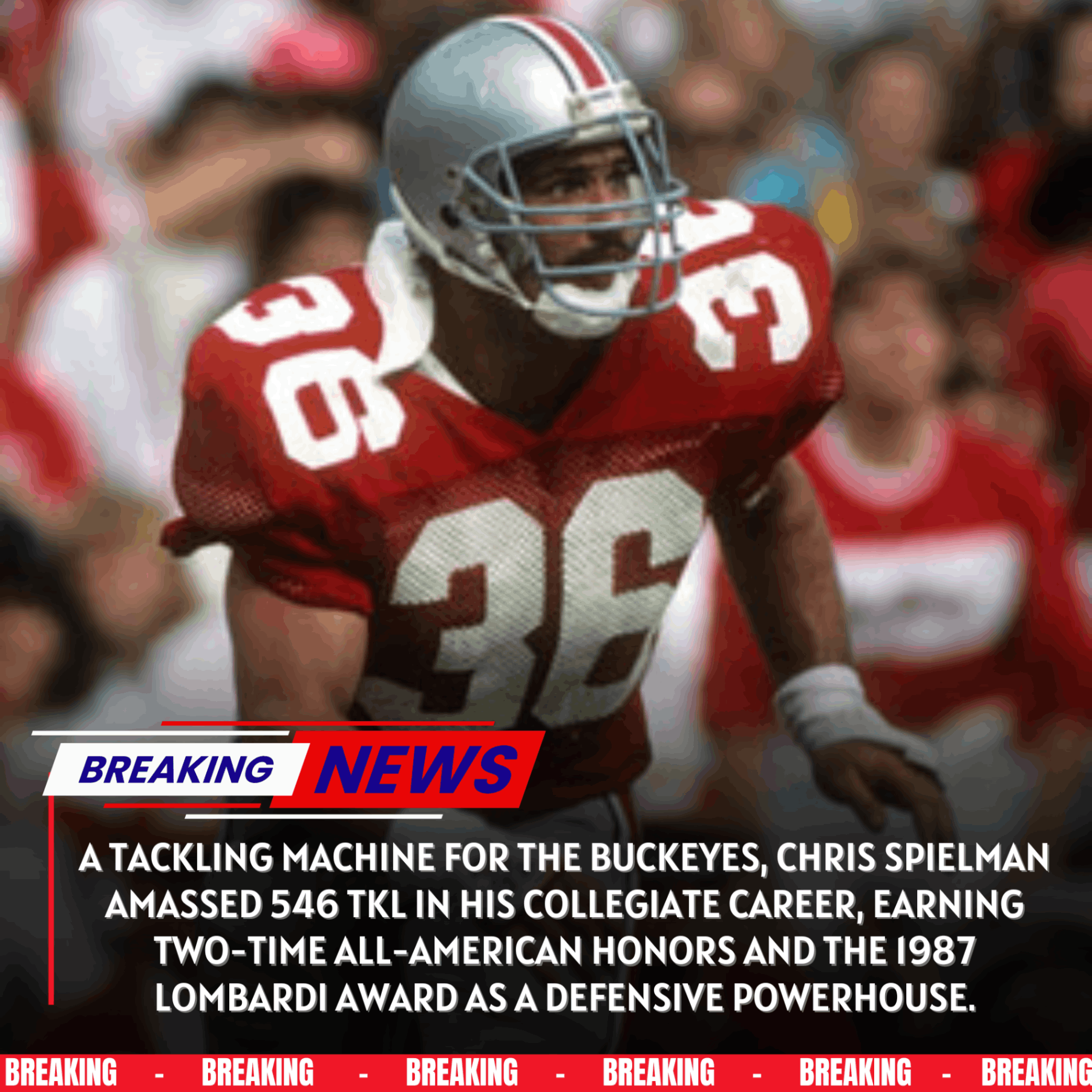
Few names in college football history carry the same weight inside the walls of Ohio State as CHRIS SPIELMAN. Long before modern defensive schemes, social media highlights, and analytics-driven evaluations, Spielman built a legacy rooted in toughness, intelligence, and an uncompromising commitment to excellence. His time with the Ohio State Buckeyes did more than produce staggering statistics. It created a defensive blueprint that still echoes through the program today.
A defender shaped by discipline and purpose
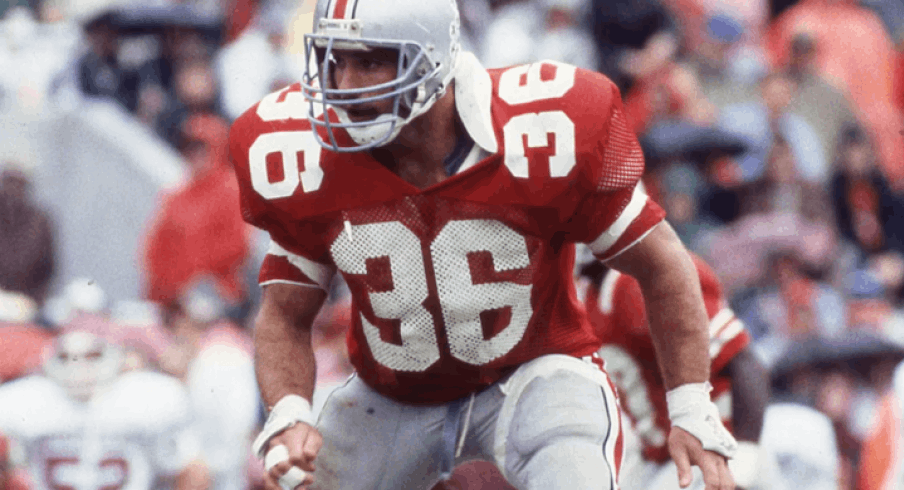
Chris Spielman arrived in Columbus with a reputation for intensity, but few could have predicted the scale of his impact. From his earliest appearances, it was clear that Spielman approached football with a rare seriousness. Every snap mattered. Every assignment was personal. Teammates recall a linebacker who studied film relentlessly, understood opposing offenses deeply, and refused to be outworked in practice.
Ohio State defenses of the mid-1980s were built on structure and physicality, and Spielman fit perfectly into that identity. He was not the flashiest player on the field, but he was almost always the most prepared. His understanding of blocking schemes, running lanes, and quarterback tendencies allowed him to arrive at the point of attack before plays fully developed.
The meaning behind 546 tackles
The number itself is staggering. Five hundred forty-six tackles over a collegiate career is not simply a reflection of opportunity or longevity. It is evidence of consistency, anticipation, and durability. Spielman did not chase statistics. His tackles came naturally as a byproduct of doing his job with precision.
What separated him from many great defenders was his ability to diagnose plays instantly. While others reacted, Spielman anticipated. He filled gaps with authority, wrapped up ball carriers securely, and rarely missed in space. Coaches trusted him implicitly, often adjusting defensive calls knowing Spielman would correct mistakes on the fly.
Opposing offenses quickly learned that avoiding Spielman entirely was nearly impossible. Whether attacking the interior or stretching plays to the outside, his pursuit angles and relentless motor made him a constant presence.
Leadership without theatrics
Spielman’s leadership style was direct and uncompromising. He was not known for dramatic speeches or emotional displays. Instead, he led through example. His preparation, physical conditioning, and refusal to take shortcuts set a standard for the entire locker room.
Young defenders were often paired with Spielman during film sessions, learning how to study tendencies and recognize formations. Veterans leaned on him during critical moments, knowing he would make the correct adjustment. Coaches relied on him as an extension of the staff on the field.
In an era where leadership often came with bravado, Spielman’s influence was quieter but far more enduring. He demanded accountability, starting with himself.
Back-to-back All-American recognition
By the time Spielman earned All-American honors in 1986 and again in 1987, his reputation extended far beyond the Big Ten. National analysts praised his football intelligence as much as his physical play. He was recognized not just as a dominant linebacker, but as one of the most complete defensive players in the country.
Those honors reflected more than individual brilliance. They signaled respect for a player who elevated everyone around him. Ohio State’s defense consistently ranked among the nation’s best during his tenure, and Spielman was widely viewed as its anchor.
All-American recognition also placed him firmly among the elite defenders of his generation, cementing his status as a benchmark for future Buckeye linebackers.
The Lombardi Award and its significance
The Lombardi Award is reserved for players who embody power, technique, and leadership at the highest level. When Chris Spielman won the award in 1987, it was a moment of validation not only for him, but for the Ohio State defensive tradition.
That season represented the peak of his collegiate career. Spielman dominated games physically while maintaining remarkable discipline. He controlled the middle of the field, dictated tempo, and consistently disrupted offensive rhythm.
Winning the Lombardi Award placed him in rare company and affirmed what teammates and coaches already knew. Spielman was not simply productive. He was transformative.
Defining the ohio state linebacker tradition
Ohio State has produced countless elite linebackers over the decades, but many within the program trace the modern identity of the position back to Spielman. His combination of intelligence, toughness, and accountability became the gold standard.
Future Buckeye defenders were measured against the expectations he set. Coaches referenced his film as teaching material. Recruits were shown his highlights as examples of what it meant to play linebacker in Columbus.
Even today, his name is invoked when discussing effort, preparation, and defensive culture. Spielman’s legacy lives not just in record books, but in the mentality passed down from one generation to the next.
Beyond statistics and trophies
While accolades tell part of the story, they do not fully capture Spielman’s influence. His impact was felt in practices, meeting rooms, and moments when games hung in the balance. He was the player teammates trusted most when everything was on the line.
That trust, earned through consistency and sacrifice, is perhaps his greatest achievement. Football programs are built on belief, and Spielman inspired belief through his actions.
A legacy that endures
Chris Spielman’s time at Ohio State represents more than an era of defensive dominance. It symbolizes a standard of excellence that continues to define the program. His career serves as a reminder that greatness is built through preparation, discipline, and an unwavering commitment to the team.
Long after the final whistle of his college career, Spielman remains a cornerstone of Ohio State football history. His name stands not just for tackles and awards, but for what it truly means to wear the scarlet and gray.