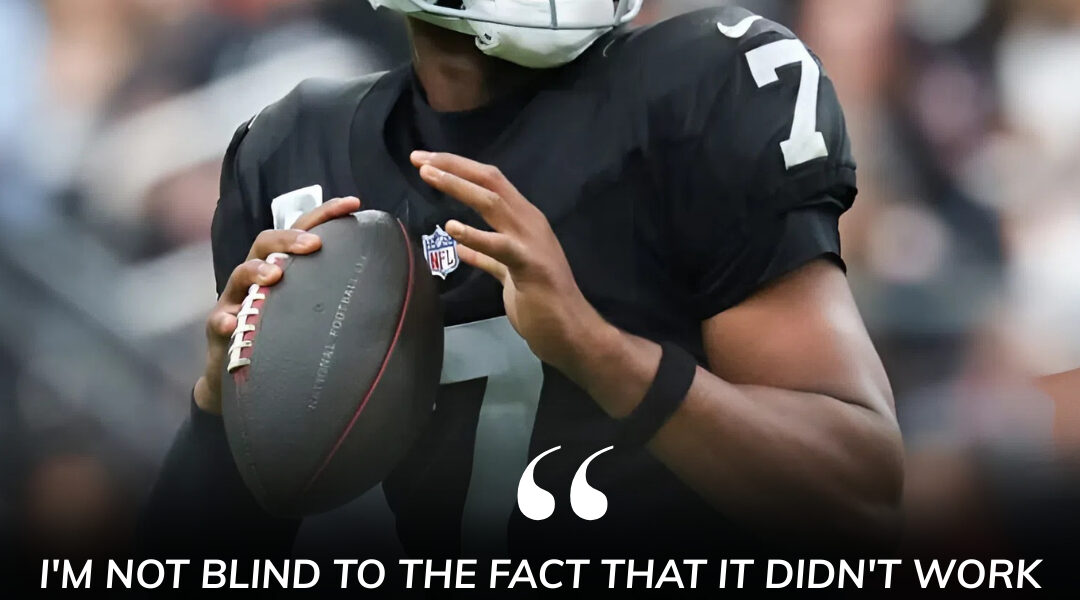

“I’m not blind to the fact that it didn’t work out the way I wanted. If I get another shot here or elsewhere, I’ll be ready to prove myself again.”
These words from Geno Smith, the veteran quarterback, carry more weight now than ever. After just one season with the Raiders, reports are emerging that the organization is poised to part ways with him, leaving fans, analysts, and players alike in shock. The news is a stark reminder of the brutal realities of the NFL, where the line between triumph and disappointment is razor-thin, and where a single season can redefine a player’s career trajectory.
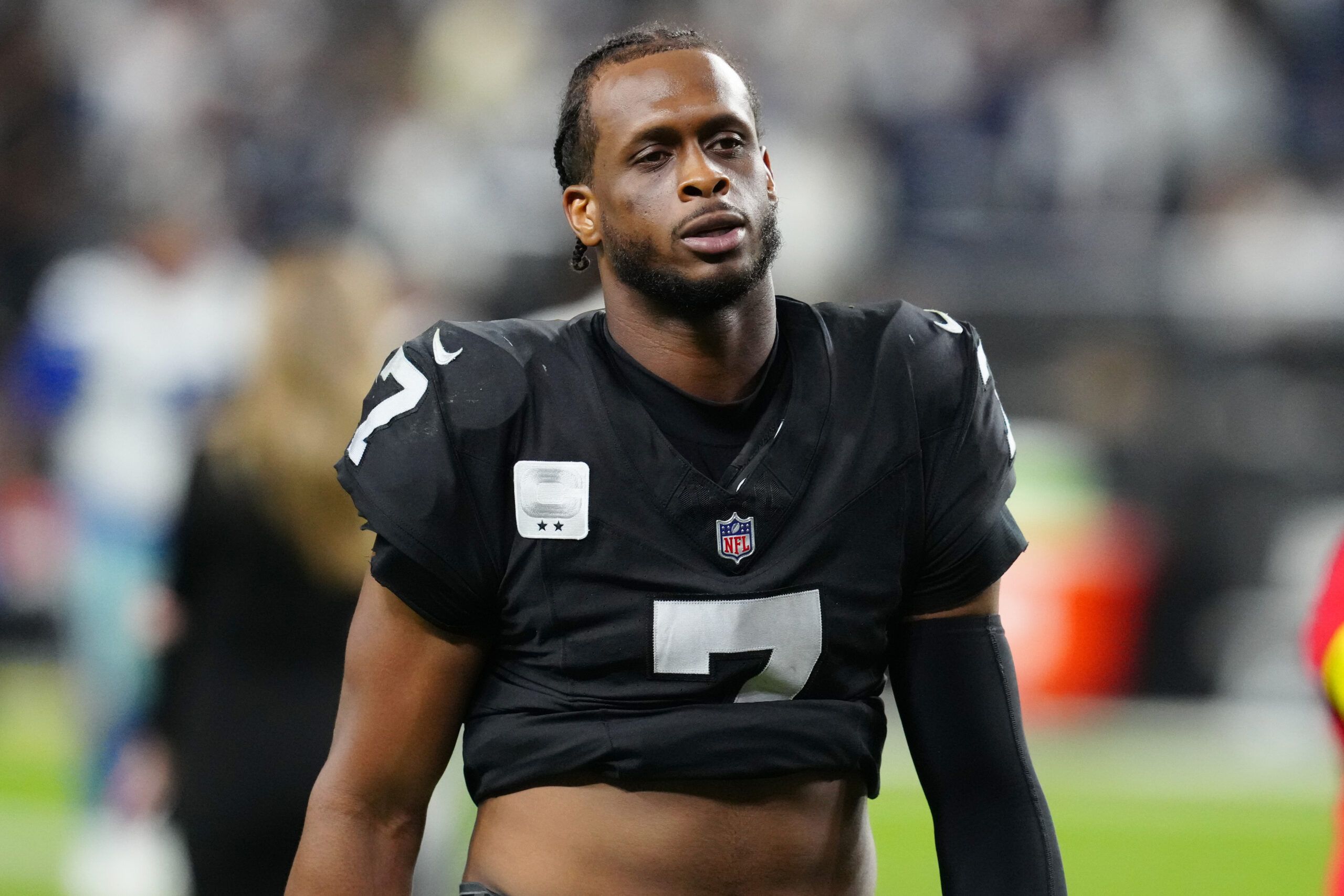
Smith’s arrival in Las Vegas was initially met with cautious optimism. Known for his resilience and professional maturity, he was seen as a stabilizing presence for a Raiders offense that had been searching for consistent leadership under center. Expectations were not necessarily sky-high, but there was a sense that Smith could provide the team with reliability and veteran savvy, traits that often translate to wins in the cutthroat world of professional football.
However, as the season unfolded, reality proved more complicated. Injuries, inconsistent play, and a series of high-pressure moments underlined the challenges Smith faced in an offense that sometimes struggled to find its rhythm. While there were flashes of brilliance—moments when Smith displayed poise, accuracy, and strategic vision—they were often overshadowed by turnovers, miscommunication, and the unforgiving nature of NFL defenses.
Fans who had hoped for a breakthrough were met with a rollercoaster of emotions. Each win brought renewed hope, but each loss felt like a reminder of what might have been. Social media and sports commentary exploded with debate: Was Smith the right fit? Could the Raiders’ struggles be blamed on coaching, personnel, or something beyond control? The answers were never simple, but the mounting pressure culminated in the current situation—reports that the Raiders are prepared to move on, leaving Smith’s future uncertain.
It is in moments like this that a player’s character is most visible. Smith’s statement reflects humility, determination, and a readiness to face whatever comes next. He acknowledges that things didn’t go as planned but refuses to let disappointment define him. “If I get another shot here or elsewhere, I’ll be ready to prove myself again,” he said. Those words reveal a man who understands the stakes of professional football, yet remains resilient in the face of setbacks. It is a mindset that has carried him through earlier career challenges, and one that will likely continue to shape his path forward.

From the team’s perspective, the decision to part ways with Smith is undoubtedly complex. NFL front offices must balance performance, potential, and long-term strategy, often making choices that seem cold or abrupt to outside observers. For the Raiders, the move signals a desire to explore other options at quarterback, perhaps seeking a younger player with untapped potential or someone who better fits the evolving offensive scheme. It is a business decision as much as a football one, and while fans may feel a sense of loss, the organization is acting within the harsh realities of professional sports.
For Smith, the road ahead is uncertain but not without opportunity. Veteran quarterbacks often find new life in different systems, bringing experience and perspective that younger players lack. Teams in need of a reliable presence at quarterback may see Smith as a valuable asset—a player who has navigated adversity, understands the NFL landscape, and can step into a leadership role quickly. His resilience, work ethic, and professionalism make him a candidate for redemption, a narrative that has played out before with other quarterbacks who initially struggled but ultimately found success elsewhere.
Beyond the technical aspects of football, there is a deeply human story here. Geno Smith’s journey is a reminder that professional athletes are more than statistics or highlight reels—they are people with dreams, pressures, and the constant weight of public scrutiny. A single season does not define a career, and setbacks can often serve as catalysts for growth, reinvention, and renewed motivation. The emotional impact of being released or moved on from a team is profound, yet Smith’s words suggest he is prepared to channel that experience into future success.
The Raiders’ decision also sparks larger conversations about player evaluation, team culture, and the expectations placed on quarterbacks in the modern NFL. In a league where attention is intense and patience is limited, the pressure to perform is relentless. Fans and analysts alike must grapple with the nuances of the game: the difference between a quarterback’s performance and the systemic challenges of a team, the role of coaching, and the often-overlooked intangibles that contribute to success. Smith’s situation exemplifies the delicate balance between talent, opportunity, and circumstance that defines professional football.
Despite the uncertainty, there are reasons for optimism. Smith has proven in the past that he can overcome obstacles and rise to the occasion. His career, which has included both high-pressure playoff appearances and seasons of personal development, demonstrates a level of perseverance that is rare in professional sports. Teams looking for a quarterback who brings more than just skill—someone with leadership, insight, and a measured approach—may see in Smith a player ready to contribute immediately.
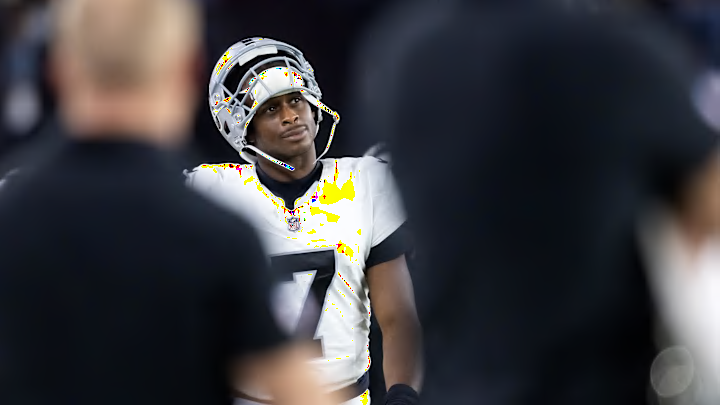
As the NFL community awaits official confirmation of the Raiders’ plans, the narrative around Smith will continue to unfold. Fans may debate the merits of the decision, but there is no question that the quarterback himself is entering a pivotal chapter. Whether he lands with a new team or finds another opportunity with the Raiders, the defining trait will be his ability to adapt, learn, and demonstrate that his journey is far from over.
In reflecting on this season, Smith’s words resonate: “I’m not blind to the fact that it didn’t work out the way I wanted.” There is honesty in that admission, and it is paired with an undeniable resolve: “If I get another shot here or elsewhere, I’ll be ready to prove myself again.” Those statements encapsulate the duality of professional sports—the heartbreak of unmet expectations and the relentless drive to keep moving forward.
Ultimately, Geno Smith’s story is emblematic of the NFL itself: unpredictable, intense, and filled with moments that test both skill and character. The Raiders’ reported decision to part ways marks the end of one chapter but the potential beginning of another. For Smith, the season may have been a setback, but it is also a platform for future opportunities. Fans, analysts, and teammates alike will be watching closely to see how the next act unfolds—a reminder that in football, as in life, resilience often determines the ultimate outcome.
Whether under the bright lights of a new stadium, in the locker room of a different franchise, or simply in his own personal pursuit of excellence, Smith’s commitment to proving himself remains unwavering. His journey is a testament to perseverance, a narrative of challenge met with courage, and a story that continues to captivate those who follow the NFL with passion and emotion.
In the end, Geno Smith’s journey with the Raiders may have lasted just a single season, but it has left an indelible mark. It serves as a vivid illustration of the highs and lows of professional football and the enduring spirit of a player determined to seize the next opportunity. The NFL landscape is ever-changing, and as Smith moves forward, one truth remains clear: he is ready, willing, and prepared to prove himself once more.