Elon Musk Paints Seven Chilling Scenarios for the Future: When Universities Lose Value, AI Reigns, and Humanity Questions Its Purpose

Elon Musk has never been known for modest forecasts. In the latest episode of the Moonshots with Peter Diamandis podcast, the Tesla and SpaceX CEO offered a sweeping and unsettling vision of the future—one shaped by exponential artificial intelligence, humanoid robots that outperform elite professionals, and a society forced to confront a deeply uncomfortable question: what is the purpose of human existence when machines can do almost everything better?
While Musk himself admits that not all of his predictions will necessarily come true, they reveal how one of the most influential technological minds of our era views the road ahead. His message is not simply about innovation—it is about disruption at every level of society, from education and healthcare to geopolitics, energy, and human meaning.
The Real Bottleneck of AI Isn’t Chips—It’s Power
Contrary to popular belief, Musk argues that the biggest constraint on AI development is no longer advanced chips or computing power. Instead, the true bottleneck is electricity and the infrastructure required to deliver it.
According to Musk, within the next one to two years, AI expansion will be limited by the availability of power grids, transformers, cooling systems, and stable energy supply. He pointed to his own company, xAI, as an example: providing one gigawatt of electricity to a new computing cluster in Memphis has proven far more difficult than acquiring cutting-edge AI chips.
In other words, intelligence at scale is becoming an energy problem, not a silicon problem. As AI systems grow larger and more capable, nations and companies that can generate and distribute massive amounts of electricity will gain a decisive advantage.
Humanoid Robots Will Surpass the Best Doctors
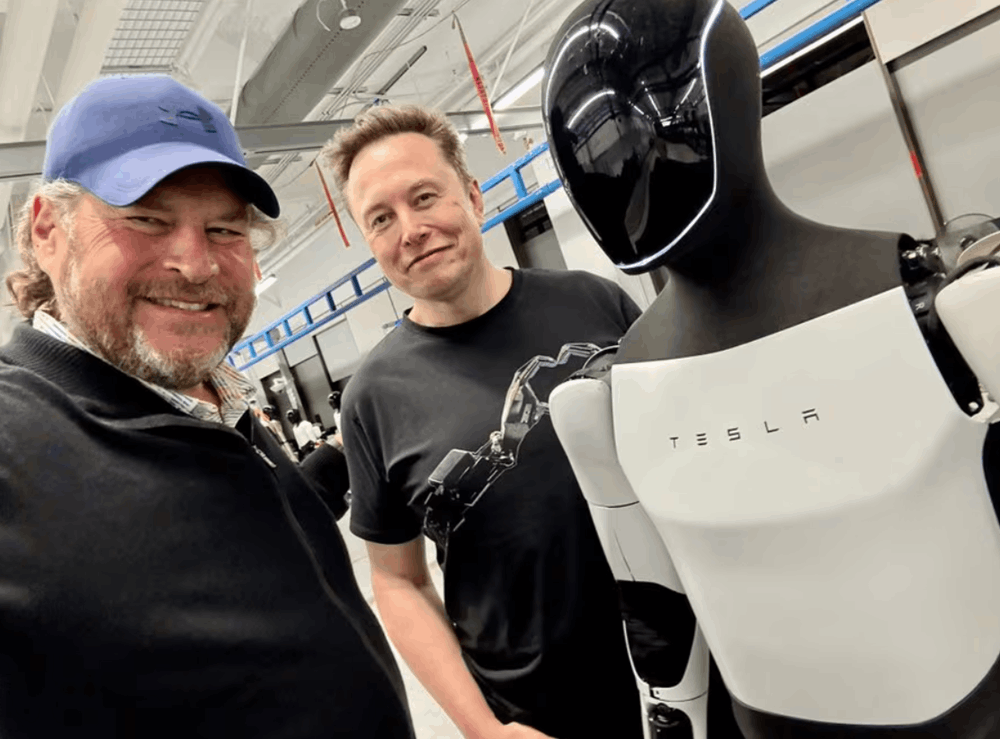
One of Musk’s most controversial predictions involves Tesla’s humanoid robot, Optimus. He claims that within roughly three years, humanoid robots could outperform the world’s best surgeons. With a safety margin, he estimates that within four years robots will be better than any human doctor—and by year five, comparisons may no longer even make sense.
The logic behind this prediction lies in exponential growth across three fronts: AI software, chip performance, and electromechanical precision. Unlike humans, robots can instantly share knowledge and experience across the entire network. Every successful procedure performed by one robot becomes immediately available to all others.
If this vision materializes, elite medical expertise would no longer be scarce or expensive. World-class healthcare could become a low-cost, widely accessible service—fundamentally reshaping global health systems and medical education.

Universities Are Losing Their Practical Value
As machines encroach on even the most complex intellectual work, Musk questions the relevance of traditional higher education. In his view, universities today offer little practical value beyond social experience.
The long-standing promise—study hard, attend a prestigious university, and secure a good job—is rapidly collapsing. AI can already function as a near-perfect personal tutor: endlessly patient, constantly updated, and capable of tailoring explanations to any learning style.
Meanwhile, many university curricula remain slow, outdated, and disconnected from real-world technological progress. Musk suggests that knowledge itself has become nearly free, and formal credentials may soon matter far less than adaptability, curiosity, and first-principles thinking.
Extending Human Life Is Not Science Fiction
When it comes to aging and death, Musk adopts a strikingly calm tone. He argues that significantly extending human lifespan—even achieving a form of “semi-immortality”—is not a fantasy, but a solvable engineering problem.
His reasoning is based on the observation that aging occurs in a synchronized manner across the body, suggesting the presence of a shared biological clock. From this perspective, aging is not an unchangeable law of nature, but more like a design flaw—a biological program optimized for death rather than longevity.
If that “program” can be understood and altered, Musk believes radical life extension could become a reality within the coming decades.
China Will Dominate AI Compute Power
Looking at global competition, Musk predicts that China will emerge as the world’s leader in AI computing capacity. Since electricity is the key constraint for AI, the country that produces the most power gains a strategic edge.
Musk estimates that by 2026, China’s electricity production could exceed that of the United States by more than three times. While China currently lags behind in advanced chip manufacturing, Musk believes this gap is temporary. Once overcome, China’s scale and state coordination could make it the dominant AI power.
This shift would have profound implications for economics, military balance, and global influence.
A Wealthier Yet More Unstable Society
According to Musk, AI and automation will create a paradoxical future: widespread material abundance combined with social instability.
In a world where robots and AI produce goods and services at extremely low cost, deflation could become the norm and basic living standards could rise dramatically. Survival would require far less effort than at any point in human history.
Yet this very abundance may trigger a crisis of meaning. When people are no longer needed for survival or productivity, they may struggle to find purpose, motivation, and identity. Musk warns that a society without challenge could drift into psychological emptiness—or even chaos.
Solar Energy Is the Only Real Answer
On energy, Musk is unequivocal: the Sun is the solution. He is deeply skeptical of small-scale nuclear fusion projects on Earth, comparing them to “making ice in Antarctica”—expensive, unnecessary, and illogical when an enormous fusion reactor already exists in the sky.
Rather than attempting to create artificial suns, Musk argues humanity should focus on efficiently capturing, storing, and distributing solar energy. Solar power, combined with large-scale battery storage, is free, abundant, and sufficient to power both civilization and the coming AI revolution.
The Final Question: Why Do We Exist?
In a future where AI eliminates scarcity of information and skill, Musk believes humanity’s greatest limits will no longer be knowledge—but energy, physical resources, and the ability to create meaning.
When machines outperform humans in intelligence, productivity, and even creativity, the ultimate question shifts. It is no longer “What can we do?” but “Why do we do anything at all?”
Musk’s vision is not purely dystopian or utopian. It is a warning—and a challenge. The technologies coming into existence may grant humanity unprecedented power and comfort, but they also force a reckoning with purpose, values, and identity.
Whether society thrives or fractures in this future may depend less on machines—and more on how humans choose to redefine what it means to live a meaningful life.