Elon Musk’s blunt comment exposed political taboos, triggering outrage that revealed how fragile protected narratives truly are.

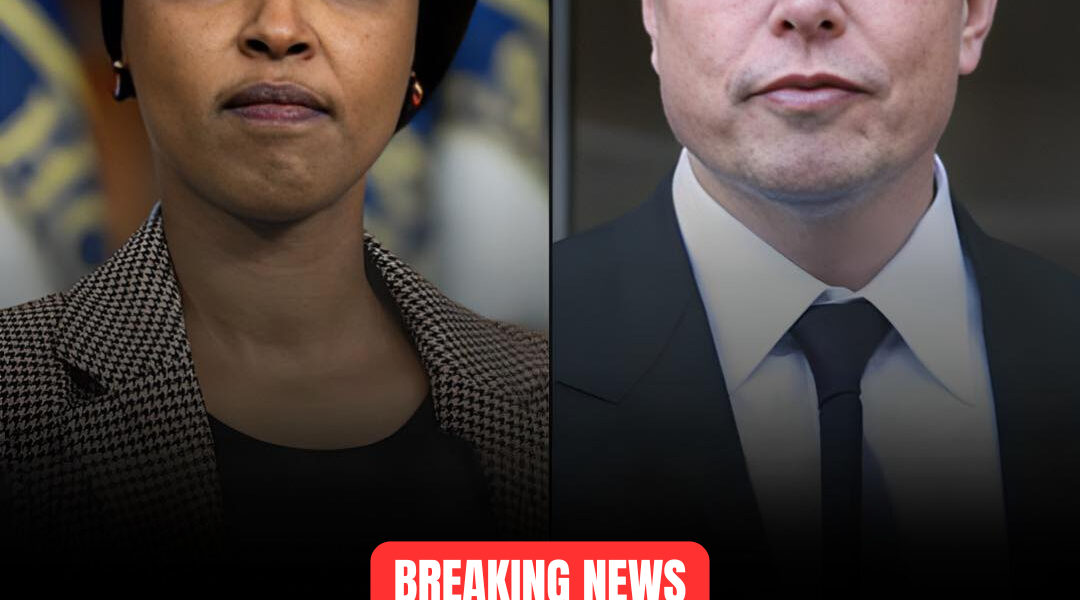
The moment Elon Musk pressed “post,” it detonated far beyond a routine social-media spat. What looked like a blunt, almost careless comment about Rep. Ilhan Omar’s political base quickly became a flashpoint—because it landed at the intersection of power, identity, immigration, and a national discomfort with asking hard questions.
Omar’s response was immediate and furious. She called Musk “one of the dumbest people on earth,” dismissed his claim as a conspiracy theory, and emphasized that her district is majority white. The words went viral within minutes. Supporters applauded her defiance. Critics saw something else entirely: a politician lashing out not just at Musk, but at the implication that her political story might be more complicated than her preferred narrative.
What Musk did—intentionally or not—was force an uncomfortable conversation into the open.
Elon Musk is not a career politician. He doesn’t speak in polished talking points or filter every sentence through a focus group. That is precisely why his comments hit harder than those of a cable news host or partisan pundit. When Musk says something, people don’t hear it as party propaganda; they hear it as a challenge. And challenges make institutions nervous.
At the core of the clash wasn’t just Omar’s district demographics. It was the broader question of political coalitions and protected narratives. Musk’s critics rushed to frame his comment as xenophobic or ignorant, but few engaged with the deeper issue: why even discussing the role of tight-knit voting blocs is treated as taboo, while similar analyses are routine elsewhere in American politics.
Every election analyst talks about Cuban Americans in Florida. Evangelicals in the South. Union households in the Midwest. But when the discussion turns to immigrant communities—particularly Somali Americans in Minnesota—the rules suddenly change. Questions become “dangerous.” Curiosity becomes “conspiracy.” And disagreement becomes moral failure.
Musk didn’t create that double standard. He tripped over it and exposed it.
The timing made the reaction even more explosive. Minnesota’s Somali community was already under intense scrutiny following ICE operations and a major welfare fraud scandal that shocked the state. Millions of dollars allegedly meant for children were siphoned off in a scheme that prosecutors say involved members of the community’s leadership class. For many Minnesotans, it raised painful questions about accountability, oversight, and political protection.
Into that atmosphere stepped Elon Musk—arguably the most influential private citizen in the world—asking, bluntly, whether political realities were being ignored.
Omar’s reply wasn’t just defensive. It was emotional. And emotion often signals vulnerability.
By focusing on insults, she sidestepped the broader conversation. Yes, her district may be majority white. But elections are not won by raw percentages alone. They are won by turnout, organization, and intensity. Small, highly mobilized communities can exert enormous influence—something every political strategist understands. Musk’s comment, stripped of outrage, was not radical. It was basic political math.
Yet the backlash suggested something more fragile was being protected.
Musk’s role in this moment is larger than one tweet. Over the past few years, he has positioned himself as a disruptor not only of industries, but of narratives. By buying and reshaping a major social platform, he removed layers of editorial cushioning that once insulated public figures from direct challenge. For politicians accustomed to controlled environments, that loss of insulation feels like chaos.
But to millions of Americans, it feels like honesty.
The ferocity of Omar’s response only amplified Musk’s point. If the claim was truly laughable, why react with rage instead of rebuttal? If facts were so firmly on her side, why not calmly dismantle the argument? The choice to escalate emotionally made the exchange memorable—and curiosity-provoking.
People began asking questions they hadn’t before. How do voting blocs actually function in Minnesota? What role does community leadership play in turnout? Why are some topics framed as off-limits? None of those questions are hateful. They are civic.
Musk doesn’t pretend to be neutral. He doesn’t need to. His influence comes from his willingness to say what many think but fear to voice. That trait makes him polarizing, but it also makes him powerful. In this case, it forced a sitting member of Congress into a reactive posture—and revealed how brittle modern political discourse has become.
This wasn’t about Somali Americans versus white voters. It was about whether facts can be discussed without moral condemnation. It was about whether political analysis is allowed to exist outside approved narratives. And it was about who gets to decide which questions are acceptable.
Omar accused Musk of spreading conspiracy theories. But conspiracy thrives in silence, not sunlight. Musk didn’t whisper in forums or cloak his words in coded language. He spoke openly, on a public platform, inviting disagreement. That is the opposite of conspiratorial behavior. It is confrontation.
And confrontation, while uncomfortable, is often how truth advances.
In the end, no laws were changed by this exchange. No elections were overturned. But something shifted. The incident reminded people that power reacts differently when challenged by someone who cannot be easily dismissed, canceled, or controlled.
Elon Musk walked away largely unchanged. Rep. Ilhan Omar, however, revealed how thin the line has become between political confidence and narrative panic.
And for millions watching, the lingering question wasn’t whether Musk was rude or Omar was angry.
It was why such a simple political observation triggered such a powerful response—and what that says about the stories we’re no longer allowed to question.