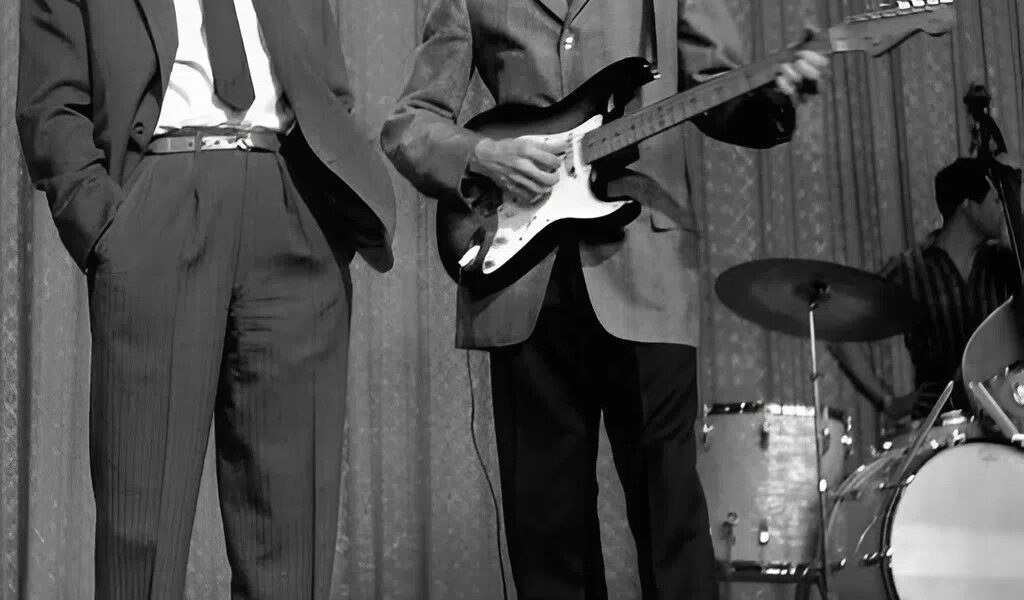

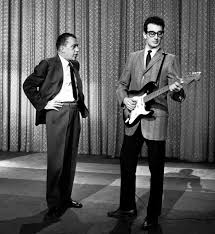
On December 1, 1957, a young musician with thick-rimmed glasses, a clean-cut suit, and an unmistakable sound stepped onto one of the most influential stages in American entertainment history. That night, Buddy Holly performed on The Ed Sullivan Show—a moment that would quietly but permanently alter the course of rock ’n’ roll.
At the time, The Ed Sullivan Show was more than just a television program. It was a cultural gatekeeper. Appearing on Sullivan’s stage meant instant national exposure, legitimacy, and entry into millions of American living rooms. For emerging artists, it was the difference between regional popularity and true stardom.
Buddy Holly, only 21 years old, arrived not as a novelty act, but as a symbol of a new musical generation.
A Performance That Felt Different
Unlike many rock performers of the era who relied on flashy movements or rebellious imagery, Buddy Holly stood confidently with his Fender Stratocaster, backed by his band The Crickets. There were no theatrics. No exaggerated gestures. Just tight harmonies, crisp rhythms, and a sound that blended country, rhythm and blues, and pop into something entirely fresh.
That night, Holly performed “That’ll Be the Day,” the song that had propelled him to national fame earlier that year. From the first chord, it was clear this wasn’t just teenage music—it was songwriting-driven rock, melodic and emotionally direct.
Television audiences saw something new:
-
A rock musician who wrote his own songs
-
A band that played its own instruments live
-
A clean-cut image that contrasted sharply with rock’s “dangerous” reputation
It made rock ’n’ roll feel accessible, intelligent, and enduring.
Breaking the Mold of 1950s Rock
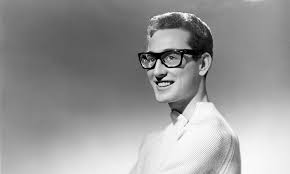
In 1957, rock ’n’ roll was still controversial. Many parents viewed it as loud, reckless, and morally suspect. Buddy Holly challenged that perception without compromising authenticity. His appearance on The Ed Sullivan Show reassured mainstream America that rock music could be creative, disciplined, and respectful—without losing its energy.
Ed Sullivan himself was known for skepticism toward rock artists, yet Holly’s professionalism and talent won over both the host and the audience. The performance was calm, confident, and polished—qualities that helped normalize rock music in American households.
Influence Beyond the Moment
While the performance lasted only a few minutes, its impact echoed for decades.
Future legends such as The Beatles, Bob Dylan, The Rolling Stones, and Bruce Springsteen would later cite Buddy Holly as a foundational influence. Paul McCartney famously purchased Holly’s song catalog years later, acknowledging the profound effect Holly had on his own songwriting.
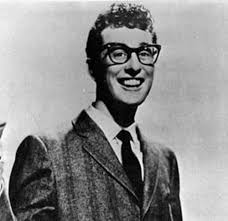
The idea of a self-contained band—writing, performing, and shaping its own sound—became a blueprint for modern rock. And that blueprint was broadcast nationwide on December 1, 1957.
A Lasting Television Legacy
Buddy Holly would tragically die just over a year later, in February 1959, but moments like his Ed Sullivan appearance preserved his presence forever. Today, that black-and-white performance is studied, replayed, and revered—not for spectacle, but for its sincerity and quiet revolution.
It wasn’t loud defiance that changed history that night.
It was confidence.
It was melody.
It was a young artist showing America what rock ’n’ roll could become.