
A Viral Claim Shakes America: Fame, Fear, and the Dangerous Power of Unverified Political Bombshells

Willie Nelson’s name suddenly trended across social media feeds, not for music, but for a viral political claim that exploded into timelines, comment sections, and heated debates overnight.
The post framed itself as “breaking news,” using urgent language that immediately triggered emotional reactions, rapid sharing, and a sense that democracy itself might be under direct and secret attack.
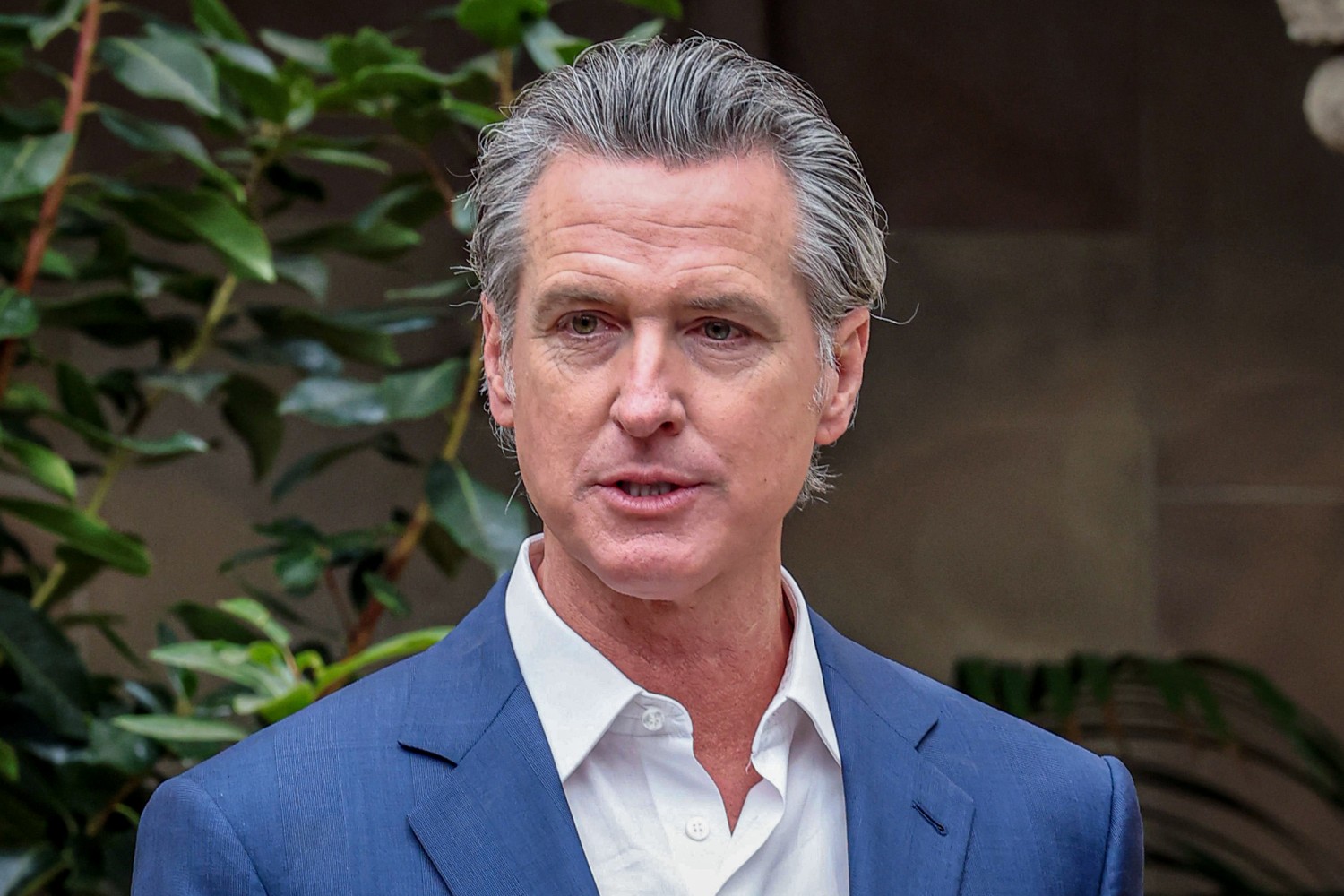
At the center of the controversy stood California Governor Gavin Newsom, accused in viral posts of being investigated for an alleged criminal scheme involving immigrant voters and mail-in ballots.

Crucially, the claim spread faster than verified facts, faster than official statements, and faster than most readers could pause to ask whether any credible evidence had actually been presented.
Supporters of the claim argued that celebrity whistleblowers often speak before institutions catch up, insisting that history rewards those who sound alarms early, even when powerful figures deny wrongdoing.
Critics responded that fame does not equal proof, warning that repeating unverified accusations risks damaging public trust, reputations, and the fragile legitimacy of democratic elections.
The phrase “if confirmed” became the rhetorical shield, allowing speculation to masquerade as near-certainty while technically avoiding direct legal assertions of guilt.
In today’s algorithm-driven media environment, such phrasing is powerful, because it invites outrage while escaping responsibility, encouraging users to share first and verify later.
Mail-in voting has long been a political flashpoint in the United States, especially after the 2020 election amplified fears, lawsuits, and misinformation across partisan lines.
California’s universal mail-in ballot system, often praised for increasing participation, is simultaneously criticized by skeptics who believe expanded access invites manipulation or fraud.
No public evidence currently confirms claims of a criminal investigation tied to registering undocumented immigrants to vote through California’s voting programs.
Election experts consistently note that non-citizen voting is rare, heavily penalized, and statistically insignificant, yet the perception of risk often matters more than data.
The viral claim illustrates how easily public fear can be reignited by familiar narratives that combine immigration, elections, and alleged elite corruption.
Social media platforms reward emotionally charged content, not accuracy, pushing posts that provoke anger or fear into recommendation feeds and trending lists.
Once a claim reaches that stage, corrections rarely travel as far, leaving millions exposed to an initial impression that lingers even after doubts emerge.
Supporters framing the story as suppressed truth argue that mainstream media silence itself proves a cover-up, reinforcing distrust toward traditional journalism.
Journalists counter that responsible reporting requires verifiable documents, named sources, and official confirmation, not viral screenshots or anonymous promises of “evidence coming soon.”
The phrase “details in the comments” has become a hallmark of engagement bait, designed to boost interaction rather than deliver substantiated information.
In comment sections, speculation multiplies, users add their own interpretations, and rumors evolve into elaborate narratives that feel increasingly real to participants.
Psychologically, repeated exposure to a claim can create familiarity, and familiarity is often mistaken for truth, especially when reinforced by like-minded communities.
Political polarization intensifies this effect, as readers are more likely to accept claims that confirm existing beliefs while dismissing contradictory information as propaganda.
This dynamic turns social media into a battlefield of narratives rather than a forum for shared facts, with truth becoming secondary to tribal loyalty.
High-profile names, whether musicians or politicians, act as accelerants, lending perceived credibility regardless of their actual access to verified evidence.
History offers cautionary tales where false allegations caused irreversible harm, even when later disproven or quietly retracted after public damage was done.
At the same time, genuine scandals have sometimes been uncovered by outsiders, reminding audiences that skepticism should apply equally to denials and accusations.
The challenge lies in balancing openness to accountability with disciplined insistence on evidence before drawing conclusions or sharing explosive claims.
Democracy depends not only on fair elections, but on public confidence that outcomes are legitimate, rules are enforced, and accusations are handled transparently.
When viral content undermines that confidence without proof, the long-term damage can outweigh any short-term political advantage.
For everyday users, the responsibility is uncomfortable but unavoidable: pause, question sources, and resist the impulse to amplify uncertainty as certainty.
Asking simple questions matters, including who benefits from the claim, what evidence exists, and why verification has not yet occurred.
Platforms, too, face pressure to address misinformation without appearing partisan, a balance they have repeatedly struggled to maintain.
The economic incentive structure of attention-based media makes restraint difficult, as outrage reliably converts into clicks, shares, and advertising revenue.
Politicians targeted by viral allegations often face a dilemma, knowing that responding can amplify the story, while silence is framed as guilt.
Legal systems move slowly by design, but social media operates at the speed of emotion, creating a dangerous mismatch in expectations.
When promised evidence fails to appear, attention usually shifts elsewhere, leaving unresolved impressions embedded in public memory.
This pattern erodes accountability for those who make dramatic claims without follow-through, encouraging repetition of the same tactic.
For fans and followers of public figures, emotional loyalty can override critical thinking, transforming admiration into uncritical belief.
Conversely, reflexive dismissal can also blind observers to legitimate concerns, highlighting the need for consistent standards regardless of political alignment.
The current controversy ultimately says less about one individual claim and more about the information ecosystem that allowed it to flourish.
It exposes vulnerabilities in how modern societies process breaking news, authority, and trust under constant digital pressure.
Whether evidence ever emerges or not, the episode will be remembered as another stress test for democratic discourse in the internet age.
The real question is not only whether a claim is true, but how quickly millions are willing to believe it without confirmation.
In that sense, the story’s impact extends beyond politics, touching culture, media literacy, and collective responsibility.
Every share is a small act of endorsement, shaping what others see, think, and fear in an already divided environment.
The future of informed debate depends on slowing the cycle, demanding proof, and valuing accuracy over adrenaline.
Until then, viral political bombshells will continue to detonate across feeds, leaving confusion, controversy, and conversation in their wake.