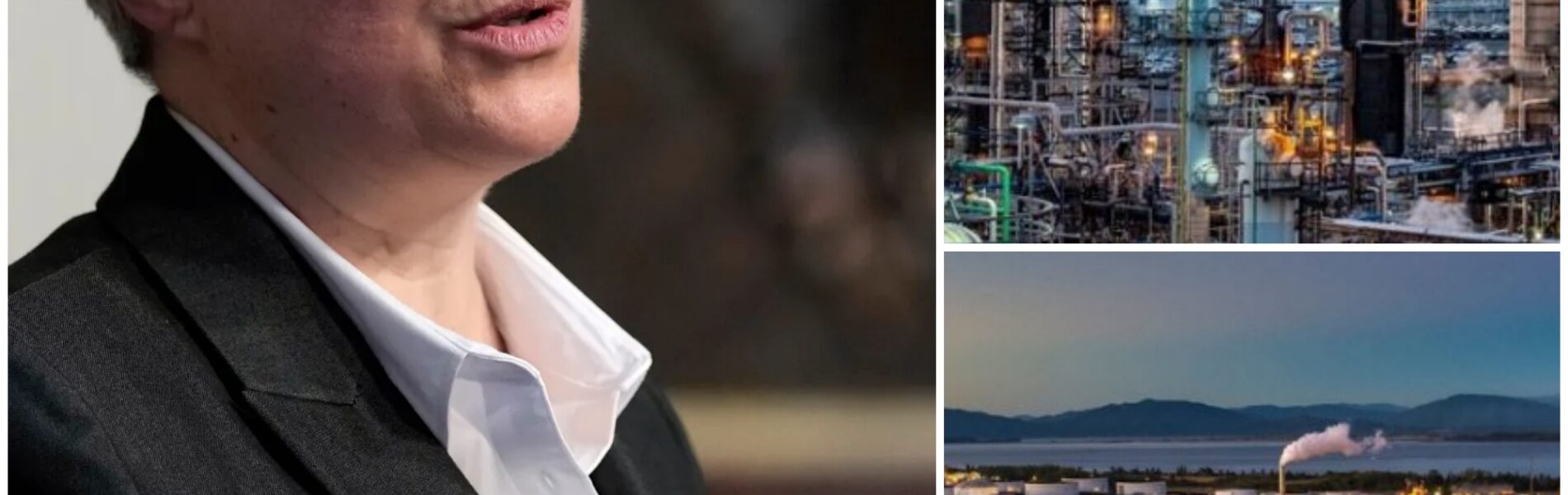

Oregon’s Fuel Future in Peril as Phillips 66 Signals More Refinery Divestments: Ferndale Plant — Lifeline for Most of State’s Gas — Now on the Chopping Block
Oregon’s entire fuel supply chain is hanging by a thread after Phillips 66 made clear in recent corporate filings that it is actively divesting up to $3 billion in refinery assets — including the Ferndale refinery in Washington, the single most critical facility supplying gasoline and diesel to Portland and much of the state.

The warning follows the company’s abrupt December 2024 shutdown of its 139,000-barrel-per-day Los Angeles refinery — a move that erased a major piece of West Coast refining capacity overnight. Now, with Ferndale firmly in the crosshairs, energy analysts, trucking associations, and rural Oregon communities are sounding the alarm: the state has no refineries of its own, no meaningful backup import route, and only 10–15 days of fuel storage — barely half the national average.
The Olympic Pipeline: Oregon’s Fragile Artery
Nearly all of Oregon’s ~100,000 barrels per day of gasoline and diesel demand flows through one aging 400-mile lifeline: the Olympic Pipeline. The line carries refined products south from Washington’s five refineries — BP Cherry Point, Phillips 66 Ferndale, Marathon Anacortes, Shell Puget Sound, and U.S. Oil Tacoma — directly into Portland’s storage terminals.
When the pipeline suffered a brief maintenance shutdown in September 2025, pump prices spiked within hours, not days. AAA Oregon reported stations scrambling to ration inventory as panic buying set in. The state’s razor-thin storage cushion means any sustained disruption — whether from maintenance, mechanical failure, regulatory shutdown, or divestiture — risks running dry in under two weeks.
Phillips 66’s Pattern: California Exit, Washington Next?
Phillips 66 has been clear about its strategy. In investor calls and SEC filings, executives have repeatedly cited shrinking refining margins, declining demand for traditional fuels, and mounting regulatory pressure as reasons for exiting or converting assets. The Los Angeles refinery closure was the most visible example, removing 139,000 barrels per day from the West Coast supply pool almost instantly.

Now, Ferndale — which supplies the majority of Oregon’s fuel via the Olympic line — is listed among the assets under strategic review. While the company has not announced a firm closure date, the inclusion in the $3 billion divestiture portfolio has sent fuel-security experts and state officials scrambling.
In Salem, Governor Tina Kotek’s office has issued urgent warnings: “Oregon relies almost entirely on Washington refineries. Any change to their operations threatens our state’s fuel security.” The governor has directed her economic and energy teams to develop contingency plans, but insiders admit there is no realistic short-term alternative. Importing gasoline and diesel from Asia is logistically nightmarish — tankers take nearly a month to reach West Coast ports, followed by days of offloading, testing, and inland distribution.
The Math Is Brutal for Oregon Families

Oregon drivers already pay some of the highest fuel prices in the nation. As of December 2025, the average price was $3.70 per gallon — 75 cents above the national average of $2.95. For a typical driver consuming 480 gallons per year, that’s already $1,776 out of pocket annually — hundreds more than drivers in Oklahoma or Texas.
If Ferndale closes or converts and Oregon is forced to rely heavily on Asian imports, industry modeling shows pump prices could surge to $8–$10 per gallon. That translates to an annual fuel bill of $3,840–$4,800 — an extra $2,000–$3,000 per household, equivalent to more than two months’ rent for many working families.
For a school bus driver in rural Klamath Falls or a trucker in Eastern Oregon, these numbers aren’t statistics — they’re the difference between making payroll, feeding a family, or losing a job.
Washington’s Climate Laws Seal the Timeline
Washington state law is unambiguous: all refineries must achieve net-zero greenhouse gas emissions by 2050 or shut down. The Clean Energy Transformation Act requires utilities to reach 100% clean electricity by 2045, and the state’s April 2025 refinery transition study admits that the five major facilities — including Ferndale — will likely change product mix or function, operating at significantly lower volumes than today’s petroleum output.
California’s experience offers a grim preview: Phillips 66’s Rodeo refinery conversion to renewable diesel slashed output and jobs sharply. Valero’s Benicia facility is set to end petroleum refining by April 2026, removing another 145,000 barrels per day from the regional supply. Federal analysts warn California will lose ~17% of in-state refining capacity in just 12 months.

If Washington follows suit, Oregon’s best-case scenario is a drastically reduced stream of alternative fuels — nowhere near enough to meet current demand.
The state’s own modeling stops short of hard numbers, but real-world conversions show losses of tens of thousands of barrels per day, with only 20–30% replaced by renewables.
No Backup Plan, No Margin for Error
Oregon has no domestic refining capacity, no alternative pipeline, and no strategic reserve large enough to weather prolonged disruption. Every gallon burned in the state traces back to that single, aging artery — the Olympic Pipeline.
For working families already stretched thin, the threat is no longer theoretical.
It is the new price of dependence.
Governor Kotek’s office has pledged to develop contingency plans, including emergency fuel-import protocols and negotiations with Washington to preserve Ferndale’s capacity. But time is short, and the math is unforgiving.
Every Oregon driver now lives on a shrinking fuel island — hemmed in by policy, geography, and corporate decisions made far from Salem.
The lifeline is fraying.
The countdown has begun.