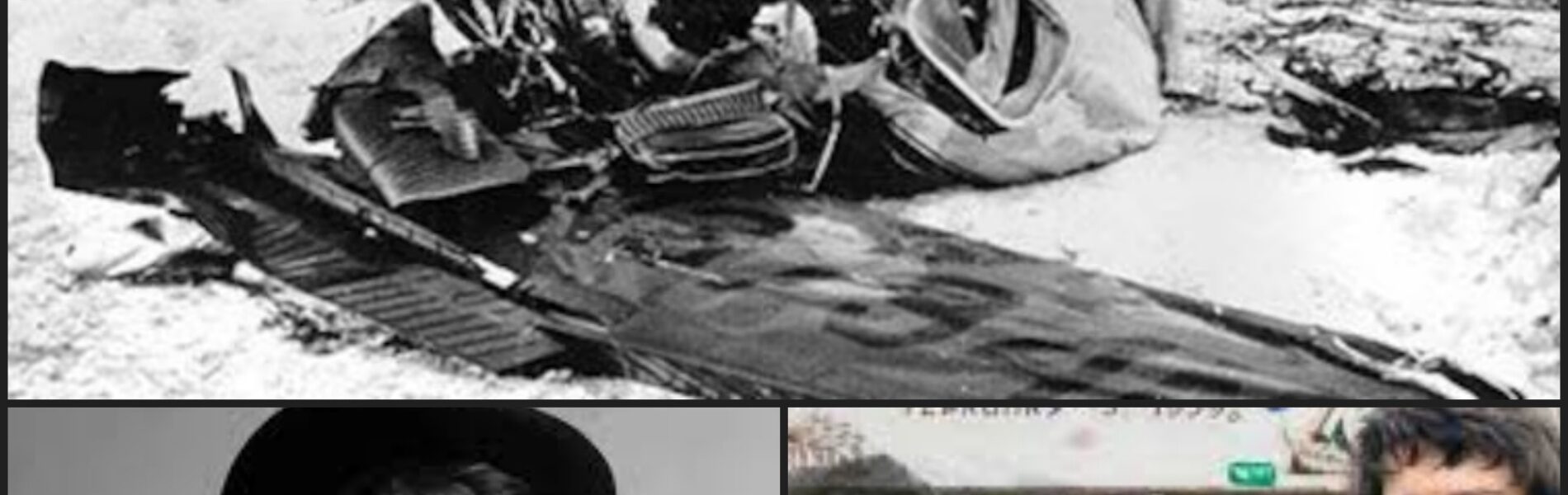

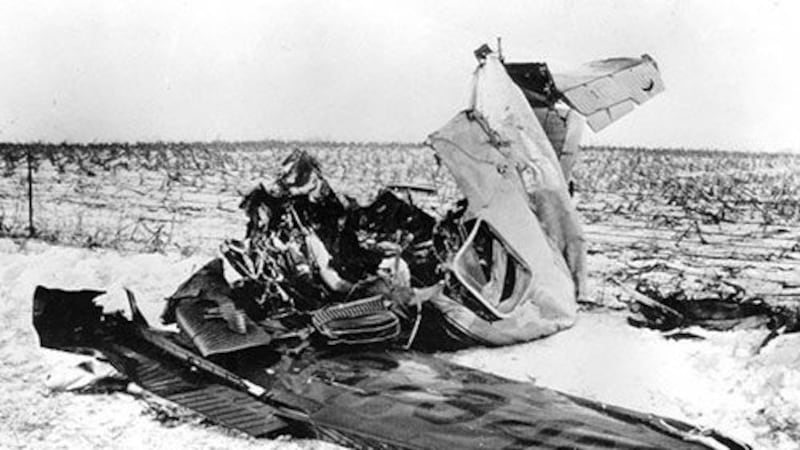
The winter of 1959 was an unrelenting beast in the American Midwest. In the early hours of February 3rd, the town of Clear Lake, Iowa, was paralyzed by a biting, sub-zero chill and a wind that felt like a razor against the skin. At the local airport, a small Beechcraft Bonanza sat on the runway, its engine humming against the backdrop of a snow-choked sky. Inside the Surf Ballroom just a few miles away, the “Winter Dance Party” had just come to an end, but for the musicians involved, the real struggle was just beginning.
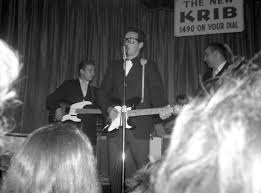
Among the performers was Waylon Jennings, then a young, aspiring bass player for Buddy Holly. History remembers that night for the tragedy that followed, but for Jennings, the night was defined by a haunting, psychological weight—a feeling he could never quite name, but one that would stay with him for the rest of his life.
The Weight of a Cold Intuition
Before the plane ever left the runway on that bone-chilling night, Waylon Jennings was struck by a sensation that defied logic. It wasn’t the sharp, stabbing fear of someone who foresees a crash. It wasn’t the frantic panic of a phobia. It was something quieter, more insidious—a deep-seated hunch that something was fundamentally “wrong.”
Jennings would later recall the moment with startling clarity. As the group hurried to pack their gear, the exhaustion of weeks spent on broken-down, unheated buses was etched into every face. The sound of the wind howling outside the ballroom felt like an omen. Amidst the rush of luggage being moved and the distant drone of the aircraft warming up in the Iowa frost, a persistent thought took root in Jennings’ mind: I should not be on this flight.
There was no mechanical evidence to support this. There was no specific reason to doubt the pilot’s ability. It was pure instinct—that primal, guttural sense of self-preservation that humans so often ignore in favor of convenience or social politeness… until it is far too late.
A Fateful Exchange of Seats
The story of how Waylon Jennings ended up staying on the bus while J.P. Richardson, known as “The Big Bopper,” took his seat on the plane is one of the most famous anecdotes in music history. But seen through the lens of Jennings’ premonition, the exchange takes on a supernatural quality.
Richardson was suffering from the flu, his large frame battered by the freezing temperatures of the tour bus. He approached Jennings and asked for his seat on the chartered plane so he could get to the next stop early and find a bed. Jennings, still feeling that “unnamed feeling” pulling at his gut, agreed.
When Buddy Holly found out that Jennings wasn’t going to fly, he jokingly told him, “Well, I hope your ol’ bus freezes up!”
To which Jennings replied with the words that would haunt his dreams for decades: “Well, I hope your ol’ plane crashes!”
In that moment, the exchange was just banter between friends. But underneath the jokes, the “wrongness” Jennings felt was manifesting. He wasn’t just giving up a seat; he was unknowingly stepping out of the path of a destiny that was about to claim three of the brightest stars in rock ‘n’ roll.
The Physics of a Lingering Thought
What is a premonition? Scientists often call it “predictive processing”—the brain’s ability to pick up on thousands of tiny, subconscious cues (the rattle of the wind, the look in the pilot’s eye, the sheer intensity of the storm) and synthesize them into a feeling of dread.
For Jennings, the “Ice of Iowa” wasn’t just on the ground; it was in the air. He remembered the frantic energy of the night, the way the light caught the ice crystals in the air, and the overwhelming desire to just stay put. While the world saw a young man being “kind” to a sick colleague, Jennings felt like a man who had narrowly avoided a closing trap.
The tragedy occurred mere minutes after takeoff. The plane, burdened by the weather and perhaps the weight of the expectations placed upon it, spiraled into a cornfield. Buddy Holly, Ritchie Valens, and J.P. Richardson were gone in an instant. The “unnamed feeling” Jennings had experienced was suddenly given a name: Survival.
The Haunting Aftermath
For Waylon Jennings, the nightmare didn’t end with the crash. It began there. For years, he carried a crushing burden of “survivor’s guilt,” exacerbated by the final, joking words he had exchanged with Holly. The premonition that had saved his life became a cage for his conscience.
He often looked back on that night in Clear Lake as the moment his innocence died. He realized that the instinct he had felt—the deep hunch that he shouldn’t board that plane—was a gift he didn’t know how to handle. He spent the rest of his career, and much of his life, trying to outrun the echoes of that Iowa runway.
It changed the way he approached music and life. He became one of the “Outlaws” of country music, a man who refused to follow the “proper” way of doing things, perhaps because he knew firsthand how fragile the structures of life truly are. He leaned into his instincts because, once before, his instincts had been the only thing standing between him and a frozen field.
Conclusion: The Silent Guardian
The story of Waylon Jennings on February 3rd, 1959, serves as a powerful reminder of the hidden dimensions of human experience. We live in a world of data, schedules, and logic, but there remains a part of the human spirit that communicates in whispers and shadows.
Jennings’ experience tells us that sometimes, the most important thing we can do is listen to the silence in our own hearts. That “unnamed feeling” wasn’t a hallucination; it was a warning. It was the briefest of glimpses into a future that wasn’t meant to be his.
Tonight, as the wind howls over the plains of Iowa, one can almost imagine the ghost of that young bass player standing on the tarmac, looking at the small plane, and feeling the cold chill of a premonition. It is a reminder of brilliance, ambition, and the thin, invisible line between a legacy that continues and a life paused in time.
Waylon Jennings lived to tell the story, but a part of him never truly left that runway. He remained a man shaped by the night he chose to stay behind, forever listening for the next whisper of instinct in the dark.