“He Was Only 37…”— The Sentence Alex Pretti’s Mother Couldn’t Finish, and the Truth That Followed

“He Was Only 37…”
— The Sentence Alex Pretti’s Mother Couldn’t Finish, and the Truth That Followed
“He was only 37…” and even those words trembled as they escaped his mother’s lips — unfinished, fractured by grief and confusion. At once they were simple and devastating: a lifetime reduced to two numbers, cut short on a winter morning that neither his family nor a watching nation would ever forget. Alex Jeffrey Pretti, an ICU nurse who had spent his days caring for America’s veterans, was dead — shot by federal agents in Minneapolis during a controversial immigration enforcement operation. He was 37 years old.

To millions around the country, his name became another headline; a data point in a larger political conflict. But the story of Alex — the brother, the son, the caregiver, the man with a warm smile and a quick laugh — was far from over.
A Life of Service, Not Violence
Alex wasn’t a stranger to hardship, but he never hid from the hard things in life. Born and raised near Green Bay, Wisconsin, he grew up in communities where service — big and small — meant everything. He was a Boy Scout, a choir singer, and an avid outdoorsman who loved mountain biking and connecting with the world beyond screens and city streets. After earning his degree from the University of Minnesota, he first worked in scientific research before returning to school to become a nurse.
By 2026, he was a licensed ICU nurse at the Minneapolis Veterans Affairs Medical Center — a role he took seriously, with compassion and pride. Colleagues said he was not only deeply dedicated to patient care but quick with humor, always ready to lighten someone’s burden even while carrying his own.
“Help” was more than a word to Alex — it was a mission.
January 24, 2026: A Morning That Changed Everything

On the chilly morning of January 24, federal agents from the Department of Homeland Security and Border Patrol were conducting operations in Minneapolis, arresting an undocumented man in connection with unrelated charges. Around fifty people had gathered — some to protest, others to record what was happening, and still others who simply found themselves in the wrong place at the wrong time.
Alex was among them.
What happened next is the subject of intense dispute and scrutiny. Federal authorities contended that Pretti approached officers while armed and behaved aggressively. Witness videos tell a radically different story: Alex holding up his hands, cellphone in view, trying to steady and help a woman who had been shoved to the ground and pepper‑sprayed. In those angles, he was pinned, beaten, and ultimately shot by agents upon a claim that he presented a threat — a claim his family and witnesses reject, calling it false and harmful.
In the end, Alex didn’t have a chance to finish his own sentence — or his own life.
Silence from Power, Outcry from the People
In the hours after the shooting, Alex’s parents described a surreal haze of grief and bewilderment. They were still waiting for direct communication from federal authorities — a call that never came, even as they were learning their son’s fate from television and social media posts.

Across the city and the nation, outrage began to swell. Protests erupted at the site of the shooting outside the Bishop Henry Whipple Federal Building, where friends, strangers, and activists demanded answers, transparency, and accountability. Chanting and candlelight vigils spread beyond Minneapolis, mobilizing people who had never marched in their lives.
Some compared the scene to war zones — not just because of the gunfire but because of the chill of disbelief that a caregiver, someone defined not by aggression but by aid, could be killed in broad daylight while helping another person.
A Voice from an Unexpected Corner: Chairman Cody Campbell
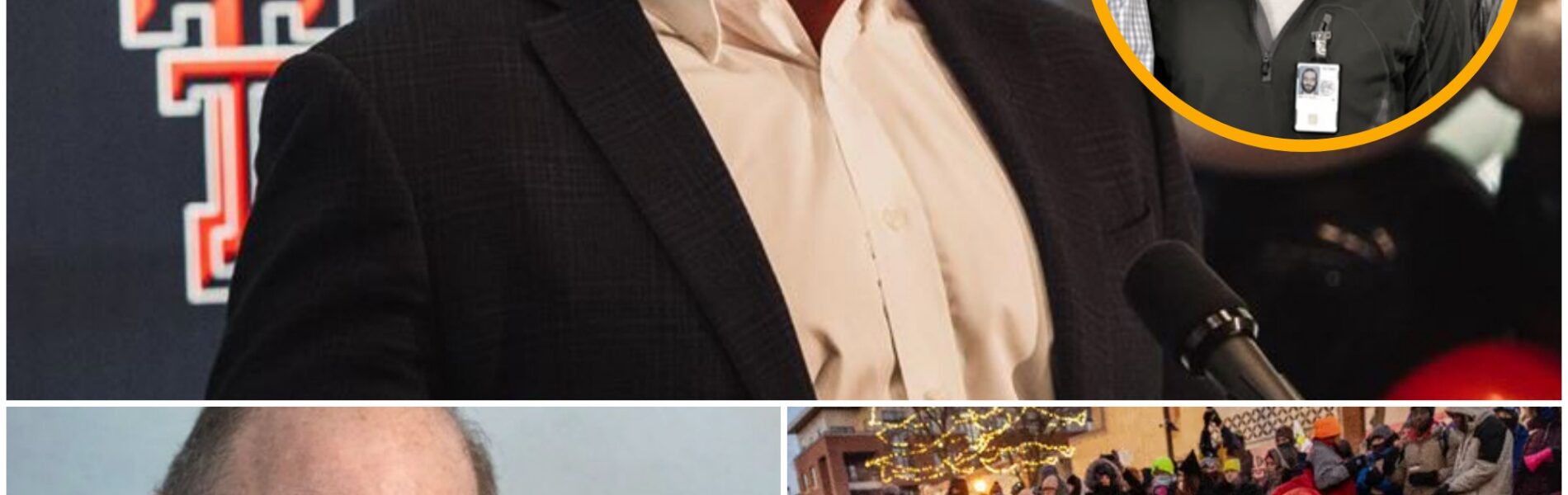
Across state lines in Texas, Chairman Cody Campbell — the newly elected head of the Board of Regents of the Texas Tech University System — watched the unfolding events with a heavy heart. Campbell, whose life had been defined by leadership, community building, and service in both business and education, felt something in Alex’s story that stirred a deeper reflection about civic responsibility and the fragility of American ideals.
Campbell is not a political partisan. As a businessman, former collegiate and NFL athlete, and someone deeply involved in shaping educational opportunities for others, he has spent much of his career creating spaces where ambition and hope could flourish. He was unanimously elected chairman of the Board of Regents in April 2025, having distinguished himself through leadership roles on finance committees, charitable initiatives, and mentorship programs.
Yet even a figure rooted in football fields and boardrooms could not ignore the raw humanity of Alex’s death — the family’s anguish, the unanswered questions, and the broader national reckoning about the use of force, civil liberties, and governmental accountability.
In a rare public statement, Campbell addressed the nation not from a place of political calculation, but from a moral one. He spoke not about immigration policy or administrative authority, but about empathy, duty, and the obligation every citizen — especially those with influence — holds to protect the dignity of one another.
“When a life devoted to care is taken in a moment of crisis, we must ask not only how that happened, but how we can ensure it never happens again.” He continued by reminding listeners that a compassionate society values truth and transparency over silence and rhetoric — that accountability is not a partisan plea, but a universal one.
For Campbell, the loss of a fellow American — a caregiver, a neighbor, a human being — was a reminder that even those who teach, lead, and uplift others must also raise their voices when justice falters.
The Family’s Demand, a Nation’s Reflection
Alex’s family didn’t want maximum exposure. They didn’t seek strategic advantage or viral moments. They wanted honesty: how did their son die? Why did official narratives diverge from video evidence and eyewitness testimony? And why had there been no direct outreach from the very agencies involved?
Their questions quickly became the chorus of a larger conversation — one not just about one man’s death, but about how a nation reckons with power, protest, and personal freedom.
In Minneapolis, demonstrations continued, and legal actions were launched. Investigations were demanded at local and federal levels. Politicians, commentators, and activists of all stripes were forced into a spotlight they did not ask for, an issue they could not ignore.
And everywhere — from city streets to university halls — the refrain echoed: He was only 37.