

Duke on Top — No Debate
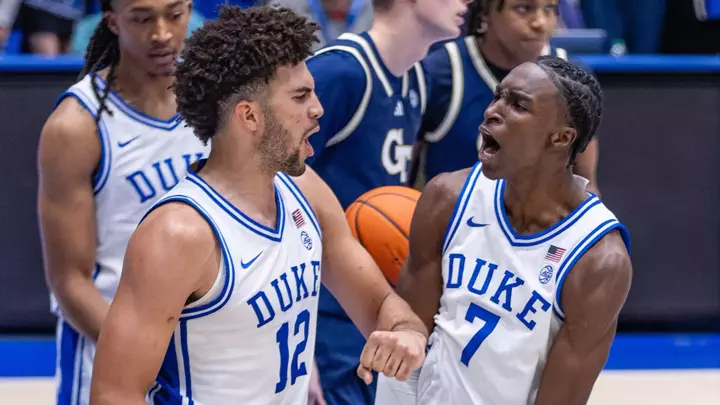
With 26 former players currently active in the NBA, Duke stands alone at the summit of the ACC. This isn’t just a reflection of historic greatness built over decades — it’s proof that the program has successfully evolved into the modern era of basketball.
What truly separates Duke from the rest is what has happened recently. Over the last three seasons, under the current head coach, the Blue Devils have already produced 8 active NBA players. In an era defined by one-and-done prospects, NIL pressures, and rapid roster turnover, that number is staggering.
It signals something deeper than recruiting hype:
Duke has built a system that prepares players to step into the NBA immediately, both physically and mentally.
NBA front offices trust Duke prospects because they arrive ready — capable of handling pace, spacing, defensive rotations, and professional expectations from Day One. Duke isn’t just winning at the college level; it’s consistently feeding the league with NBA-ready talent.
👉 Duke doesn’t develop “great college players.”
👉 Duke develops professionals.
🔵 UNC Close Behind — Quietly Dangerous
With 8 active NBA players, North Carolina remains firmly in the conversation. The Tar Heels may not dominate headlines the way Duke often does, but their numbers tell a story of consistency and longevity.
UNC’s strength lies in its philosophy. The program emphasizes:
-
Fundamentals
-
Team basketball
-
Basketball IQ
-
Defensive accountability
As a result, many UNC players carve out longer NBA careers, even if they aren’t drafted at the very top. They understand roles, accept rotations, and adapt quickly to professional systems.
UNC may not flood the league every year, but it never disappears from it. And that constant presence — season after season — is what makes the program so reliable and, in many ways, so dangerous.
🟠 Virginia & Florida State — Quality Over Volume

Virginia (7 active NBA players) and Florida State (6) offer a different but equally important lesson:
Impact is not measured by raw quantity alone.
These programs focus on:
-
Physical development
-
Defensive structure
-
Tactical discipline
-
Mental toughness
Virginia’s system produces players with elite defensive instincts and decision-making. Florida State, on the other hand, has become known for long, athletic, positionless players who fit seamlessly into modern NBA schemes.
The result?
Their players don’t just reach the NBA — they stick.
Many come in as later draft picks or undrafted signings, yet earn rotation minutes because they understand spacing, switches, and team concepts. That ability to survive and adapt is one of the hardest things to measure — but the numbers prove it works.
📊 What the Numbers Really Say About the ACC
When you step back and look at the data as a whole, a clear pattern emerges:
-
ACC programs consistently rank among the top producers of NBA talent
-
Success is spread across multiple schools, not concentrated in just one
-
Players from the ACC often transition faster and last longer in the league
These numbers reflect more than recruiting success. They reflect culture, coaching continuity, and competitive environments that mirror the NBA itself.
ACC players are battle-tested. Night after night, they face elite opponents, complex defenses, and high-pressure situations. By the time they reach the NBA, the adjustment isn’t a shock — it’s a continuation.
🏁 The Bigger Picture
Duke may lead the ACC in sheer numbers.
UNC brings stability and endurance.
Virginia and Florida State deliver efficiency and toughness.
Together, they tell one story:
The ACC isn’t just producing stars — it’s producing NBA players who last.
And in professional basketball, that might be the most important number of all.
https://www.youtube.com/watch/bdUldZKiV5k