And Still I Rise: Al Green’s 2026 Constitutional Manifesto and the New Path to Impeachment

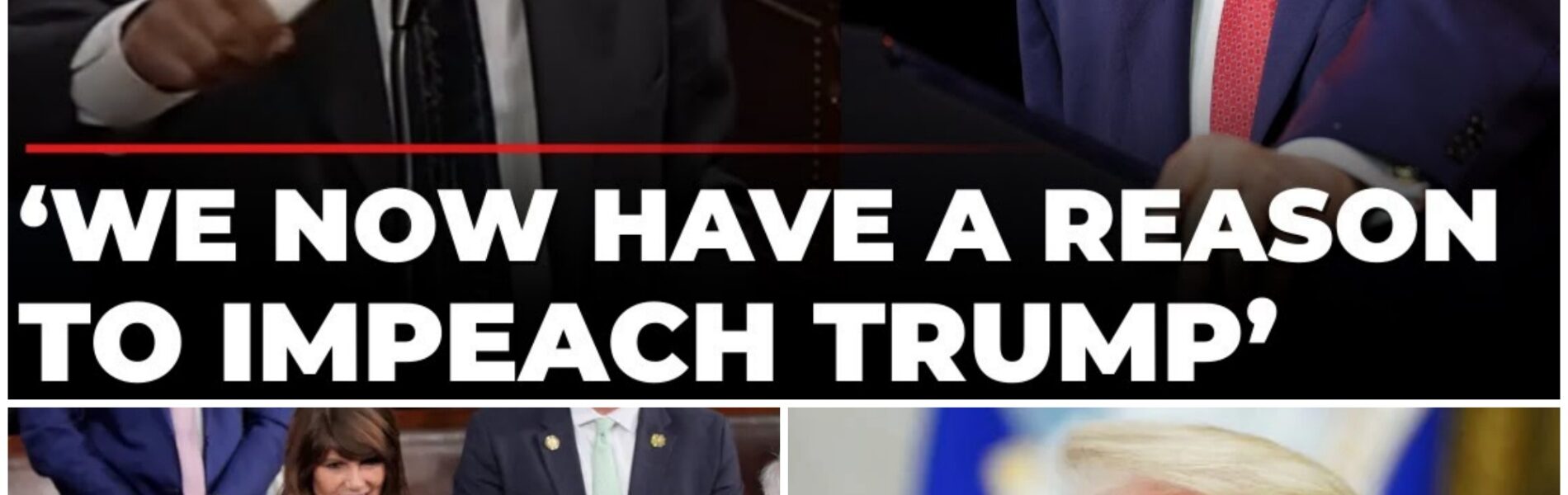
The atmosphere in the House of Representatives has always been one of historic weight, but the first speech of 2026 by Congressman Al Green felt different. It was not merely a political oration; it was a visceral cry for the preservation of the American Republic.
Green stood before his colleagues and the American people as a self-described “liberated, unbought, unbossed, and unafraid” Democrat. His words were heavy with a sense of urgency that transcended the usual partisan bickering found on the Hill.

The central theme of his address was fear—not a coward’s fear, but a patriot’s concern for the safety of the citizenry. He spoke of a country where the rule of law is being replaced by the whims of a single man’s “morality.”
At the heart of this fear is the tragic case of Renee Good, a Christian mother of three who lost her life in a confrontation with federal authorities. The details Green shared were harrowing, describing masked men in police regalia approaching her vehicle with aggression and profanity.
When Good attempted to drive away from what appeared to be a life-threatening situation, she was met with gunfire. One officer shot through her side window, ending her life and leaving a family shattered and a community in shock.
What truly shakes the foundation of justice, according to Green, is the administration’s immediate labeling of this woman as a “terrorist.” This designation, issued without a trial or a transparent investigation, serves to exonerate the officers involved before the facts are even gathered.
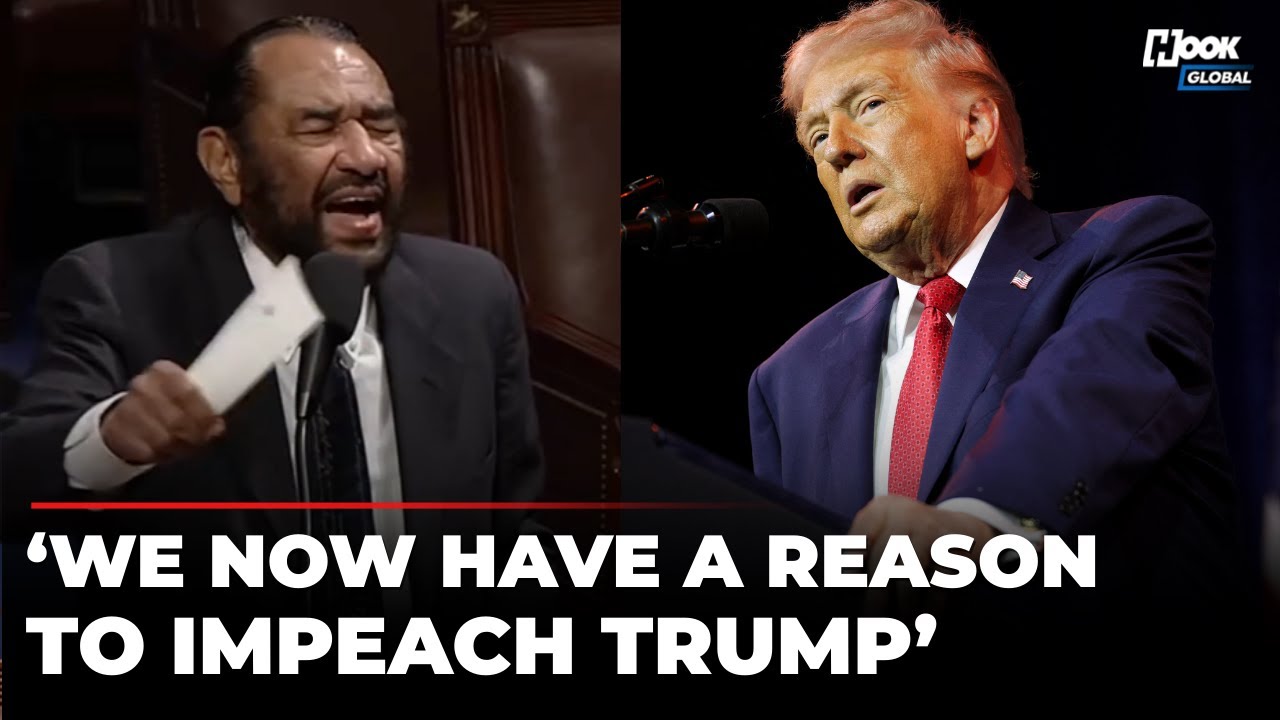
Green warned that if the federal government can convince the public that a mother seated in her car is a terrorist, then no one is safe. He argued that the administration is intentionally shutting out local law enforcement from the investigation to prevent the case from ever reaching a fair trial.
This domestic lawlessness, in Green’s view, is perfectly mirrored in the administration’s recent foreign policy actions. He pointed specifically to the unauthorized military hostilities currently taking place within and against the nation of Venezuela.
The Congressman drew a direct line from the President’s own words to the current constitutional crisis. When asked if there were limits on his power, the President reportedly stated that his own mind and morality were the only things that could stop him.
This statement is a direct challenge to Article 1, Section 8, Clause 2 of the United States Constitution. That clause explicitly vests the power to declare war in the Congress, not the executive branch.
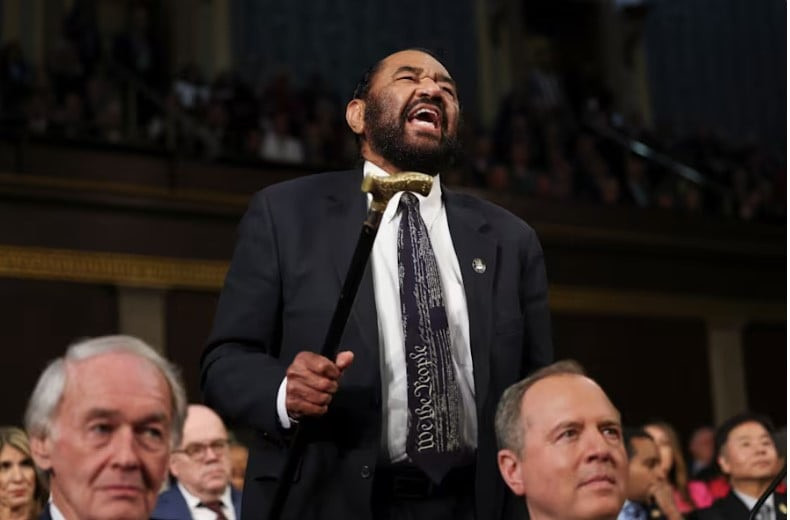
Green highlighted Senate Joint Resolution 90, a bipartisan effort to remove U.S. armed forces from hostilities in Venezuela. This resolution serves as a formal “finding” that Congress has not authorized the use of military force in that region.
The President’s response to this legislative pushback has been one of threats and intimidation. He has publicly stated that the Republicans who voted for the resolution should never hold public office again, a move Green labeled as pure bullying.
Respect, according to the Congressman, is spelled “F-E-A-R” in this administration’s dictionary. The President seeks to rule through intimidation rather than the consent of the governed or the constraints of the law.
Green’s argument is that the President is using “noble ends”—such as the removal of a foreign dictator—to justify “unconstitutional means.” He warned that if this is allowed to continue, the Constitution will eventually become a meaningless document.
There is a growing concern that the interests of major oil companies have replaced the interests of the American people in the halls of power. Green questioned whether the opinions of corporate executives now carry more weight than the constitutional authority of Congress.

The Congressman was clear that he does not speak for the entire Democratic Party, nor does he speak for his colleagues. He spoke as a lone voice of conscience, willing to stand by himself if it means standing for the truth.
He announced his firm intention to bring articles of impeachment against the President specifically for the declaration of war in Venezuela. This move is not about political theater, but about creating a permanent record of opposition to executive overreach.
Green dismissed the idea that these actions are a waste of time. He noted that Congress spends more time in “recess” between votes than it would take to debate and vote on the future of the presidency and the protection of the republic.
Impeachment, in this context, is the only remedy available to stop a “reckless, ruthless outlaw” who believes he is beyond the reach of the law. It is a signal to future presidents that the American people will not tolerate the subversion of their founding documents.
The Congressman’s speech was a reminder that the Constitution does not protect itself. It only has power when individuals within the government are willing to act in response to the words written on that sacred parchment.
As the military continues its operations and the domestic rhetoric heats up, Al Green has positioned himself as the primary antagonist to a presidency he views as an existential threat. He has laid down a gauntlet that the rest of the House must now address.
The path to impeachment is never easy and rarely popular in the moment, but Green argues that a noble cause should never be avoided simply because it is difficult to bring to fruition today. His focus is on the long arc of justice.
By connecting the tragedy of Renee Good to the war in Venezuela, Green has created a narrative of a government that has lost its way. It is a government that bullies its own citizens and ignores its own laws to achieve its goals.
The call for “liberty and justice for all” is not just a slogan for the Congressman; it is the metric by which he judges the current administration. And by that metric, he finds the presidency severely lacking.
As this new session of Congress moves forward, the “Al Green factor” will be a constant presence. His commitment to bringing these articles of impeachment ensures that the debate over executive power will remain at the forefront of the national conversation.
The American people are now left to decide if they agree with Green’s assessment of the danger. Is the country truly at a breaking point where the Constitution is becoming irrelevant, or is this merely the latest chapter in a long history of political friction?
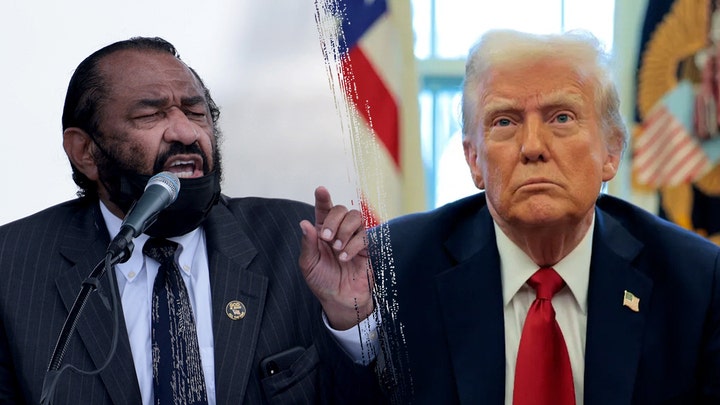
Regardless of the outcome, the speech delivered by Al Green in early 2026 will be remembered as a moment of stark clarity. It was a moment when a member of Congress looked directly at the presidency and said, “I do not fear you.”
The fight for the soul of the American government is no longer happening in the shadows. It is happening on the floor of the House, in the streets where citizens like Renee Good live, and in the international waters off the coast of South America.
Al Green has made his stand, rooted in the belief that the government belongs to the people, and that those people have a duty to enforce the limits of power. The articles of impeachment are coming, and with them, a reckoning for the ages.
This is a story of a republic at a crossroads, where the actions of a few can determine the freedom of the many. It is a story that is still being written, with the next chapter set to take place in the very heart of Washington D.C.