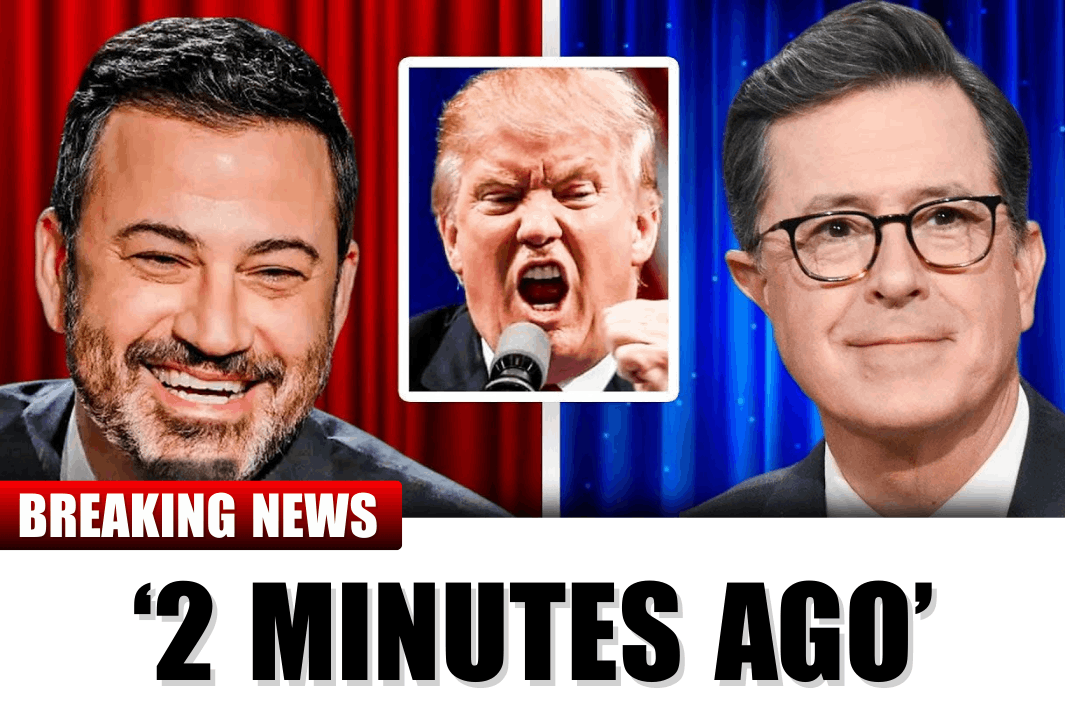
BREAKING: TRUMP LOSES IT After JIMMY KIMMEL & STEPHEN COLBERT EXPOSE Him LIVE ON TV — LATE-NIGHT SHOWDOWN SENDS THE STUDIO INTO TOTAL CHAOS.

NEW YORK — A widely shared YouTube video circulating in early 2026 offers a highly dramatized retelling of late-night television events from September 2025, asserting that Jimmy Kimmel and Stephen Colbert staged a coordinated, explosive live confrontation exposing President Donald J. Trump’s alleged campaign against free speech. The clip portrays a rapid-fire “showdown” in which the hosts methodically presented Mr. Trump’s statements, policy actions and public remarks as evidence, leading to stunned studio silence followed by gasps, laughter and thunderous applause. It further claims Mr. Trump, watching in real time, “lost it completely,” pacing furiously, shouting demands for network retaliation and remaining inconsolable for nearly an hour while aides scrambled to contain the damage.
No joint live segment, chaotic crossover or real-time demolition of that nature ever aired on major network television. Mr. Kimmel and Mr. Colbert did appear as guests on each other’s programs on Sept. 30, 2025 — a pre-planned, simultaneously taped event broadcast on “Jimmy Kimmel Live!” (ABC) from Brooklyn and “The Late Show with Stephen Colbert” (CBS) from Manhattan. The appearance was playful and promotional, centered on mutual support rather than confrontation. The hosts joked that their unity would drive Mr. Trump “nuts,” waved across a split-screen, referenced his insults calling them “no-talent losers,” and included a brief cameo by Seth Meyers for a group photo captioned “Hi Donald!” The tone remained lighthearted throughout, with no reported moments of dead silence, producer scrambling, audience eruption or evidence of a prolonged presidential meltdown linked to the broadcast.
The video builds on actual 2025 developments but inflates them into fiction. On Sept. 15, 2025, Mr. Kimmel’s monologue criticized conservative responses to the killing of activist Charlie Kirk, triggering intense backlash from Trump allies and conservative media. FCC Chairman Brendan Carr, in a Sept. 16 interview with podcaster Benny Johnson, described the remarks as “some of the sickest conduct possible” and warned broadcasters could face scrutiny under news-distortion rules, adding ominously, “We can do this the easy way or the hard way.” Major station groups Nexstar and Sinclair immediately pulled the program from affiliates in dozens of markets, reaching millions of viewers. On Sept. 17 ABC/Disney announced an indefinite suspension of “Jimmy Kimmel Live!,” citing the need to avoid further political escalation and protect staff amid rising threats.
The decision provoked swift and widespread condemnation as an infringement on free expression. Mr. Colbert opened his Sept. 18 program with the declaration “Tonight, we are all Jimmy Kimmel,” labeling Mr. Trump an “autocrat” and stating unequivocally, “With an autocrat, you cannot give an inch.” David Letterman, in a rare public statement, called the suspension “ridiculous” and accused networks of appeasing an “authoritarian criminal administration.” Jon Stewart rearranged his “Daily Show” schedule to deliver a pointed segment supporting Kimmel, while Seth Meyers, Jimmy Fallon and others voiced solidarity on air. More than 400 entertainers, writers and producers signed an ACLU open letter protesting the move. Public pressure mounted rapidly: thousands canceled Disney+ subscriptions, demonstrations formed outside ABC studios in Los Angeles and New York, and online petitions gathered hundreds of thousands of signatures demanding reinstatement.
Disney relented on Sept. 23, reinstating the show after six days. Mr. Kimmel’s return monologue ran 18 minutes and was emotional at points, with the host visibly tearful as he thanked supporters, clarified that his Kirk comments were not intended to mock murder, and condemned “anti-American” efforts to restrict speech, including FCC pressure tactics. The episode drew 6.3 million viewers — the program’s highest rating in a decade — and the YouTube upload of the monologue surpassed 20 million views within days, making it one of the most-watched late-night segments of the year.
Separately, CBS announced in July 2025 that “The Late Show with Stephen Colbert” would conclude in May 2026, citing structural challenges in late-night viewership, rising production costs and declining advertising revenue. The timing — only days after Mr. Colbert criticized Paramount’s $16 million settlement with Mr. Trump over a “60 Minutes” interview edit with Kamala Harris — fueled speculation of indirect political influence. Although CBS insisted the decision was purely financial and unrelated to content, the announcement amplified perceptions of a broader chilling effect on critical voices in entertainment media.
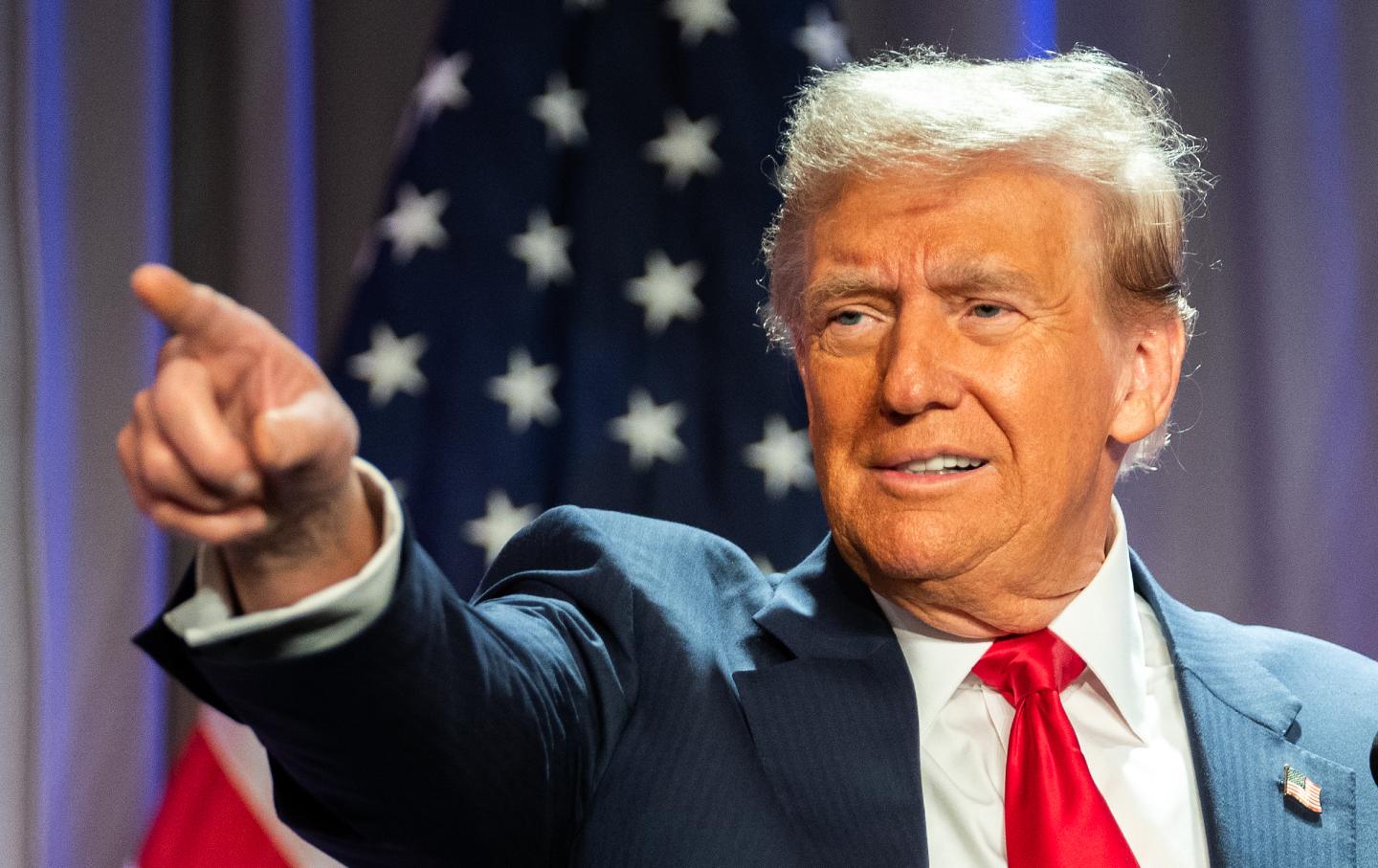
Mr. Trump celebrated both developments on Truth Social. After Kimmel’s suspension, he posted: “Great news for America. The ratings-challenged Jimmy Kimmel show is cancelled.” Following the Colbert cancellation news, he called the host a “pathetic train wreck with no talent” and suggested CBS should “put him to sleep as the humanitarian thing to do.” Such rhetoric, combined with Carr’s public warnings, raised alarms among press freedom advocates about potential government leverage over broadcasters.
The YouTube video weaves these incidents into a single, cinematic narrative of a live joint assault that caused studio chaos and a lengthy White House outburst. No mainstream reporting, network statements, crew accounts, audience testimony or contemporaneous evidence describes such an event. The Sept. 30 crossover was celebratory and ratings-positive, not confrontational. Assertions of dead silence, producer hesitation, audience pandemonium or an hourlong presidential rage lack corroboration from any verifiable source.
This content follows a familiar pattern in polarized online media: real events — program suspensions, cancellations, cross-host solidarity — are repurposed with dramatic narration, suspenseful music and invented details to simulate breaking news. It amplifies legitimate concerns about media pressure under the second Trump administration, including FCC rhetoric, corporate settlements and the vulnerability of broadcast outlets to regulatory threats, while fabricating a climactic showdown that never occurred.
Late-night television continues to confront declining linear viewership, shifting audience habits toward streaming and deepening political polarization. Authentic acts of resistance — public statements, monologues, cross-program appearances, open letters and audience mobilization — unfold through coordinated messaging and public support, not manufactured chaos. When genuine pressure arises, it leaves traces: booking records, promotional materials, post-broadcast fallout, ratings data and public statements from participants. Here, none exist for the described battle. The red light never illuminated for that showdown; the stage remained empty.
Yet the underlying anxieties the video exploits are real. The 2025 suspension and reinstatement of “Jimmy Kimmel Live!,” combined with the announced end of “The Late Show,” highlighted the precarious position of late-night hosts who criticize power. Whether driven by regulatory warnings, corporate caution or economic realities, the episodes underscored how quickly criticism can trigger consequences in an era of concentrated media ownership and heightened political sensitivities. For now, the viral clip serves as a reminder that in polarized times, the line between fact and fiction can blur quickly online — even when the real story, already dramatic enough, needs no embellishment.
:max_bytes(150000):strip_icc():focal(770x272:772x274)/stephen-colbert-jimmy-kimmel2-71825-45660e22b3f34ae9a29b0ac0c7055b14.jpg)