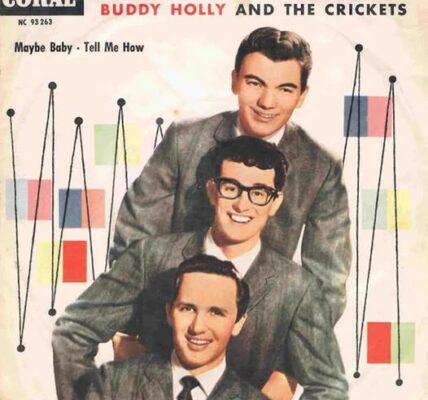

When people talk about the birth of rock & roll, history often points to a handful of artists and songs that didn’t merely reflect a changing sound — they created it. Among those defining moments, Buddy Holly’s “Maybe Baby” stands tall as one of the genre’s most influential early statements. Released in 1957, the song didn’t rely on spectacle or shock. Instead, it quietly — and permanently — changed the direction of popular music.
At a time when rock & roll was still finding its identity, “Maybe Baby” introduced something radical: emotional honesty wrapped in simplicity. The track balanced playful uncertainty with youthful confidence, presenting love not as melodrama but as a relatable, lived experience. That balance would become a cornerstone of rock music for decades to come.
A Sound That Felt New — and Real
Musically, “Maybe Baby” was deceptively straightforward. Its clean rhythm, crisp guitar lines, and uncluttered arrangement stood in stark contrast to the heavily orchestrated pop songs dominating radio at the time. Buddy Holly understood that rock & roll didn’t need excess — it needed connection.
Holly’s vocal delivery was conversational, slightly vulnerable, yet undeniably confident. He didn’t sing at listeners; he sang with them. That approach marked a turning point. For the first time, young audiences heard music that sounded like their own thoughts, fears, and hopes — not something filtered through a polished, distant persona.
Breaking Away From the Crooner Era
Before Buddy Holly, much of popular music was dominated by crooners and carefully manufactured stars. Their voices were smooth, controlled, and often emotionally distant. Holly broke that mold entirely. On “Maybe Baby,” his voice carried natural imperfections — and those imperfections became its strength.
This shift mattered. It told listeners that music didn’t need to be flawless to be powerful. It needed to be honest. In doing so, Holly helped redefine what a pop and rock artist could be: not an untouchable icon, but a real person expressing real feelings.
Simplicity as a Revolution
What made “Maybe Baby” revolutionary wasn’t just how it sounded — it was how little it tried to be. Buddy Holly trusted melody, rhythm, and emotion to carry the song. There were no gimmicks, no novelty hooks, no exaggerated theatrics.
That restraint became a blueprint. Later artists — most famously The Beatles — openly cited Holly as a foundational influence. His approach to songwriting, band structure, and performance helped shape the modern rock band format: singer, guitarist, songwriter, and storyteller combined into one.
Rock & Roll Becomes a Cultural Force
In many ways, “Maybe Baby” marks the moment rock & roll stopped being a trend and started becoming a cultural movement. It proved the genre could grow, mature, and endure. The song showed that rock music could be personal without being soft, confident without being arrogant, and simple without being shallow.
Through this track, Buddy Holly helped push rock & roll away from novelty records and toward something lasting. It wasn’t just dance music anymore — it was identity, expression, and voice.
A Legacy That Still Resonates
More than six decades later, “Maybe Baby” still sounds alive. Its structure remains timeless, its emotion universal. That endurance speaks to Buddy Holly’s genius. He didn’t chase trends — he created a foundation strong enough for generations to build upon.
In the grand story of rock & roll, “Maybe Baby” isn’t just a chapter. It’s the opening paragraph. And Buddy Holly isn’t just part of the genre’s history — he is one of its architects.
Few artists in the history of rock ’n’ roll possessed the rare ability to make simplicity feel profound quite like Buddy Holly, and “You’ve Got Love” stands as a beautiful testament to that gift. While the song may not carry the rebellious punch of some of his biggest hits, it captures something equally powerful — the warmth, optimism, and emotional honesty that defined early rock music at its core.
From the very first notes, “You’ve Got Love” feels light on its feet. The rhythm is upbeat without being aggressive, the melody warm without being overly sentimental. It’s the kind of song that doesn’t demand attention — it invites it. And once you’re listening, Buddy Holly’s unmistakable presence does the rest.
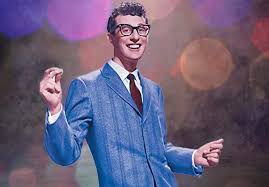
Effortless Charm, Genuine Emotion
What made Buddy Holly special was never excess or flash. His magic lived in authenticity. On “You’ve Got Love,” his vocal delivery is sincere and unforced, as if he’s singing directly to one person rather than performing for a crowd. There’s no exaggeration, no dramatic flourish — just confidence, clarity, and emotional truth.
The lyrics themselves are simple, even modest, but that simplicity is exactly the point. Holly understood that love songs didn’t need grand metaphors or complex poetry to resonate. Sometimes, the most powerful message is the most direct one. By trusting the song’s emotional honesty, he transformed everyday words into something timeless.
A Reflection of Early Rock ’n’ Roll Optimism
“You’ve Got Love” reflects a defining quality of early rock ’n’ roll: optimism. In an era when the genre was still forming its identity, songs like this carried a sense of innocence and hope. They celebrated connection, youth, and emotion without cynicism.
Buddy Holly embodied that spirit. His music felt approachable and human, grounded in real feelings rather than manufactured personas. That quality helped early rock ’n’ roll resonate so deeply with young audiences who were searching for music that felt like it belonged to them.

Why Buddy Holly Stood Apart
While many artists of his time relied heavily on image or external songwriting, Buddy Holly was deeply involved in shaping his own sound. His instincts for melody, structure, and emotional balance were remarkably advanced, and “You’ve Got Love” showcases that instinct perfectly.
He didn’t overproduce the song. He didn’t hide behind studio tricks. Instead, he trusted the fundamentals: a strong melody, a steady rhythm, and an honest performance. That approach not only set him apart from his peers but also laid the groundwork for generations of singer-songwriters who followed.
A Perfect Pairing That Endures
Together, Buddy Holly and “You’ve Got Love” form a perfect pairing — artist and song in complete harmony. The track reminds us that rock ’n’ roll, at its best, doesn’t require spectacle or excess. It thrives on honesty, energy, and a voice that knows how to make love sound real.
Decades later, the song still feels fresh. It still smiles back at the listener. And it still captures what Buddy Holly did better than almost anyone else: turning simple emotions into music that lasts forever.
In the end, “You’ve Got Love” isn’t just a love song — it’s a quiet celebration of everything that made Buddy Holly one of rock ’n’ roll’s most enduring and beloved pioneers.