ELON MUSK ON AGI, U.S.–CHINA RIVALRY, JOBS, CLEAN ENERGY, AND HUMANOID ROBOTS: A VISION OF THE NEXT DECADE

Elon Musk, cofounder and CEO of Tesla, cofounder of SpaceX, and founder of xAI, has never been known for cautious predictions. In a wide-ranging discussion with venture capitalist Dave Blundin, founder and GP of Link Ventures, Musk laid out his latest thinking on artificial general intelligence (AGI), the escalating technological rivalry between the United States and China, the future of jobs, the clean-energy transition, and the rise of humanoid robots. Together, these topics form a single narrative: humanity is approaching a structural transformation driven by intelligence, automation, and energy abundance.

At the center of the conversation was AGI—the point at which artificial intelligence matches or exceeds human intelligence across most tasks. Musk reiterated his belief that AGI could arrive far sooner than many policymakers expect. While timelines vary, he suggested that the early 2030s are a realistic window, and that the pace of progress is accelerating rather than slowing. What concerns Musk most is not that AGI will exist, but whether humanity will be prepared to align it with human values. This concern was a major motivation behind founding xAI, which he describes as an effort to build AI systems that are maximally curious about reality and transparent in their reasoning.
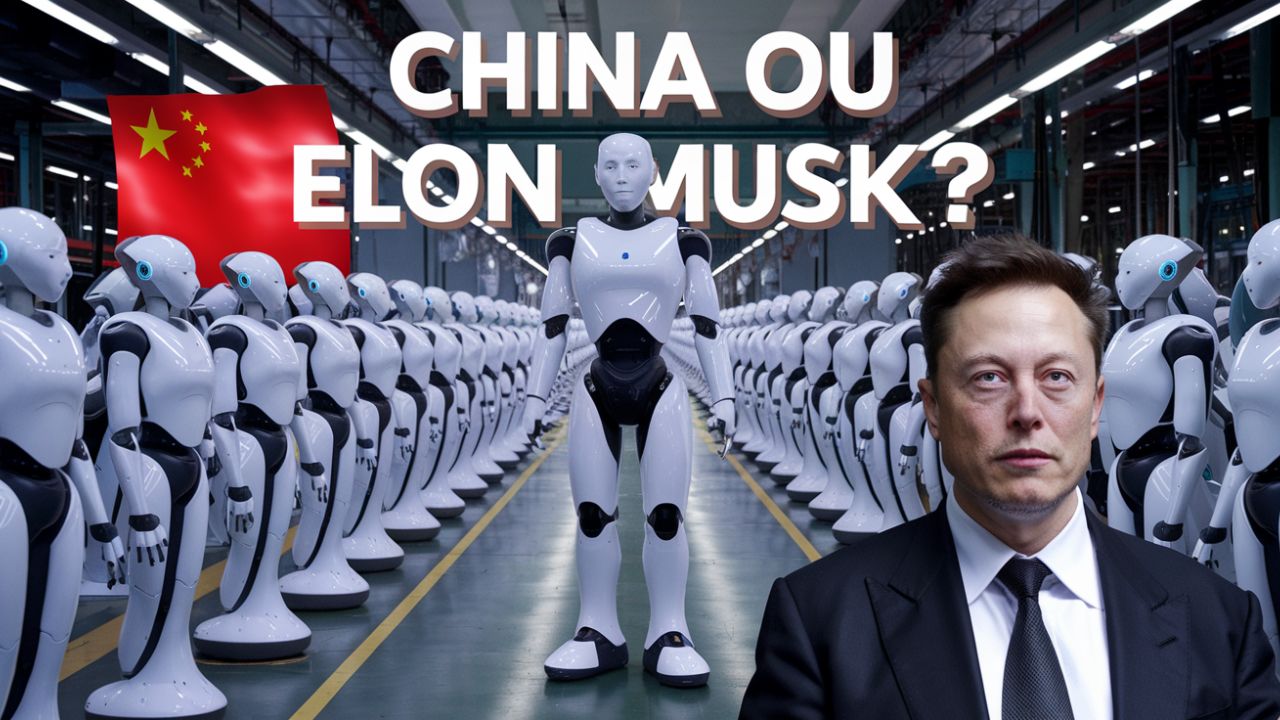
Musk warned that AGI development is no longer a purely scientific endeavor; it has become a geopolitical race. The United States and China, he argued, are now competing not just over markets or military hardware, but over who will shape the dominant intelligence infrastructure of the future. In his view, AI superiority will determine economic productivity, military deterrence, and even cultural influence. China’s rapid scaling of AI talent, compute resources, and state coordination presents a formidable challenge, while the U.S. retains advantages in innovation ecosystems, venture capital, and foundational research. The outcome, Musk suggested, will depend less on ideology and more on who can build the most capable and reliable systems first.
This rivalry has profound implications for global stability. Musk cautioned against treating AI as a traditional arms race, noting that unlike nuclear weapons, AI systems are deeply embedded in civilian life—powering logistics, finance, healthcare, and communication. A misaligned or poorly governed AGI could create systemic risks far beyond national borders. For that reason, Musk believes international dialogue and minimal safety standards are inevitable, even amid competition. The challenge, he said, is achieving cooperation without slowing progress to a dangerous degree.
One of the most immediate consequences of AI advancement is its impact on the job market. Musk was blunt: many existing jobs will disappear. White-collar professions once thought immune—such as law, accounting, programming, and even parts of medicine—are already seeing automation pressure. However, Musk does not frame this as a catastrophe, but as a transition. He argues that AI will make labor optional rather than obsolete, creating a world in which goods and services are abundant and inexpensive. The real question is how societies distribute meaning, income, and purpose when work is no longer the primary organizing principle of life.
In this context, Musk has repeatedly expressed openness to ideas like universal basic income, though he emphasizes that money alone is insufficient. Humans, he argues, need purpose. The challenge for future societies will be creating systems where individuals can pursue creative, social, or exploratory goals without economic desperation. Dave Blundin echoed this view, noting that venture capital is increasingly shifting toward tools that amplify human creativity rather than simply replacing labor.
The discussion then turned to clean energy, a domain where Musk is not speculating but actively executing. Tesla’s mission, he reiterated, is to accelerate the world’s transition to sustainable energy. Musk argued that the clean-energy problem is no longer technological but logistical. Solar, wind, batteries, and electric vehicles are already cost-competitive or cheaper than fossil fuels. The bottlenecks now lie in permitting, grid infrastructure, and political inertia. He described a future where energy is so abundant that it reshapes geopolitics, reducing the strategic importance of oil while elevating access to materials like lithium, nickel, and rare earths.
Clean energy also intersects directly with AI. Training large models and operating global data centers require enormous amounts of electricity. Musk believes that AI progress will force an acceleration of renewable energy deployment and grid-scale storage, simply to meet demand. In this sense, AI and clean energy are not separate revolutions, but mutually reinforcing ones.
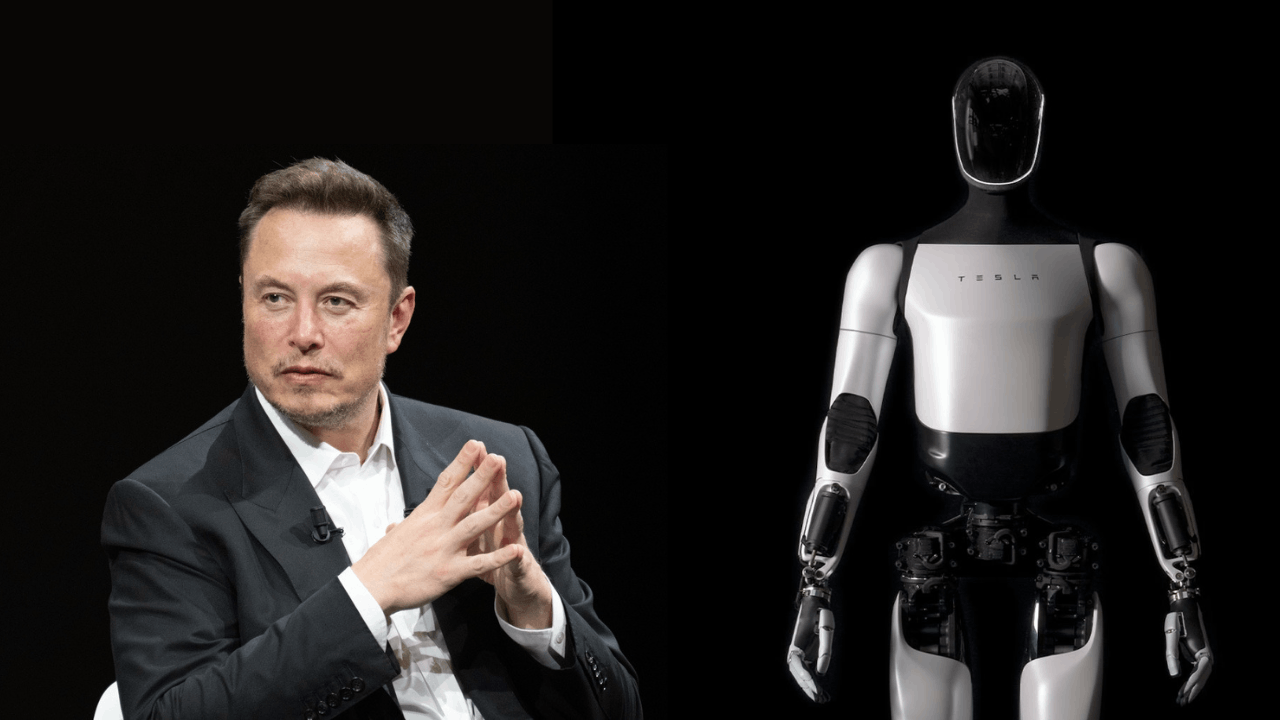
Perhaps the most tangible symbol of this convergence is the humanoid robot. Musk described Tesla’s Optimus robot as potentially more impactful than the company’s cars. With advances in AI, vision, and electric actuators, humanoid robots could perform a wide range of physical tasks—from manufacturing and logistics to elder care and household work. Musk envisions a future where humanoid robots are produced at scale, drastically reducing the cost of physical labor. This, he argues, could lead to an economy of “extreme abundance,” where material scarcity becomes the exception rather than the rule.
Yet Musk acknowledged that humanoid robots raise profound ethical and societal questions. Who owns them? Who is liable for their actions? How do societies adapt when both cognitive and physical labor are automated? These questions, he said, must be addressed proactively, not after the technology is already ubiquitous.
Throughout the conversation, Dave Blundin pressed Musk on whether he remains optimistic. Musk’s answer was characteristically nuanced. He believes humanity is capable of navigating this transition, but only if it confronts risks honestly and resists complacency. The coming decades, he suggested, will be defined by choices made now—about AI alignment, energy systems, and how power is distributed between states, corporations, and individuals.
In the end, Musk’s vision is neither purely utopian nor dystopian. It is a warning and an invitation. AGI, clean energy, and humanoid robots have the potential to unlock unprecedented prosperity, but they also concentrate power in ways humanity has never experienced before. Whether this future becomes one of liberation or instability will depend not on technology itself, but on governance, values, and collective foresight.
As Blundin concluded, the world is no longer preparing for the future—it is actively building it. And figures like Elon Musk, operating at the intersection of intelligence, energy, and industry, are shaping that future faster than most institutions can respond.