Elon Musk Announces One Month of Free Internet for Venezuela: Humanitarian Aid, Political Shockwaves, and Global Debate

In early January, the global community was shaken by a dramatic announcement linked to Elon Musk and his satellite internet company, Starlink. According to statements circulated online, Starlink would provide free high-speed satellite internet access to Venezuela for one full month, a move described by Musk as an act of solidarity with the Venezuelan people during a period of extreme political and social uncertainty. The announcement immediately ignited intense international debate, not only because of its humanitarian implications, but also because of the controversial political context surrounding it.
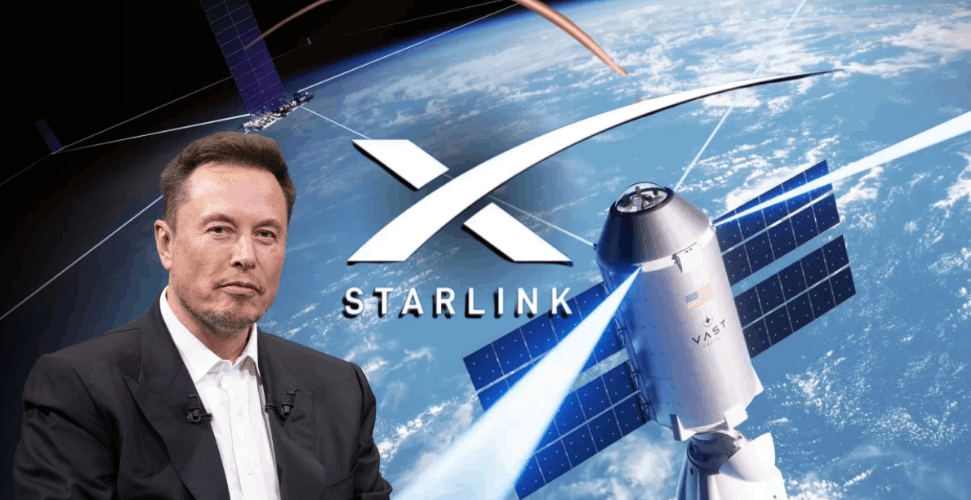
The message, shared via Starlink’s official social media channels and reposted by Musk himself, stated that Venezuela would receive uninterrupted satellite internet access until early February 2026. Musk framed the decision as support for ordinary citizens, emphasizing access to communication, information, and connectivity at a time when the country was allegedly undergoing a fragile political transition following major security developments. While details surrounding these events remain disputed and heavily politicized, the announcement alone was enough to send shockwaves through diplomatic, economic, and media circles worldwide.
Starlink, a subsidiary of SpaceX, has rapidly become one of the most influential communication infrastructures on Earth, serving more than six million users across dozens of countries. In regions affected by war, natural disasters, or political instability, Starlink has often been positioned as a technological lifeline—restoring connectivity where traditional networks fail or are restricted. In this context, Venezuela represents one of the most complex and sensitive environments Starlink has ever entered.
For many Venezuelans, access to stable internet has long been unreliable, expensive, or subject to censorship. Free satellite internet, even temporarily, could dramatically alter daily life—allowing families to communicate with relatives abroad, businesses to reconnect with global markets, journalists to report freely, and citizens to access uncensored information. Supporters of Musk’s move argue that connectivity is no longer a luxury but a basic necessity, especially during national crises.
However, critics warn that such a move cannot be viewed purely through a humanitarian lens. Venezuela’s political situation has been volatile for years, and any major technological intervention by a foreign billionaire inevitably raises concerns about sovereignty, influence, and unintended consequences. Some policymakers argue that while internet access empowers citizens, it can also become a geopolitical tool—shaping narratives, mobilizing movements, and influencing outcomes during sensitive transitional periods.
Former U.S. trade officials and foreign policy analysts have urged caution. They note that even if connectivity improves short-term conditions, Venezuela’s long-term recovery depends on far more than internet access. Questions surrounding democratic legitimacy, free and fair elections, institutional stability, and security remain unresolved. Without clear political frameworks and trusted governance, technological aid alone may offer relief without resolution.
Economic uncertainty adds another layer of complexity. Venezuela holds some of the world’s largest oil reserves, yet years of mismanagement and instability have severely damaged its energy infrastructure. While international companies have shown renewed interest, large-scale investment requires political predictability and legal certainty. Analysts question whether any meaningful reconstruction can occur without first addressing governance and rule-of-law issues.
Musk’s involvement has also fueled debate about the expanding role of private individuals in global affairs. In recent years, he has increasingly operated at the intersection of technology, politics, and humanitarian response—sometimes acting faster and more decisively than governments themselves. To supporters, this represents bold leadership in a slow-moving world. To critics, it is a troubling concentration of power in the hands of unelected individuals.
Regardless of perspective, the Venezuela-Starlink announcement underscores a new reality: in the 21st century, control over connectivity can shape nations as profoundly as control over territory or resources. Whether Musk’s decision will be remembered as a turning point for Venezuelans—or as another chapter in the growing tension between technology and geopolitics—remains to be seen.
One thing is certain: a single announcement was enough to ignite global conversation, expose deep political fault lines, and remind the world that in times of crisis, access to information may be as powerful as any form of aid.