Elon Musk Predicts a Workless Future: “In 20 Years, Humans Might Not Need Jobs, and Money Could Disappear”

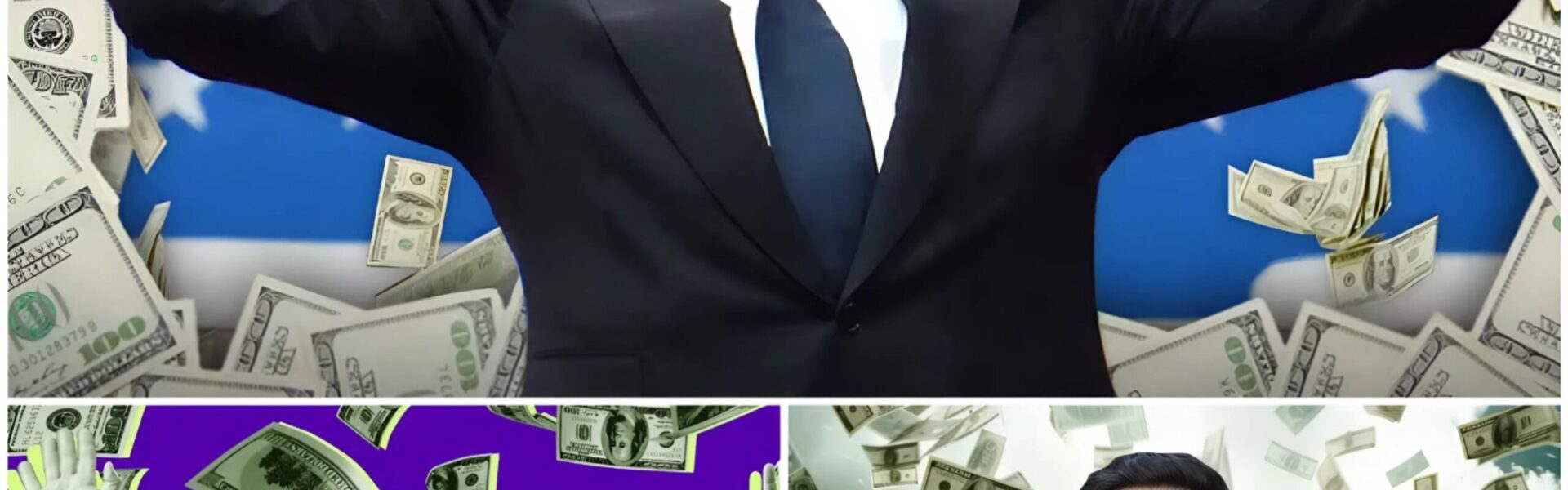
At a recent U.S.–Saudi forum, billionaire entrepreneur Elon Musk delivered a forecast that sent shockwaves through both the technology and economic communities. Musk boldly claimed that within the next 20 years, humans may no longer need to work, and money — as we know it — could lose its significance entirely.
This vision challenges our fundamental understanding of society, labor, and value, sparking debates about the role of AI, robotics, and wealth distribution in shaping the future.
AI and Robots: The Dawn of a Workless Era
According to Musk, the rise of robots and artificial intelligence will bring about a revolution unlike any seen before. In this future, work becomes optional, not mandatory for survival. He likened human labor to tending a vegetable garden — something done for enjoyment and personal satisfaction, rather than necessity.
Central to Musk’s vision is Tesla’s Optimus robot, which he believes will redefine manufacturing. Once millions of these robots are operational, the world could enter an era of explosive productivity, where goods and services are produced at unprecedented speed and scale.
“Money might not have meaning anymore,” Musk said. He described a post-scarcity world, akin to those depicted in the Culture series of novels, where humans live off unlimited resources provided by AI and robots, no longer dependent on wages to survive.
The Dark Side of a Workless Future
While the forecast is dazzling, Musk also acknowledged the risks and challenges of such a society. In a world dominated by AI and robotics:
-
Low-skilled jobs are being replaced by AI, leaving younger generations, especially Gen Z, struggling to find employment opportunities.
-
Wealth inequality could accelerate, as the gains from automation and AI concentrate in the hands of a small elite.
-
Dependence on AI and robots raises ethical questions and risks, including the potential loss of human agency in everyday life.
Musk’s vision, while aspirational, underscores that technological progress alone cannot guarantee a fair and equitable society.
A World Beyond Money
Musk imagines a future where money is no longer central to human life:
-
People would live off resources generated abundantly by AI, including food, housing, and essential services.
-
Labor would be a choice driven by passion, creativity, and learning, rather than necessity.
-
AI and robots could manage and optimize global resources, creating a near post-scarcity economy.
However, such a future relies heavily on effective management, ethical AI development, and equitable resource distribution. Without these safeguards, the benefits of automation could remain confined to a privileged few.
Economic Skepticism
Despite Musk’s bold predictions, economists are cautious. Critics point out that:
-
Robots are still expensive and not yet capable of fully replacing human labor across all sectors.
-
Automation remains limited, and many jobs still require human creativity, judgment, and flexibility.
-
The economic benefits of AI are currently concentrated in large corporations, with little trickle-down effect to society at large.
As a result, a truly workless society may be decades away, if it happens at all. And without proper policies, wealth gaps could widen rather than shrink.
Stimulating Human Imagination
Musk’s predictions serve as a wake-up call for society:
-
They challenge us to rethink the value of labor, money, and purpose in human life.
-
They prompt governments, businesses, and communities to consider how to prepare for a world where work is optional.
-
They encourage discussions on how AI and automation can be used to enhance human well-being rather than exacerbate inequality.
Whether one views Musk’s forecast as utopian or dystopian, it undeniably pushes the imagination, inspiring visions of a radically different future.
The Stakes Are High
Musk’s vision portrays a world where:
-
Work becomes optional, not obligatory.
-
AI and robots generate limitless resources, potentially replacing the need for money.
-
Humans can focus on creativity, learning, and personal fulfillment rather than survival.
Yet, the same vision carries profound social and economic risks, requiring careful policy-making and ethical frameworks to ensure benefits are shared broadly.
Ultimately, Musk’s forecast is both a promise and a warning: the future could be extraordinarily prosperous — or it could deepen inequality and social divides to levels never seen before.
In Musk’s own words: “The world may not need money, but the challenge will be ensuring everyone benefits, not just a small elite.”
This prediction, bold and provocative, is a call to action for humanity, urging us to prepare thoughtfully for the age of AI, automation, and a workless society.
You are not connected to the internet.
https://www.youtube.com/watch/Q4FdieW8HmQ