

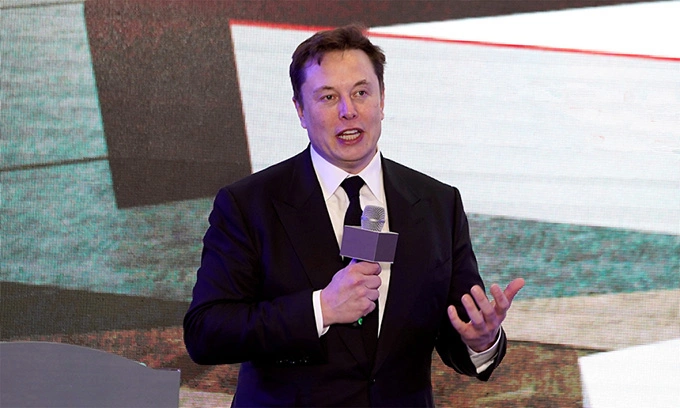
Billionaire Elon Musk has once again sparked global debate, this time with a bold idea to tackle climate change. On November 3, Musk shared a concept involving solar radiation management (SRM) on social media platform X, proposing the use of AI-powered satellites to control the amount of sunlight reaching Earth. As global temperatures inch closer to critical thresholds, such geoengineering solutions are attracting attention as potential last-resort measures to counteract climate change.
According to Musk, satellites could theoretically be employed to reflect a portion of solar radiation back into space. In this scenario, a large constellation of AI-controlled satellites could make small adjustments to the energy Earth receives from the Sun, potentially slowing or even reversing global warming. The proposal merges climate science with aerospace engineering, showcasing Musk’s signature blend of audacious thinking and technical ambition.

While Musk is not the first to suggest controlling sunlight, the idea of planetary-scale geoengineering has long fascinated scientists and tech innovators. Some startups have already experimented with high-reflectivity aerosol sprays into the stratosphere or the deployment of massive orbital mirrors. However, experts caution that such projects are fraught with immense technical, environmental, and geopolitical challenges, and practical implementation could take decades.
One major uncertainty lies in predicting how altered solar radiation would affect global weather systems. A single miscalculation could disrupt rainfall patterns, trigger droughts, or inadvertently cool certain regions beyond expectations. Ensuring precise, stable adjustments across hemispheres — while accounting for seasonal variations — adds yet another layer of complexity. Musk’s idea, while theoretically promising, would require unprecedented levels of control and coordination.
Moreover, the geopolitical dimension cannot be underestimated. Decisions about controlling sunlight would have worldwide consequences, potentially affecting agriculture, ecosystems, and economies in different regions. Countries might disagree on how, when, or whether such interventions should be applied, raising questions of governance, responsibility, and international law. Musk’s AI-controlled satellite constellation would need to operate within this complex framework, balancing precision with safety and fairness.
Musk’s SpaceX is uniquely positioned to explore such a concept due to its expansive space infrastructure. The company currently operates more than 6,000 Starlink satellites and plans to deploy thousands more. While SpaceX has not confirmed any work specifically on SRM satellites, its existing constellation provides a potential platform that could support planetary-scale geoengineering in the future. If leveraged, SpaceX’s advantage over smaller startups attempting aerosols or orbital mirrors could be substantial.
The scientific community remains divided on the ethics and feasibility of Musk’s proposal. Proponents argue that geoengineering may become necessary if greenhouse gas emissions continue at the current pace. By reflecting sunlight, SRM could temporarily reduce global temperatures and buy humanity more time to decarbonize energy systems. Critics, however, warn that manipulating solar radiation carries enormous risks. The long-term consequences are largely unknown, and mistakes could exacerbate environmental crises rather than mitigate them.
In addition, Musk’s proposal highlights the potential role of artificial intelligence in global climate solutions. AI could theoretically monitor, predict, and adjust sunlight levels with precision far beyond human capability. By combining autonomous control with real-time environmental data, such a system could dynamically respond to changes in Earth’s atmosphere, potentially maintaining global temperature within safer limits. Yet, reliance on AI also introduces new challenges, including cybersecurity risks, system failures, and ethical considerations about machine governance over natural processes.
Despite the controversy, Musk’s suggestion has reignited discussions about humanity’s technological responsibility. Could AI satellites become a viable solution to the climate crisis? Or is the idea simply a visionary thought experiment, showcasing the extremes of Musk’s futurism? While SpaceX has not publicly committed to developing SRM satellites, the conversation alone underscores the growing intersection between aerospace innovation and climate science.
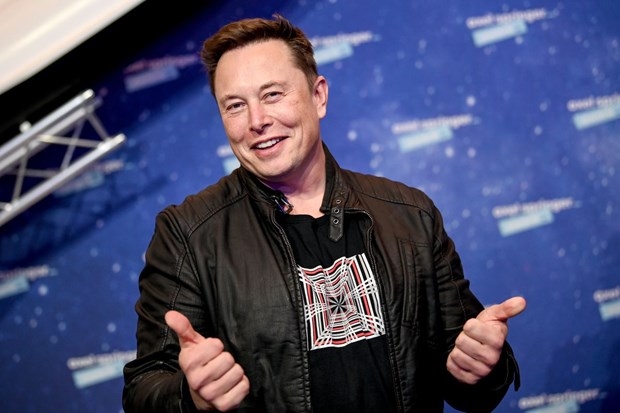
Ultimately, Musk’s vision reflects a broader trend in which private space companies are increasingly involved in planetary stewardship. With access to orbital infrastructure and cutting-edge technology, companies like SpaceX have the tools to influence not only communication and exploration but potentially Earth’s climate itself. Whether Musk’s proposal remains speculative or becomes actionable in the coming decades, it illustrates the bold, sometimes controversial ways in which technology could address existential global challenges.
In conclusion, Elon Musk’s idea to use AI-controlled satellites to block sunlight may sound like science fiction, but it is rooted in serious climate science and advanced aerospace engineering. While implementation would be technically challenging and politically sensitive, the concept highlights the urgent need for innovative solutions to global warming. As the climate crisis intensifies, discussions sparked by visionary thinkers like Musk could shape the trajectory of planetary-scale interventions, opening debates about the balance between technological ambition and environmental stewardship.