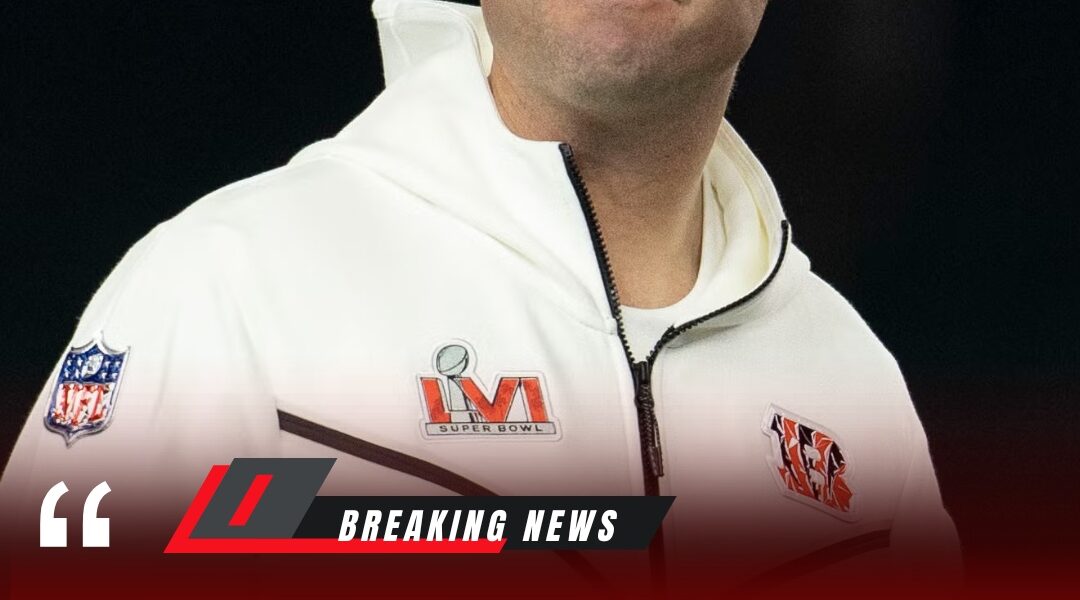
EYE OF THE STORM: Bengals Stick with Zac Taylor as NFL Coaching Purge Claims Eight Victims, Including Rival Harbaugh

DATELINE: CINCINNATI – January 13, 2026
While the National Football League undergoes one of the most volatile weeks in its recent history, a familiar and perhaps controversial silence has settled over Paycor Stadium. As moving vans line up outside team facilities from Miami to Baltimore, the Cincinnati Bengals have made their stance unequivocally clear: they are opting out of the madness.
Despite missing the postseason for a third consecutive year—a drought that eats away at the prime years of franchise quarterback Joe Burrow—the Bengals are retaining head coach Zac Taylor for the 2026 season.
The decision comes directly from Bengals president Mike Brown, whose offseason messaging has centered on stability and patience. This vote of confidence extends beyond the sidelines to the front office, with Brown offering public affirmation for director of player personnel Duke Tobin. However, this commitment to the status quo stands in stark, almost jarring contrast to the rest of the league, where patience has effectively gone extinct.

The League-Wide Bloodbath
To understand the weight of the Bengals’ decision, one must look at the carnage surrounding them. As of this morning, eight NFL franchises have terminated their head coaches, signaling a desire for radical change that Cincinnati has rejected.
The timeline of departures paints a picture of a league with zero tolerance for mediocrity:
-
Tennessee Titans: The firing cycle began early, with the Titans dismissing former Bengals offensive coordinator Brian Callahan on October 13, less than halfway through the season.
-
New York Giants: Brian Daboll was shown the door on November 10 after failing to turn the franchise around.
-
Atlanta Falcons: Raheem Morris was relieved of his duties on January 4, immediately following the regular season finale.
-
Las Vegas Raiders: In a move described by analysts as a “grave mistake,” the Raiders fired veteran Pete Carroll on January 5.
-
Arizona Cardinals: Jonathan Gannon was fired on January 5.
-
Cleveland Browns: Continuing their tradition of instability, the Browns fired two-time Coach of the Year Kevin Stefanski on January 5, with sources describing the current state of the organization as “simply a mess”.
-
Baltimore Ravens: The most shocking move of the cycle occurred on January 6, when the Ravens parted ways with John Harbaugh. Despite an extensive resume and an incredible track record of success, even Harbaugh was not safe from the axe.
-
Miami Dolphins: The purge concluded most recently with Mike McDaniel being let go on January 8.
Even teams currently in the playoffs, such as the Green Bay Packers, are being watched closely following weekend exits, suggesting the number of vacancies could rise.

The Gamble on Continuity
The firing of John Harbaugh in Baltimore places the Bengals’ decision in a harsh new light. If a coach with a Super Bowl ring and decades of consistency can be removed for underperforming, why is Zac Taylor safe after three straight years of watching the playoffs from home?
The answer lies in the Bengals’ historical DNA. The franchise has rarely been one to make reactionary moves. By keeping Taylor and Tobin, Mike Brown is betting that continuity is a competitive advantage in a division now defined by chaos. With Cleveland and Baltimore hitting the reset button, the Bengals and the Pittsburgh Steelers remain the only stabilized forces in the AFC North.
However, the logic of “stability” is a hard sell for a fanbase growing increasingly restless. The “Joe Burrow Window” is not infinite. Every season that ends in January is a missed opportunity to capitalize on having an elite quarterback. Critics argue that chipping away at Burrow’s prime without playoff results is a dereliction of duty.
A Pressure-Cooker 2026
While the Bengals have avoided the “major change” sweeping the league, the atmosphere at 1 Paul Brown Stadium will be anything but relaxed. The organization seems to be gently hinting that the upcoming 2026 season represents the highest pressure yet for the current regime.
The dynamic has shifted. In previous years, Taylor could point to the Super Bowl LVI run or the AFC Championship appearance as proof of concept. But those achievements are now further in the rearview mirror. Three years of stagnation have eroded the goodwill earned during those runs.
For fans, watching good organizations make bold moves—like Baltimore parting with a legend to find a new spark—makes Cincinnati’s inactivity difficult to swallow. The NFL in 2026 feels new, aggressive, and ruthless. By standing still, the Bengals risk falling behind.
Zac Taylor survives to coach another year. But as the empty offices in Cleveland, Baltimore, and Las Vegas prove, survival is temporary. In 2026, the Bengals must do more than just exist; they must win, or the “radical change” they avoided this winter will be inevitable next year.