
55,600 Fans. 12 Songs. 30 Minutes That Changed Music Forever.

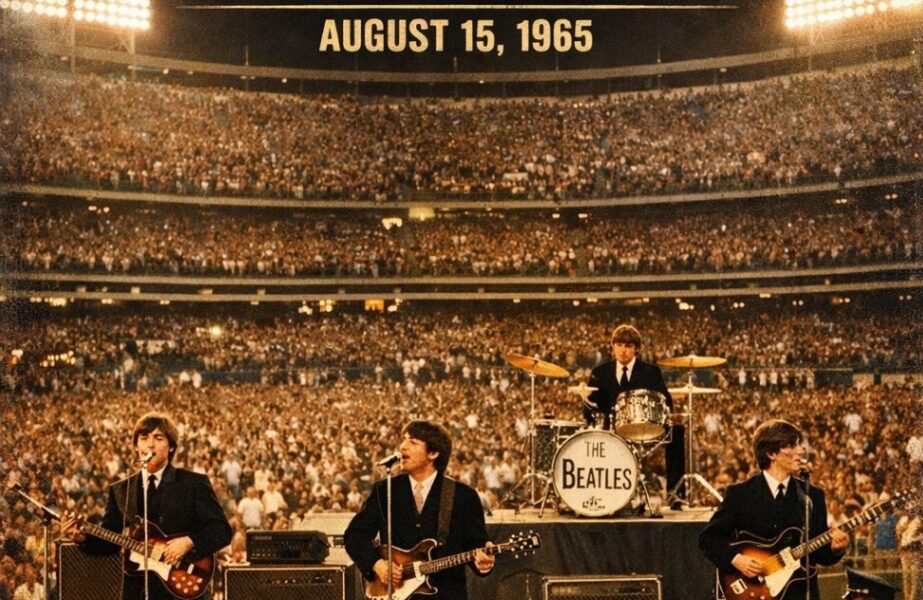
On August 15, 1965, The Beatles didn’t just play a concert — they rewrote the rules of live music. That night at New York’s Shea Stadium, John Lennon, Paul McCartney, George Harrison, and Ringo Starr became the first rock band to headline a major sports stadium, unknowingly launching the era of stadium concerts that still defines global touring today.
At the time, nothing like it had ever been attempted. Rock shows were meant for theaters and ballrooms, not vast open fields designed for baseball crowds. Promoters worried about sound, security, and whether a rock band could even command a space built for 55,600 fans. The Beatles themselves had doubts. No proper stadium sound system existed for rock music, and the band could barely hear one another on stage. What they could hear was something else entirely — a wall of screams so loud it often drowned out the songs themselves.

Yet that chaos became the moment’s defining feature. Shea Stadium captured Beatlemania at its peak: fans crying, fainting, and screaming with a fervor that felt less like a concert and more like a cultural eruption. The Beatles powered through a 12-song set in just over 30 minutes, racing against the noise, the nerves, and history itself. The performance was raw, imperfect, and revolutionary.
The risk paid off in ways no one could have predicted. Shea Stadium proved that rock music could fill massive venues, turning concerts into communal spectacles rather than intimate gatherings. Within a few years, artists like The Rolling Stones, Led Zeppelin, and Pink Floyd would build entire tours around stadiums — a direct legacy of what The Beatles dared to attempt that summer night.
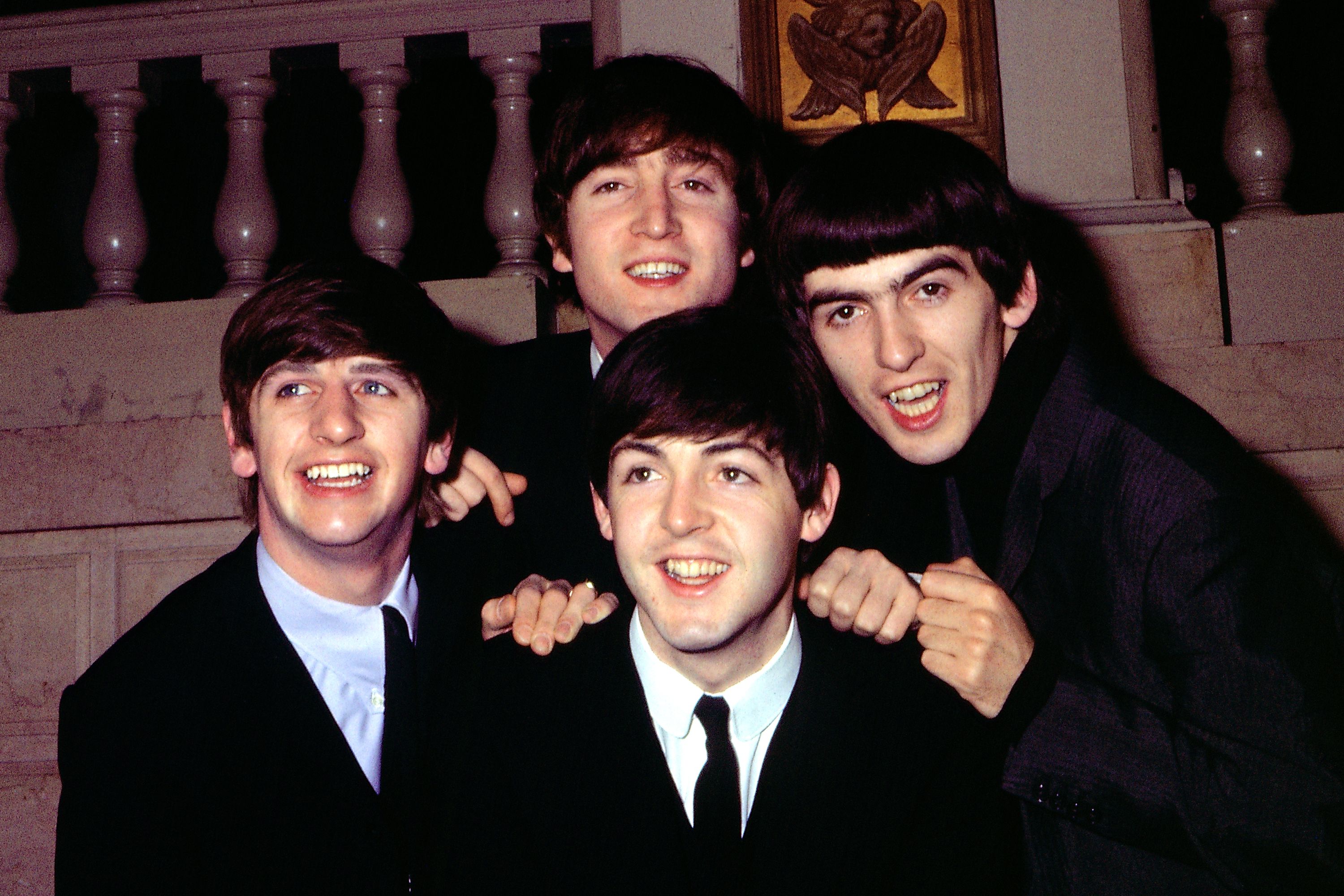
Nearly 60 years later, Shea Stadium no longer stands, but its echo remains. Every time a band steps onto a stadium stage, faces a sea of lights, and hears tens of thousands of voices rise as one, they are walking in the shadow of August 15, 1965. It wasn’t just a concert — it was the moment popular music grew bigger than the room and claimed the world as its stage.