
Andrea Bocelli’s résumé is the kind that defies summary. He has sung for popes, royalty, and presidents. He has performed at the Olympic Games, World Expos, Formula 1 events, and FIFA World Cup ceremonies. He has collaborated with some of the most respected classical and pop artists of his generation. More than 90 million records bearing his name have been sold worldwide. Above all, he remains a classical tenor whose artistry was famously recognized and praised by the great Luciano Pavarotti himself.
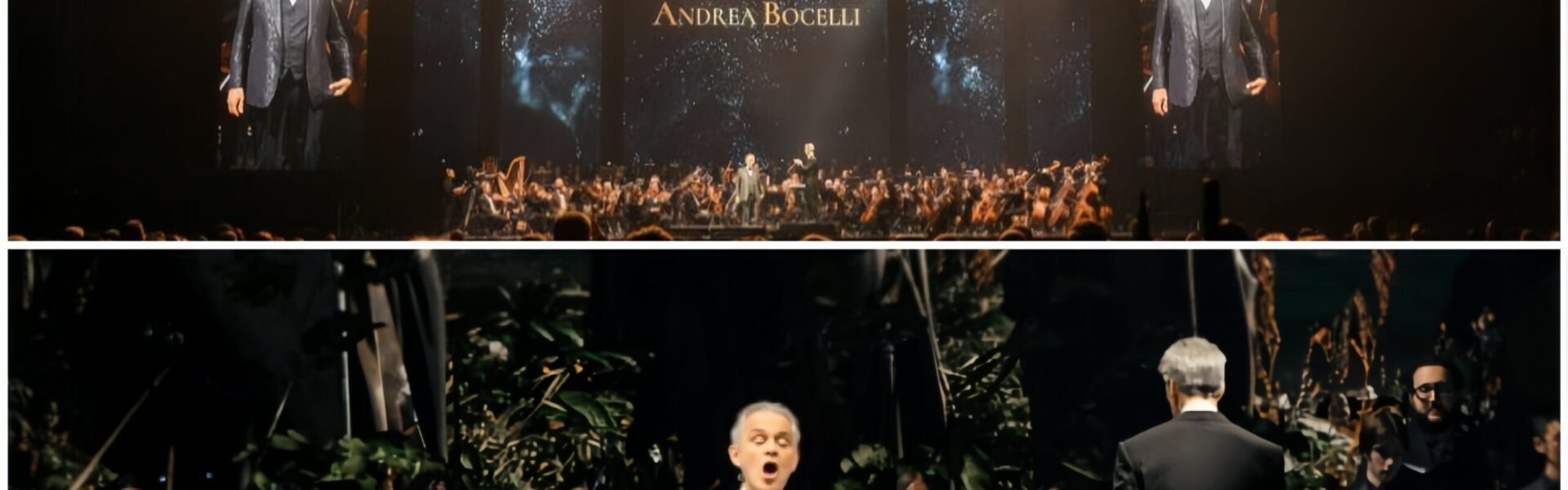
Yet on the evening of January 5, 2026, none of those accomplishments felt distant or abstract. Inside TD Coliseum in Hamilton, Ontario, Andrea Bocelli felt present, human, and deeply connected to his audience as he delivered a two-hour concert that was both grand in scale and intimate in spirit. The performance marked Bocelli’s only Canadian stop on his 2025–2026 world tour, making the night feel all the more special for those in attendance.
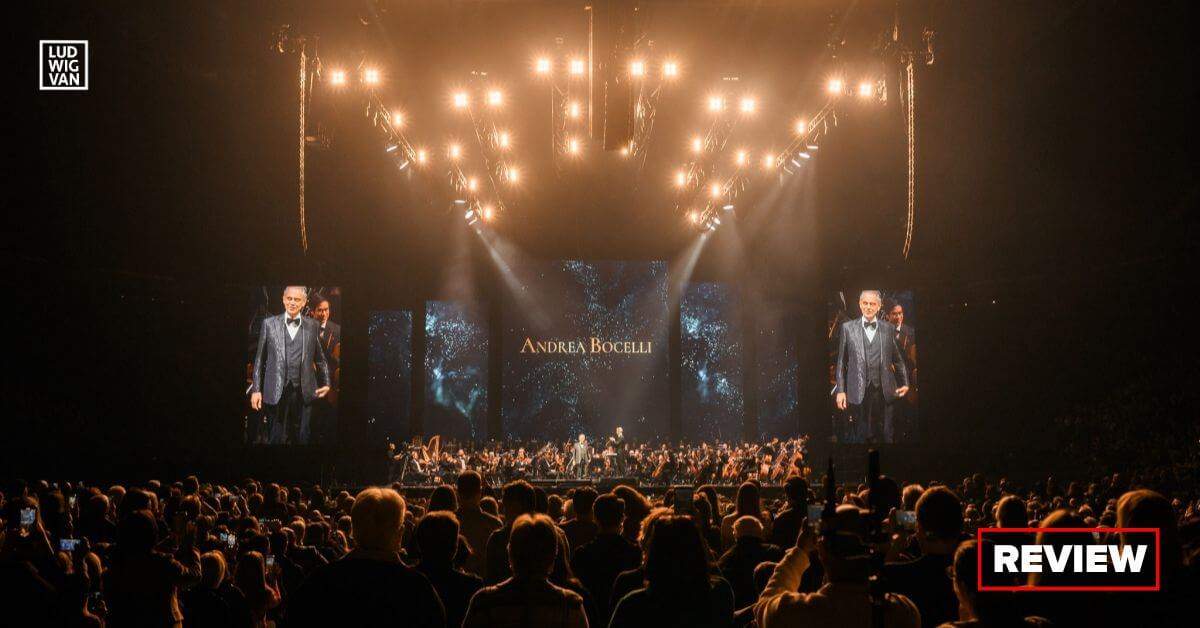
Accompanied by the Hamilton Philharmonic Orchestra, the MacMillan Singers of the University of Toronto, and conducted by longtime collaborator Steven Mercurio, Bocelli was joined by an impressive lineup of guest artists: Romanian soprano Cristina Pasaroiu, American baritone Edward Parks, pop vocalist Pia Toscano, and violinist Rusanda Panfili. Together, they presented a richly varied program of operatic arias and beloved ballads sung in Italian, French, German, English, and Latin.
Bocelli is famously reserved on stage, and this concert was no exception. When he addressed the audience, it was with just a single sentence: “I am honored to be in Hamilton for the first time.” It was enough. The warmth of the reaction suggested that no further explanation or introduction was necessary. His presence alone carried meaning.
The first half of the concert opened with a video montage highlighting Bocelli’s iconic operatic roles over the decades, a reminder of the extraordinary career that brought him to this moment. Then, with the sparkling opening notes of “La donna è mobile” from Rigoletto, the focus shifted entirely to the music. Any doubts about the 67-year-old tenor’s vocal prowess were immediately dispelled. Bocelli’s signature warm timbre, instantly recognizable and emotionally soothing, filled the arena with ease.
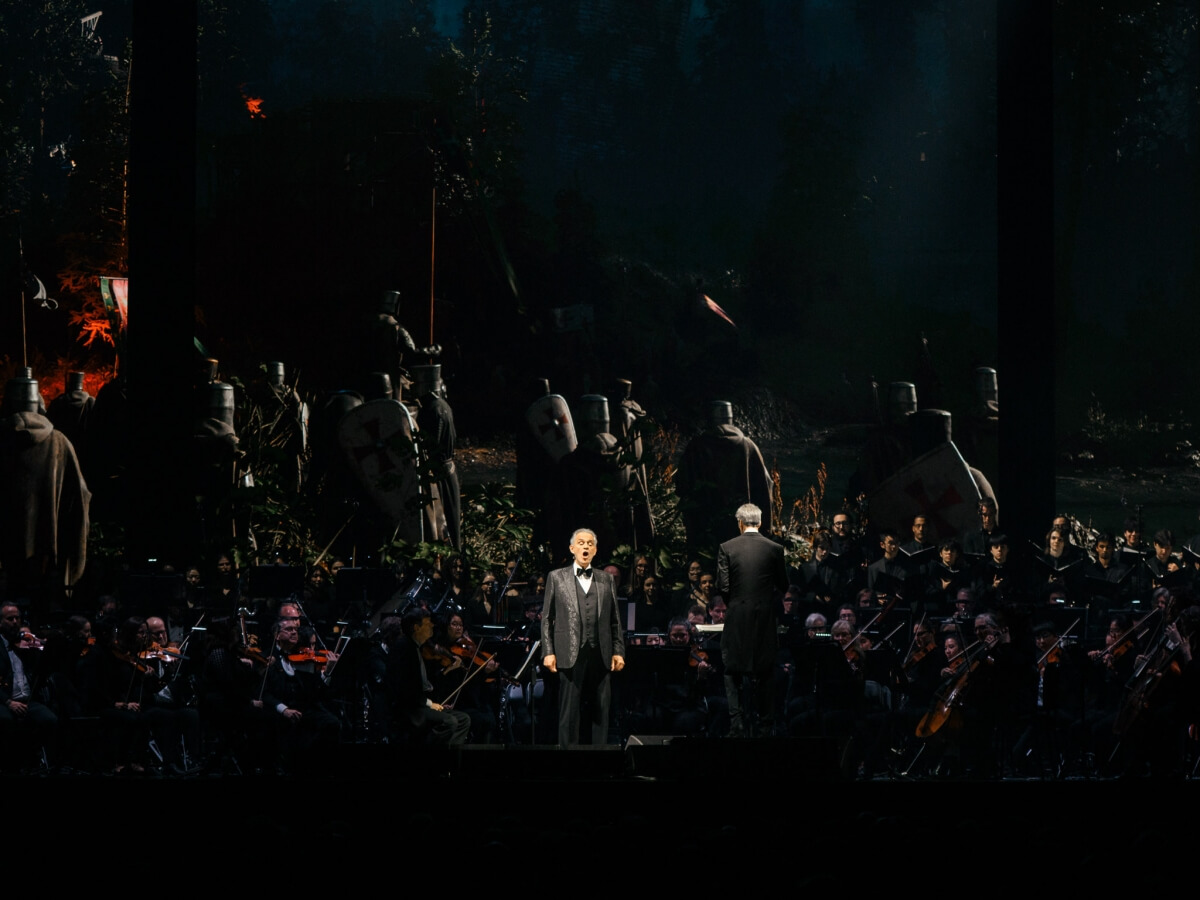
Throughout the operatic selections, Bocelli demonstrated that his technique remains remarkably intact. In “Di quella pira” from Il Trovatore, he delivered the famous high C with confidence and clarity, drawing audible reactions from the audience. His voice may have matured over the years, but its expressive power and control remain formidable.
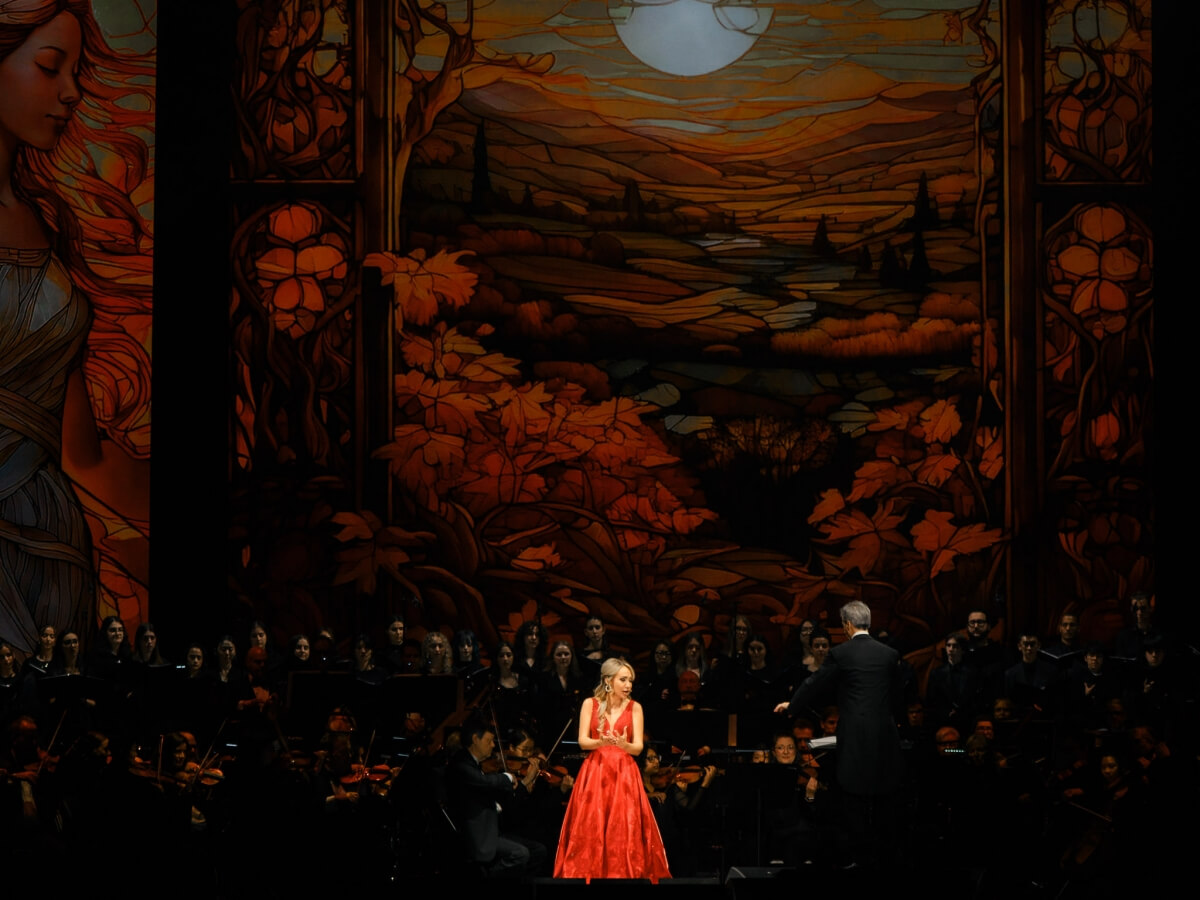
A defining feature of Bocelli’s concerts is his generosity in sharing the stage, and Hamilton was no exception. Cristina Pasaroiu proved to be a standout guest, offering a mesmerizing solo performance of “Mein Lippen” from Giuditta. Her voice was smooth, luminous, and perfectly focused, earning sustained applause. She later returned to the stage to sing “Brindisi” from La Traviata with Bocelli, embodying a radiant and convincing Violetta in a duet filled with joy and elegance.
Baritone Edward Parks brought both vocal strength and theatrical flair to the evening. His rendition of “Largo al factotum” from The Barber of Seville was delivered with humor, precision, and infectious energy, showcasing why the aria remains one of the most beloved in the baritone repertoire. Parks and Bocelli then joined forces for “Au fond du temple saint” from Les pêcheurs de perles, one of opera’s most iconic tenor–baritone duets. In a moment that evoked memories of the legendary Three Tenors, the pair held the final high note together for an astonishing fifteen seconds, prompting an enthusiastic response from the crowd.
The Hamilton Philharmonic Orchestra and the MacMillan Singers provided the musical foundation for the evening under Steven Mercurio’s direction. Both ensembles demonstrated technical excellence and commitment, supporting the soloists with energy and precision. However, the acoustics of the amplified setting occasionally created balance issues. At times, the orchestra’s volume overwhelmed the vocal lines, and the interplay between choir and orchestra lacked subtlety. This was most evident in “O Fortuna” from Carmina Burana, which unfortunately felt more like a sonic struggle than a unified musical statement.
Despite these moments, the overall impact of the performance remained overwhelmingly positive. The second half of the concert shifted toward Bocelli’s more lyrical and popular repertoire, allowing his storytelling instincts to shine. These selections highlighted his unique ability to bridge the worlds of classical music and contemporary song, a talent that has defined his global appeal for decades.
What ultimately made the evening memorable was not just Bocelli’s voice, but his restraint. He does not perform with flamboyance or theatrical excess. Instead, he sings with sincerity, letting phrasing, silence, and emotional nuance do the work. Even in an arena setting, he managed to create moments that felt personal, as if each listener were being addressed individually.
For Hamilton, the concert was more than a tour stop. It was a rare opportunity to witness one of the most influential vocal artists of our time at close range, supported by outstanding musicians and guest performers. For Bocelli, it was another chapter in a career defined not by spectacle, but by consistency, humility, and an unwavering devotion to music.
As the final notes faded and the audience rose to its feet, it was clear that Andrea Bocelli had once again achieved what few artists can: transforming a vast arena into a shared emotional space. In Hamilton, he did not simply perform. He connected. And for those in attendance, that connection will linger long after the applause has faded.
https://www.youtube.com/watch/xOHZqIUKWzg