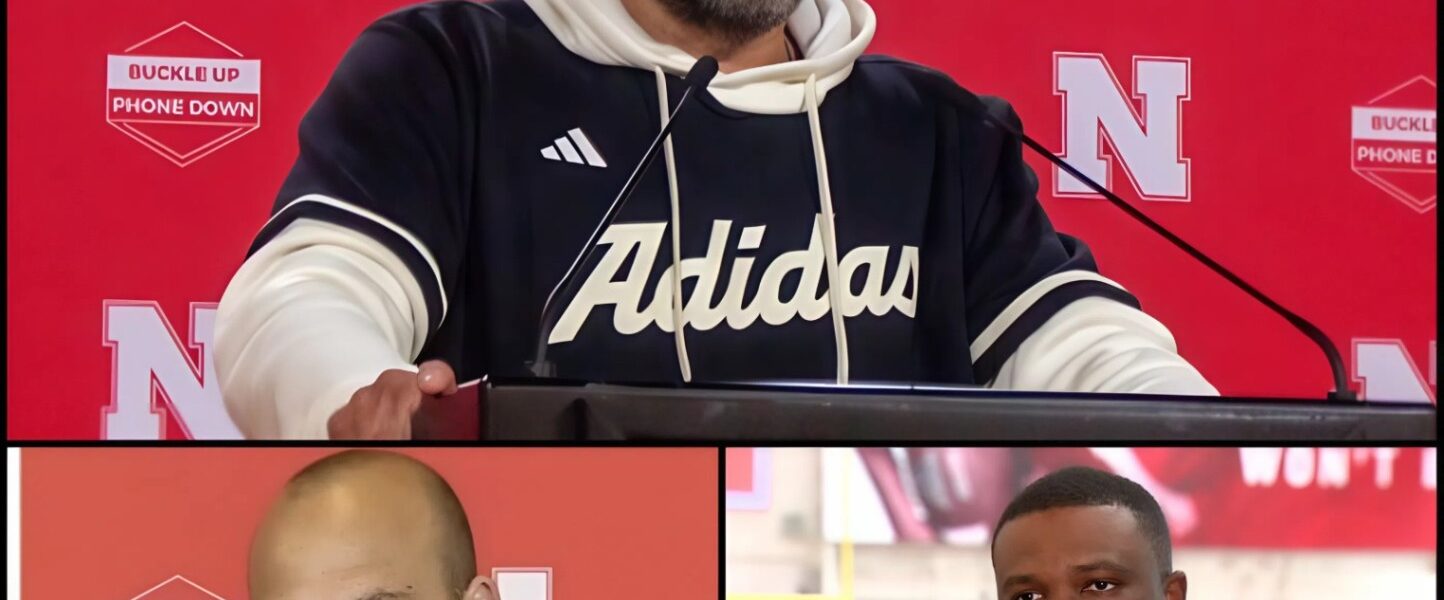
“MATT RHULE’S SHOCKING MOVE: He Fired Both Donovan Raiola And Terry Bradden At The Same Time, Triggering An Immediate Overhaul Of The Coaching Staff!”

Nebraska football was rocked this week as head coach Matt Rhule announced a dramatic shake-up to his coaching staff, dismissing offensive line coach Donovan Raiola and defensive line coach Terry Bradden simultaneously. The decision—revealed during a tense and highly anticipated press conference—sent shockwaves through Husker Nation, not only because of the timing, but because of the magnitude of the staff changes heading into bowl preparation.

Rhule also confirmed the immediate hiring of two new key figures: Geep Wade as the new offensive line coach and Rob Aurich as the program’s new defensive coordinator. The message was unmistakable: Nebraska is undergoing a full-scale reset as it prepares for the next phase of Rhule’s rebuild.
Why Raiola and Bradden Were Let Go
The Raiola Decision: Performance Concerns Reach a Breaking Point
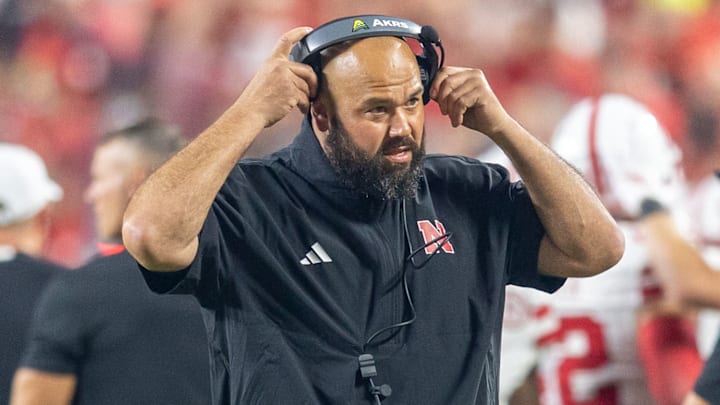
Donovan Raiola, who had been with the Huskers since 2021 and was the only on-field assistant retained when Rhule took over, had long been a polarizing figure for fans and analysts. While Raiola cultivated a reputation as a strong recruiter and developer of toughness, Nebraska’s offensive line struggled with inconsistency throughout the 2025 season.
Nebraska’s quarterbacks absorbed heavy pressure in multiple games, and the offensive line surrendered an alarming number of sacks, including one game in which the unit allowed nine sacks—one of the lowest moments of the season. Even though the line helped generate a productive run game at times, especially during Emmett Johnson’s strong stretches, the lack of pass protection became a persistent liability.
The move also carried deeper symbolism. Raiola is uncle to Nebraska quarterback Dylan Raiola, making the dismissal a sign that Rhule is prioritizing program performance over personal connections or potential internal pressure.
Rhule admitted during the press conference that letting Raiola go was “not a decision I enjoyed making,” but emphasized that it was necessary for Nebraska’s long-term trajectory.
Bradden’s Departure: A Misalignment in Defensive Vision
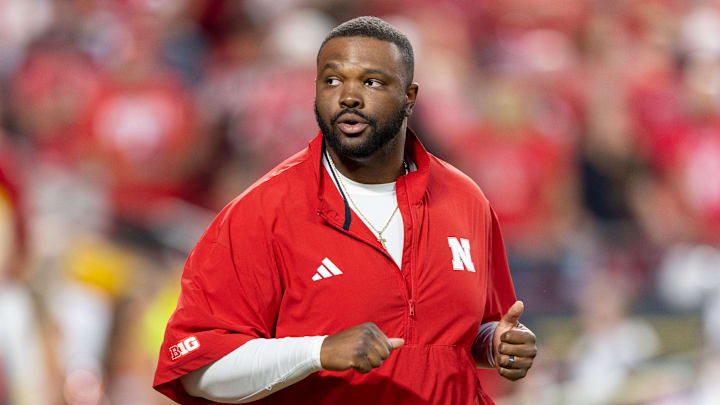
Defensive line coach Terry Bradden, who joined Nebraska after several seasons in the NFL, lasted only one year with the Huskers. Despite his professional background, Nebraska’s defensive line did not produce the disruption Rhule expected. The unit struggled to generate consistent pass rush, forcing the defense to rely heavily on blitz packages and exposing weaknesses on the back end.
Bradden’s departure came shortly after Nebraska made another major defensive move: hiring Rob Aurich as defensive coordinator. Rhule suggested that with Aurich’s arrival, the program needed defensive personnel on staff who fully aligned with the new coordinator’s system, style, and expectations.
According to Rhule, “every part of the defense needs to fit together,” and replacing Bradden was part of creating philosophical unity on that side of the ball.
The New Faces Leading the Huskers Forward
Geep Wade: A Calculated Investment in the Offensive Line
The hiring of Geep Wade is widely seen as a strategic victory for Rhule. Wade, previously at Georgia Tech, had built a reputation for stabilizing offensive lines in difficult conference environments. His units were known for strong fundamentals, disciplined run blocking, and improved pass protection—exactly the traits Nebraska needs.
Wade’s arrival signals a commitment to retooling one of the program’s most crucial, but most troubled, position groups. Rhule emphasized Wade’s proven ability to elevate linemen technically and mentally, noting that Nebraska urgently needs that kind of coaching presence.
For a Nebraska offense desperate for stability and identity, Wade’s hiring provides both hope and clarity.
Rob Aurich: A New Defensive Blueprint Takes Shape
On the defensive side, the addition of Rob Aurich has been highlighted as one of the most consequential moves of Rhule’s tenure thus far. Aurich’s track record features defenses known for aggressiveness, fast pursuit, and intelligently designed pressure schemes.
Aurich’s philosophy meshes well with Rhule’s broader vision—one that emphasizes speed, discipline, and relentless energy. Rhule described him as a coordinator with “a clear picture of what he wants this defense to look like,” suggesting that the changes are part of a larger rebuild rather than isolated adjustments.
Aurich’s role will be central in reshaping not only the defensive scheme, but also the personnel strategy moving forward.
Rhule’s Message: It’s Time for Change
During the press conference, Rhule spoke with a candid tone that underscored the seriousness of his decisions. He acknowledged that firing coaches, especially assistants he respected personally, was difficult. But he reiterated that his obligation is to the program’s success, not comfort or continuity.
“Sometimes the hardest choices are the ones that push us forward,” Rhule said, emphasizing that Nebraska’s goals require bold action—not half steps.
Rhule’s decisions this week reflect a willingness to recalibrate aggressively when results fall short of expectations. With the Huskers finishing the regular season at 7–5 and preparing for the Las Vegas Bowl, expectations for the next year are already rising sharply.
Risks and Pressure: Will the Overhaul Pay Off?
This reset comes with significant upside—but also notable risk.
1. Coaching Cohesion
Introducing a new offensive line coach and a new defensive coordinator simultaneously means Nebraska must quickly build cohesion among the staff. Misalignment or communication gaps could slow progress, especially during the crucial offseason development period.
2. Player Adaptation
Nebraska’s roster will need to adjust to potentially new schemes, terminology, and expectations. For young players or transfers, rapid adaptation will be essential.
3. Public Expectations
The fan base has embraced Rhule’s vision so far—but with bold moves come heightened pressure. If the changes fail to generate tangible improvement in 2026, criticism will intensify quickly.
Conclusion: A Defining Moment for the Rhule Era
Matt Rhule’s decision to fire Donovan Raiola and Terry Bradden—while simultaneously hiring Geep Wade and Rob Aurich—marks one of the most significant coaching overhauls Nebraska has experienced in years. The message is unmistakable: Nebraska is no longer tinkering with the edges. The program is undergoing a structural reset aimed at elevating both the trenches and the defensive identity.
For fans, the shift brings renewed energy and anticipation. For Rhule and his staff, it raises the stakes. And for Nebraska football as a whole, it represents a pivotal turning point—one that could define the success or struggles of the seasons to come.
If Rhule’s bold choices deliver results, this week may one day be remembered as the moment Nebraska’s revival truly began.