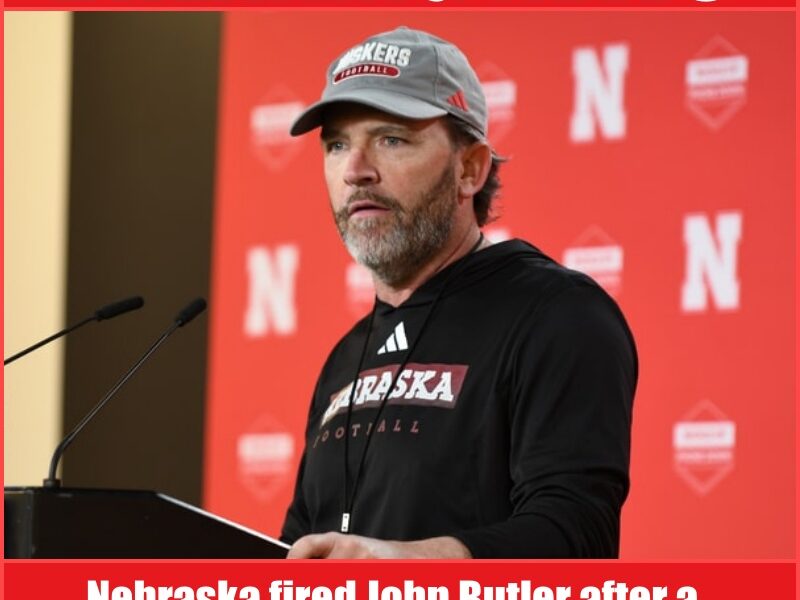
PATIENCE RAN OUT! The Tragic Run Ends With the Firing of Nebraska’s Defensive Coordinator.

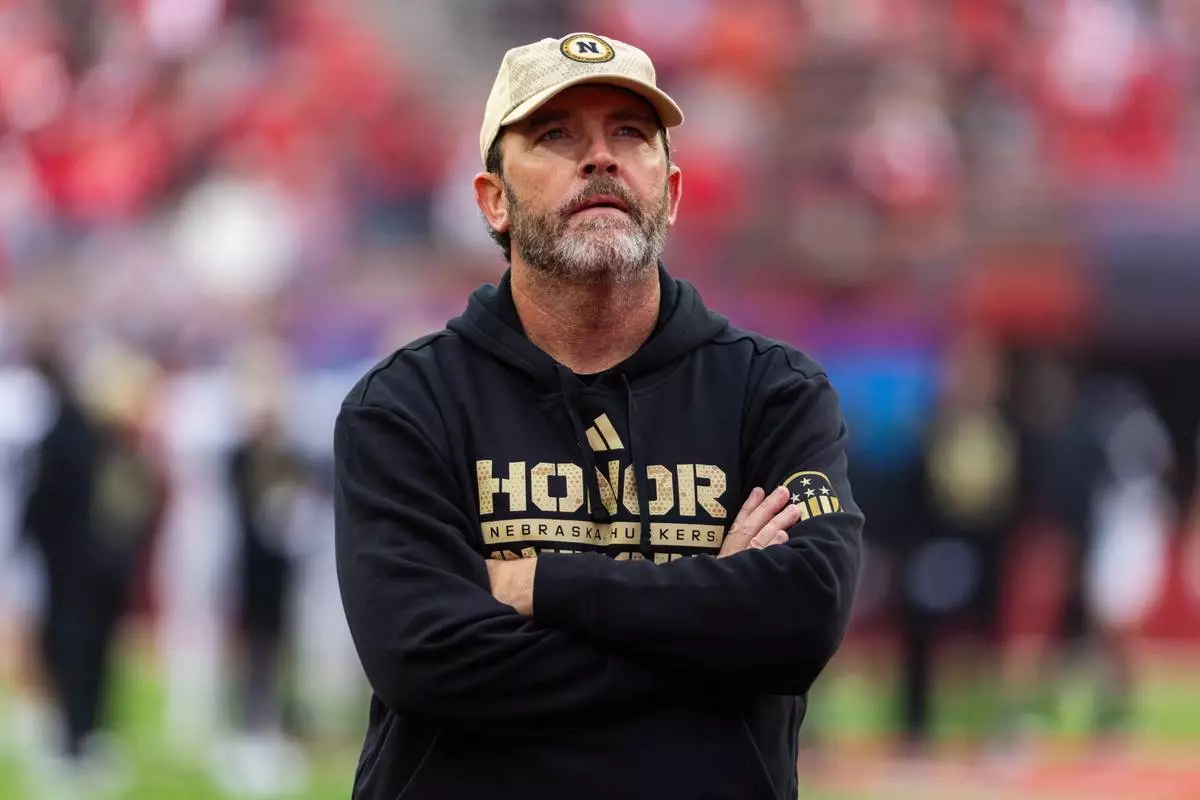
There is perhaps no coaching seat in college football as “hot” or as steeped in historical burden as a coordinator position at Nebraska. And following a season marred by late-game defensive collapses, Defensive Coordinator John Butler’s seat officially gave way. The decision to dismiss Butler was made on Monday after the Cornhuskers (7-5, 4-5 Big Ten) finished their regular season having lost four of their last six games, and having struggled throughout the entire campaign to stop the opponent’s running game.
The announcement from Head Coach Matt Rhule was concise and professional: “We thank John for his contributions to our football program over the last two seasons and wish him all the best in his coaching career.” Rhule immediately named long-time associate and former Head Coach Phil Snow as the interim defensive coordinator for the Huskers’ upcoming Bowl Game, while committing to finding Butler’s permanent replacement in the coming weeks.
This sudden move is not just a technical adjustment; it is a drastic, proactive measure taken to address a deep statistical crisis that threatened to derail Rhule’s entire program rebuilding process.
THE WEIGHT OF FAILED EXPECTATION
To fully grasp the necessity of Butler’s firing, one must look past the 7-5 record and focus on the cold, hard numbers that eroded the faith of the Nebraska fanbase:
1. The Run Defense Catastrophe
The pivotal issue was the abject failure to stop the run. Nebraska finished 14th (second-to-last) in the Big Ten Conference in run defense, surrendering a staggering 171.3 yards per game. This metric is unacceptable for a Big Ten program, where physical dominance at the line of scrimmage is the foundational standard. In their nine Big Ten games, this figure worsened to an average of 183 yards on the ground per contest.
The run defense’s consistent vulnerability allowed opposing offenses to control the clock, wear down Nebraska’s defense, and crucially, maintain drive momentum in critical third-down situations. This fundamentally undermined the team’s ability to compete with the conference’s elite.
2. Anemic Pass Rush
The ability to generate pressure on the opposing Quarterback (QB) was another area of profound weakness. The Huskers ranked 15th in the Big Ten and tied for 104th nationally with a mere 19 total sacks recorded for the season. This anemic pass rush provided opposing QBs with ample time to comfortably scan the field, leading to easy completions and compounding the pressure on the defensive backfield.
The cumulative effect of this defensive collapse was starkly illustrated in the final two regular-season games, where the Huskers were outscored by Penn State and Iowa by a combined margin of 77-26. In those two pivotal contests, Butler’s defense yielded 444 total yards and managed a meager one single sack. These losses sealed the team’s fate and extinguished any hope of a quality regular-season finale.
3. The Red Zone: A Defensive Black Hole
If run defense was the physical failure, the Red Zone defense was the psychological and execution failure. Nebraska ranked second-to-last nationally in Red Zone defense, with opponents scoring on 30 out of 31 trips (96.8%) inside the 20-yard line.
Crucially, the Huskers finished dead last in preventing Red Zone touchdowns, allowing opponents to score 24 touchdowns on those 31 trips (77.4%). This statistic reveals that when an opponent crossed the 20-yard line, they were virtually guaranteed to score a touchdown. This inability to “bend, but not break,” or even to “hold the line,” stripped the team of momentum and made victories exponentially harder to achieve.
THE NFL TRANSITION AND THE STEEP PRICE OF FAILURE
John Butler was not an inexperienced hire. He joined the Nebraska program after a distinguished NFL career, including six seasons with the Buffalo Bills, where he served as a secondary coach and Pass Game Coordinator, and four seasons with the Houston Texans. He was elevated to Defensive Coordinator when his predecessor, Tony White, took the same position at Florida State.
However, the transition from the NFL—where players are established specialists—to Big Ten college football often requires a different coaching mindset. The Big Ten demands tactical simplicity, a fierce emphasis on physical trench warfare, and the ability to motivate and quickly develop young players.
Butler’s NFL background, while impressive on paper, may have failed to translate the necessary college football rigor and foundational discipline, particularly in tackling and gap integrity against the run. The defensive philosophies, which worked well with professional secondary players, seemed fundamentally incapable of stopping the physical, ground-and-pound offenses dominating the Big Ten.
RHULE’S RESPONSE AND THE TRANSFER PORTAL GUN
The firing of a coordinator after just one year is a significant statement that Head Coach Matt Rhule felt compelled to make to preserve the integrity of the entire program. While Rhule is known for his patient, long-term approach to program building (as seen at Temple and Baylor), the modern landscape of college football dictates swift, decisive action.
The Transfer Portal Threat
The Transfer Portal is the single biggest factor accelerating this decision. Talented players will not hesitate to enter the Portal if they feel the coaching staff or the program is directionless or incapable of winning. Butler’s disastrous Red Zone and run defense statistics placed the highly-touted defensive recruits and key veterans in a difficult position.
By making the change immediately, Rhule aims to send a clear message: The leadership has recognized and acted upon the problem. This move is calculated to reassure the current roster that the program is committed to winning and stability, thus mitigating the risk of key defensive players entering the Portal during the critical winter window.
The Interim Solution: Phil Snow
Rhule’s choice of Phil Snow as interim DC is both logical and strategic. Snow is a long-time associate and trusted defensive mind, having been Rhule’s Defensive Coordinator at the Carolina Panthers (2020-2022) and previously at Baylor.
Snow brings a proven, if perhaps less fashionable, defensive philosophy and an intimate understanding of Rhule’s vision. His temporary appointment provides immediate stability and the likelihood of simplifying the defensive scheme for the Bowl Game, allowing the players to execute with confidence rather than being overwhelmed by complexity. Snow’s presence is a stabilizing force intended to secure the team’s morale before the final game and during the ensuing coordinator search.

THE ROAD AHEAD – FINDING THE RIGHT FIT
Rhule now faces a demanding, high-stakes race against the clock to find Butler’s permanent successor before the important recruiting and transfer windows close in late December and January. This hire will be one of the most critical decisions of his Nebraska tenure.
The successor must be capable of immediately addressing three critical areas:
-
Run Defense Restoration: Returning Nebraska to a position where they are among the toughest teams to run against in the Big Ten.
-
Red Zone Tenacity: Dramatically improving the Red Zone defensive efficiency, transforming the final 20 yards into a “death zone” for opponents.
-
Aggressive Pressure: Implementing tactics that effectively generate pressure and sacks, reducing the time opposing QBs have to operate.
The identity of Rhule’s new Defensive Coordinator must align perfectly with the physical and psychological demands of the Big Ten Conference. Potential candidates are likely to include those with extensive Big Ten experience, or those who have successfully run dominant defensive programs at the Power Five level, perhaps specializing in schemes known for aggressive run-stopping capabilities.
The success of the Nebraska rebuild under Rhule—particularly with the promising offensive talent led by QB Dylan Raiola—will heavily depend on the effectiveness of the defense. Butler’s firing, though painful and costly, is the necessary first step taken to ensure that the Cornhuskers’ legacy is not perpetually buried under poor statistics and historical failure.
The decision to fire Butler, while ruthless, is the cost of admission in modern college football, and Rhule’s swift action is a testament to his determination to ensure that the Cornhuskers’ historical tradition is not just a distant memory, but a future being actively rebuilt.