Polish Foreign Minister Mocks Elon Musk: “Go to Mars, There You Can Salute Like a Nazi”

The feud between Elon Musk and the European Union (EU) has escalated dramatically, with Polish Foreign Minister Radoslaw Sikorski delivering a sharp and sarcastic response to the billionaire’s recent calls to dismantle the EU. Sikorski’s remark—“Go to Mars. There you won’t be censored for saluting like a Nazi”—came after Musk had repeatedly criticized EU policies on social media, highlighting his provocative and unfiltered communication style.
The controversy began when Musk, on X, wrote that the EU should be dissolved and that sovereignty should be returned to individual member states, arguing that this would allow governments to represent their citizens more effectively. Musk even asked: “How long until the EU disappears?” accompanied by the hashtag #AbolishTheEU. His remarks followed the European Commission’s decision to fine X €120 million ($130 million) for violating transparency requirements under the Digital Services Act (DSA), which regulates large online platforms in the EU. The fine was levied because X allegedly failed to maintain transparency regarding advertising and the verification of user accounts. Musk has frequently described EU regulations as overly restrictive and detrimental to freedom of speech, framing the penalty as an attack on both X and his personal rights.
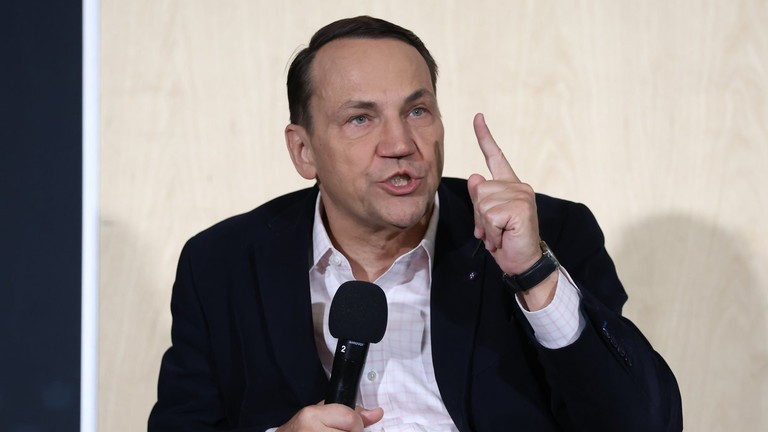
Sikorski’s retort, delivered on December 7, was a clear mixture of sarcasm and critique. By telling Musk to “go to Mars,” Sikorski was referencing Musk’s well-known ambitions for space colonization, while also indirectly mocking Musk’s tendency to make provocative gestures. The minister added that on Mars, Musk would be free from censorship, specifically in reference to the controversy surrounding Musk allegedly performing a Roman salute, which resembles the Nazi salute, during former President Donald Trump’s inauguration parade in January. The salute, a gesture banned in many countries, sparked outrage among historians, human rights activists, and Jewish advocacy groups, who accused Musk of promoting anti-Semitic symbolism. Musk denied the claims, calling the comparison an “old political attack” and insisting that his gesture had been misinterpreted.
Musk’s ambitions for Mars are well-documented. He has consistently promoted the vision of establishing a permanent human settlement on the Red Planet. SpaceX has outlined plans to send the first humans to Mars by 2026, aiming ultimately to build a self-sustaining community of 1 million people by 2050. These ambitious goals, while inspiring, have also drawn intense scrutiny, especially when juxtaposed against Musk’s public controversies and confrontational style on social media. Even former U.S. President Donald Trump noted Musk’s promises to advance human settlement on Mars during his administration. Sikorski’s comment cleverly combined criticism of Musk’s social media behavior with a jab at his grandiose space ambitions, implying that such ambitions do not exempt him from scrutiny or accountability on Earth.
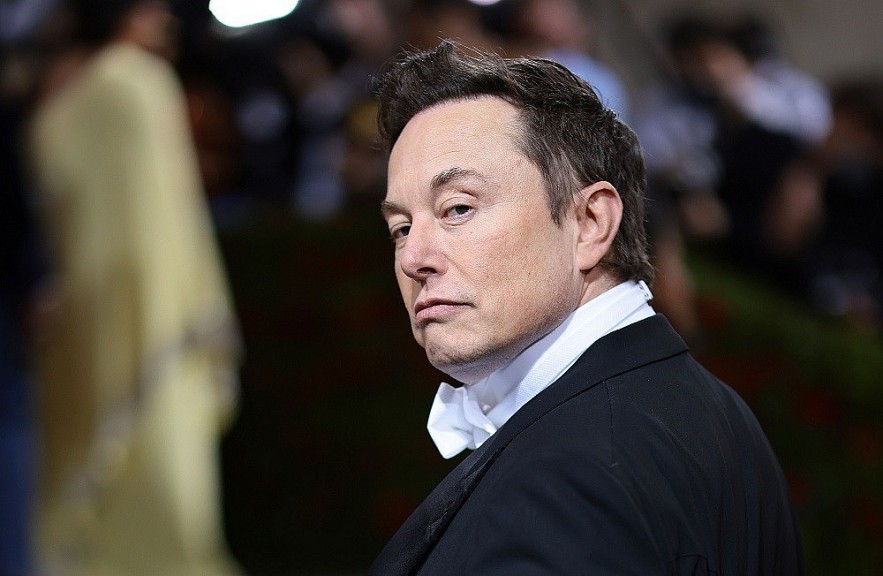
The feud intensified further after Musk responded under a post titled “The Fourth Reich”, which depicted the EU flag peeled back to reveal a swastika. Musk’s reply, simply “pretty much”, reinforced the ongoing controversy, suggesting a provocative alignment between his criticisms of EU bureaucracy and historical symbols of authoritarianism. This act drew widespread attention and condemnation from multiple sectors, highlighting Musk’s penchant for blending political commentary with shock value.
This exchange also reflects broader tensions between Musk and international regulators. Musk’s outspoken criticism of the EU follows previous conflicts, including a €120 million fine against X for allegedly misleading users regarding the paid verification system (the “blue check”), as well as claims of insufficient transparency in advertising and limited access to research data. Musk has framed these actions as politically motivated attacks on free speech, portraying himself as a defender of individual liberties against bureaucratic overreach.
The controversy has ignited reactions worldwide. In the United States, officials have criticized the EU’s approach, arguing that such actions could threaten freedom of expression and unfairly target American companies. In Poland, Sikorski’s response demonstrates a willingness among some European politicians to openly confront Musk’s provocative rhetoric, even while acknowledging the underlying humor in referencing his space ambitions. In Russia, similar disputes over Musk’s influence and statements have drawn attention, further emphasizing the global dimension of his social media activity.
Musk’s confrontational approach—whether through social media posts, provocative imagery, or controversial gestures—ensures that public attention remains firmly focused on him and his ventures. By blending sharp criticism of EU policies with references to his space exploration projects, Musk creates a narrative that simultaneously positions him as a visionary and a provocateur. Sikorski’s quip, suggesting Musk should move to Mars to escape earthly rules, encapsulates the tension between Musk’s grand ambitions and the political, social, and ethical responsibilities he faces on Earth.
As the drama continues to unfold, it underscores Musk’s ability to dominate global media cycles, leveraging controversy to highlight both his technological ambitions and his opposition to regulatory oversight. Whether Musk’s rhetoric will have tangible effects on EU policy or remain a series of sensational social media exchanges remains uncertain. However, the interaction between Musk and Sikorski, coupled with Musk’s larger clashes with the EU, demonstrates the unique position the billionaire occupies at the intersection of technology, politics, and public spectacle.
In the end, this episode is more than a personal spat—it illustrates the broader clash between innovation, regulation, and freedom of expression in the modern era. Musk’s unfiltered style and Sikorski’s biting sarcasm ensure that the debate over EU oversight, free speech, and Musk’s influence in global affairs will remain a hot topic for months to come, capturing attention far beyond the tech and political communities.
https://www.youtube.com/watch/fXARPOqweUA