
President Trump Signals Talks With Elon Musk on Restoring Internet Access in Iran Amid Unrest

Former U.S. President Donald Trump said on January 11 that he plans to speak with billionaire entrepreneur Elon Musk about the possibility of restoring internet access in Iran, following several days of nationwide outages that coincided with escalating protests. The remarks have reignited global attention on the role of private technology companies—particularly SpaceX and its Starlink satellite network—in geopolitical crises and information blackouts.
Speaking to reporters, Trump was asked whether he would work with Musk’s company SpaceX to help reestablish connectivity in Iran. His answer was direct and characteristically confident. “He’s very good at things like that,” Trump said, referring to Musk. “And he has a very good company.” Though brief, the statement carried significant weight, suggesting a potential collaboration between political leadership and private space-based infrastructure to address a highly sensitive international issue.

A Nation Cut Off
Iran has experienced a near-total internet shutdown since January 8, severely disrupting the flow of information both within the country and to the outside world. The blackout came as protests intensified across multiple cities, marking what many observers describe as the most serious wave of unrest the country has seen in years. With traditional telecommunications infrastructure disabled or restricted, millions of Iranians have been unable to communicate freely, access news, or share footage of events on the ground.
Human rights organizations and digital freedom advocates have long warned that internet shutdowns are increasingly used by governments as tools of control during periods of unrest. In Iran’s case, the prolonged loss of connectivity has raised alarms about transparency, civilian safety, and the ability of the international community to monitor developments in real time.
Starlink and the Promise of Connectivity
SpaceX’s Starlink satellite internet service has emerged in recent years as a potential workaround in situations where terrestrial infrastructure is unavailable, damaged, or deliberately shut down. The service relies on a constellation of low-Earth-orbit satellites capable of delivering broadband internet directly to user terminals on the ground, bypassing traditional telecom networks.
Starlink has previously been deployed in crisis zones and regions with limited infrastructure, including parts of Ukraine, disaster-stricken areas, and remote communities worldwide. Musk has also previously expressed support for making Starlink available to the Iranian public, particularly during periods when the government restricts internet access.
Despite Trump’s comments, neither Musk nor SpaceX has publicly responded to requests for comment regarding potential new deployments in Iran. Any such effort would likely face significant technical, legal, and diplomatic challenges, including sanctions compliance, equipment distribution, and the risk of retaliation against users on the ground.
A Complicated Relationship Revisited
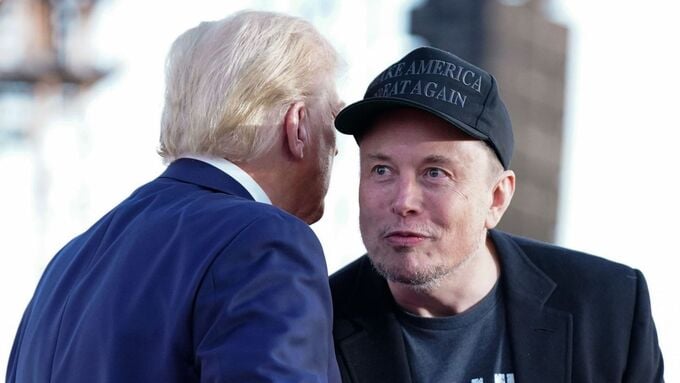
The prospect of Trump and Musk working together again adds another layer of intrigue. Their relationship has been marked by sharp turns over the years. Musk previously provided financial support to Trump’s presidential campaign and later played a role in advising on government efficiency initiatives. However, the two publicly fell out last year after Musk criticized one of Trump’s flagship tax proposals, leading to a period of visible tension.
More recently, signs of reconciliation have emerged. In January, Musk and Trump were seen dining together at Trump’s Mar-a-Lago resort in Florida, fueling speculation about renewed cooperation. Adding to that speculation, U.S. Defense Secretary Pete Hegseth is reportedly scheduled to visit a SpaceX facility in Texas in the coming days, a move that underscores the growing strategic importance of the company’s technology.
Technology Meets Geopolitics
The idea of using satellite internet to counter government-imposed blackouts raises complex questions. On one hand, supporters argue that access to information is a fundamental human right, and that technologies like Starlink can help protect free expression and transparency during crises. On the other hand, critics warn that such interventions can escalate tensions, violate national sovereignty, or put civilians at risk if authorities crack down on those found using unauthorized connections.
Trump’s comments suggest a willingness to view Starlink not just as a commercial product, but as a geopolitical tool—one capable of shaping narratives and outcomes during moments of instability. For Musk, whose companies already sit at the intersection of technology, defense, and global communications, the situation highlights both the influence and the responsibility that comes with controlling critical infrastructure.
Silence From SpaceX—for Now
As of now, SpaceX has not confirmed any new action regarding Iran. Deploying Starlink in the country would not be as simple as flipping a switch. Ground terminals would need to be physically present, users would need power sources, and the service would have to operate in a highly restrictive regulatory environment. Moreover, international sanctions and export controls could complicate any direct involvement without explicit governmental authorization.
Still, even the discussion of Starlink has symbolic power. For many Iranians, the possibility of restored connectivity represents more than access to social media—it represents a lifeline to the outside world and a means of documenting their reality.

A Test Case for the Future
The situation in Iran may serve as a defining test of how private technology companies interact with global politics in the coming decade. As governments increasingly rely on digital controls, and as private actors develop tools capable of bypassing those controls, the boundaries between state power and corporate influence continue to blur.
Trump’s stated intention to speak with Musk signals that these boundaries are not just theoretical—they are actively being negotiated in real time. Whether or not Starlink ultimately plays a role in restoring internet access in Iran, the conversation itself reflects a shifting landscape where satellites, software, and individual billionaires can shape outcomes once reserved for nation-states.
As unrest continues and the world watches closely, one question looms large: in an era of global connectivity, who truly controls access to information—and who decides when it can be turned back on?