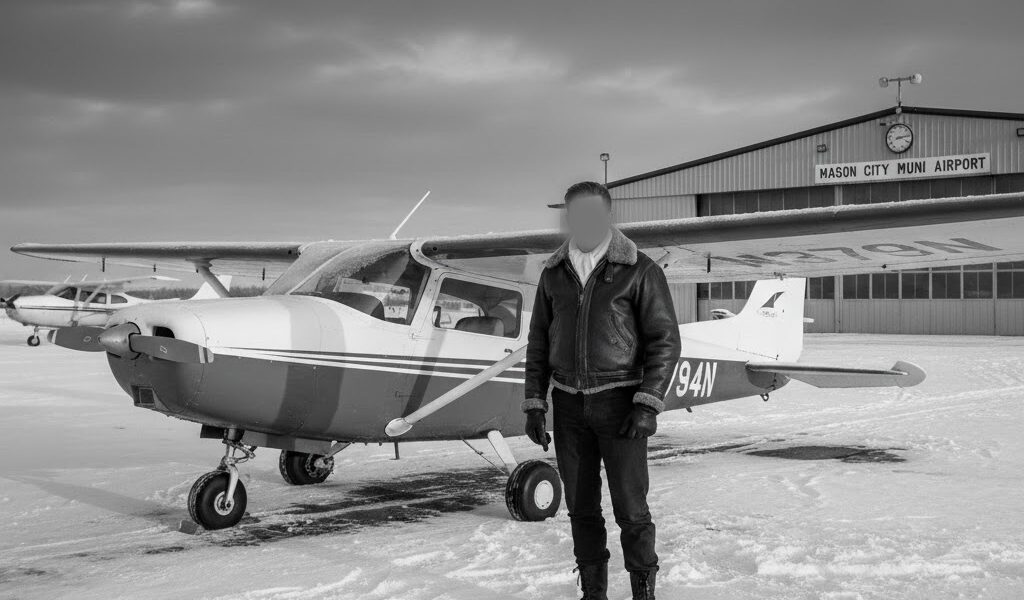
The Fatal Flight: The Hidden Truth of Pilot Roger Peterson and “The Day the Music Died”

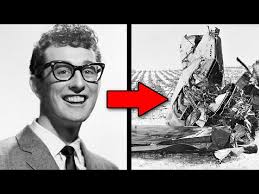
The tragedy that claimed the lives of Buddy Holly, Ritchie Valens, and J.P. “The Big Bopper” Richardson on February 3, 1959, is often attributed to the brutal Iowa winter. However, for decades, aviation experts and historians have pointed to a far more controversial factor: the man in the cockpit.
Roger Peterson, the 21-year-old pilot of the Beechcraft Bonanza, has become a central figure in a debate over responsibility, experience, and the thin line between ambition and safety.
A Pilot Out of His Depth
According to the official investigation and documents released in the years following the crash, Peterson was far less experienced than the musicians—or the charter company—likely believed. While Peterson was a dedicated pilot, his qualifications were fatally mismatched for the conditions he faced that night.
-
Lack of Instrument Rating: At the time of the flight, Peterson did not hold an Instrument Flight Rating (IFR). This is a critical qualification that allows a pilot to fly using only the aircraft’s instruments when they cannot see the horizon or the ground.<!–>
–>
-
Restricted License: Peterson held a commercial pilot’s license, but his certification was restricted to Visual Flight Rules (VFR). This meant he was legally only allowed to fly in clear weather where he could maintain visual contact with the terrain.
-
The Weather Trap: On the night of the flight, the skies over Clear Lake, Iowa, were a chaotic mix of heavy snow, 30-mph winds, and a low ceiling of clouds. Once the plane took off into the pitch-black night, Peterson lost all visual reference points.
The “Sperry F3” Confusion
One of the most tragic technical details of the flight involved the plane’s Attitude Indicator (the instrument that shows if the plane is level).
The Beechcraft Bonanza was equipped with a Sperry F3 attitude gyroscope. Unlike the instruments Peterson had trained on, which moved in one direction to indicate a climb or bank, the Sperry F3 displayed the information in the opposite direction.<!–>–>
In the middle of a blinding snowstorm, Peterson likely looked at his instruments to correct his flight path but misread them due to his lack of familiarity with that specific model. Instead of pulling the plane up, he likely steered it directly into the ground, unaware that he was descending.
The Weight of Responsibility
The Civil Aeronautics Board (CAB) ultimately ruled that the primary cause of the crash was pilot error due to Peterson’s inability to fly in instrument weather. However, the controversy doesn’t stop with Peterson. Many blame the charter company, Dwyer Flying Service, for allowing a young, non-instrument-rated pilot to take off into a gathering storm.
Peterson was under immense pressure. He was a young man trying to prove himself, flying three of the biggest stars in the world who were desperate to escape a freezing, broken-down tour bus. That pressure, combined with a lack of critical training, created a “perfect storm” that ended in disaster.
Conclusion: A Legacy of Safety
The death of Roger Peterson and his famous passengers led to significant changes in aviation safety and pilot training requirements. Today, the tragedy serves as a sobering “textbook case” for new pilots about the dangers of spatial disorientation and the absolute necessity of respecting weather minimums.
While Peterson is often remembered as the man who crashed the plane, he was also a victim of the same ambition and haste that defined the “Winter Dance Party” tour. He wasn’t a villain; he was a pilot who flew into a darkness he wasn’t yet trained to navigate.
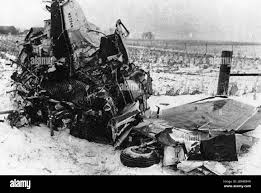
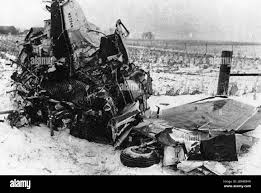
The tragedy of February 3, 1959, is etched into history as “The Day the Music Died.” We know the facts: the freezing Iowa winter, the malfunctioning bus heater, the fateful coin toss, and the Beechcraft Bonanza that plummeted into a cornfield. But beneath the cold, hard data of the crash report lies a chilling layer of folklore and witness testimony regarding a premonition that Buddy Holly reportedly shared—a dream that suggested he knew the end was coming.
The Vision: A Flight with No Destination
According to accounts shared by those close to him, including his widow Maria Elena Holly, Buddy experienced a recurring and vivid nightmare in the weeks leading up to the “Winter Dance Party” tour. The details were remarkably specific:
-
The Setting: Buddy described being trapped inside a small airplane. Outside the windows, there was nothing but a “pitch-black sky,” devoid of stars or moonlight.
-
The Chaos: In the dream, violent winds howled against the fuselage, and the cockpit instruments began to spin wildly, failing to provide any guidance.
-
The Feeling: Most hauntingly, Buddy didn’t describe a feeling of terror or a mid-air explosion. Instead, he spoke of a profound, heavy helplessness. He told friends that in the dream, he realized with absolute certainty that the flight would simply never land.
“We Were Dreaming the Same Dream”

The mystery deepened when Maria Elena revealed that she, too, was plagued by terrifying visions during that same period. While Buddy dreamed of the plane, Maria Elena dreamed of a “great ball of fire”—a comet falling from the sky and burning a deep, smoldering hole into the earth.
On the day Buddy was set to leave for the tour, Maria Elena, who was two weeks pregnant at the time, begged him to stay. She had a visceral feeling that something was wrong. In a tragic twist of fate, Buddy insisted she stay behind to rest due to her morning sickness. It was the only tour she did not accompany him on.
“It was like someone was saying something to me, and I didn’t listen,” Maria Elena later recalled. “We were both dreaming the same dream at the same time.”
Echoes of Fate: Premonitions Across the Tour
Buddy Holly wasn’t the only one surrounded by eerie coincidences during that ill-fated tour:
-
Ritchie Valens: The 17-year-old star had a lifelong fear of flying stemming from a childhood trauma where a plane crashed into his school playground. He reportedly told friends, “I’ll land on my guitar,” when asked what he’d do if a plane went down.
-
Waylon Jennings: Buddy’s bassist famously gave up his seat to the Big Bopper. When Buddy jokingly said, “I hope your damn bus freezes up,” Waylon replied with the words that would haunt him for life: “Well, I hope your ol’ plane crashes.”
Conclusion: A Legacy Enshrined in Mystery
Whether Buddy Holly’s dream was a genuine premonition or a manifestation of the extreme stress of a grueling winter tour, it adds a supernatural weight to the tragedy. The dream of a “flight that never lands” has become a central part of the Buddy Holly mythos—a chilling reminder that sometimes, the subconscious senses a storm long before the first snowflake falls.
Today, the crash site in Clear Lake, Iowa, remains a place of pilgrimage. Fans leave guitar picks and coins at the memorial, but for many, the true heart of the story remains that silent, dark cockpit in Buddy’s dream—a place where the music didn’t die, but simply transitioned into the eternal.
