
The WNBA is facing one of the most consequential moments in its history—and not because of anything happening between the lines.
A league that has spent years clawing its way into mainstream relevance now finds itself mired in a labor standoff that has spilled far beyond negotiation rooms and into the court of public opinion. What should have been a structured, strategic Collective Bargaining Agreement discussion has instead become a public relations firestorm—one that risks undermining the very momentum women’s basketball has worked so hard to build.
At the center of the controversy is the WNBA Players Association, whose recent protest tactics—including the placement of an inflatable rat outside the NBA Store—have stunned fans, sponsors, and analysts alike. For many observers, the symbolism felt less like advocacy and more like escalation, turning a complex economic discussion into a spectacle.
And the timing could not be worse.
A League Finally Gaining Momentum
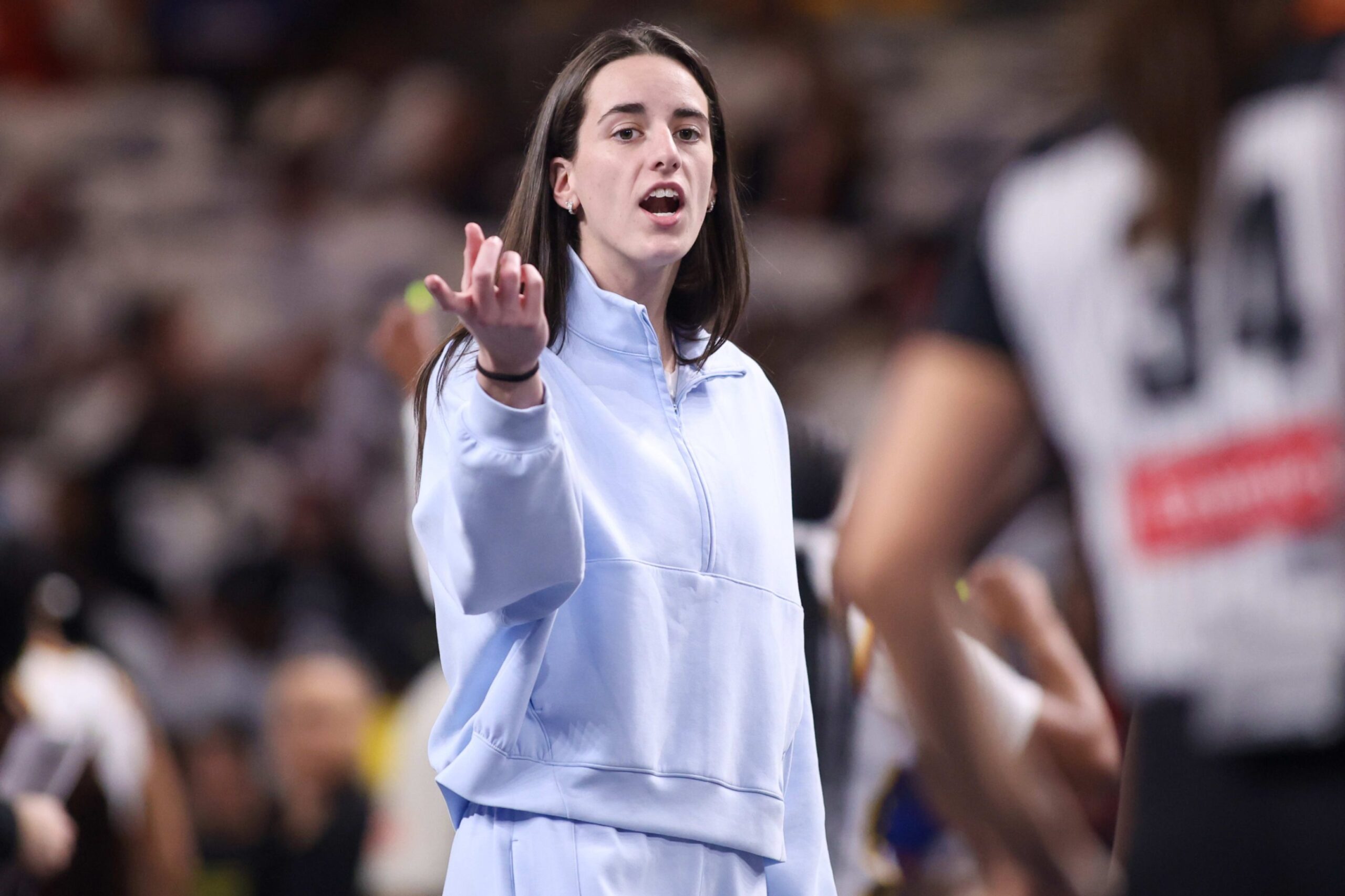
The WNBA is not a struggling afterthought anymore. Attendance is rising. Television ratings are climbing. Jerseys are selling. Social media engagement is exploding. And at the heart of this resurgence stands a new generation of stars—most notably Caitlin Clark—who have drawn unprecedented attention to the league.
For the first time in decades, women’s basketball feels like it’s breaking through the ceiling rather than pressing against it.
That momentum is fragile.
It depends on public goodwill, sponsor confidence, and the perception that the league is moving forward—not imploding from within.
Which is why the current standoff feels so alarming.
The Numbers No One Can Ignore
According to widely reported figures, WNBA owners have proposed significant improvements in the new CBA, including doubling base salaries, upgrading travel conditions, and expanding player benefits. These concessions are not insignificant. In fact, they represent the most aggressive financial commitment the league has ever made to its players.
Yet the union’s response has been to demand a 50–50 revenue split, mirroring the NBA model.
On paper, the demand sounds fair. In practice, it raises difficult questions.
The WNBA, by most public accounts, has not consistently turned a profit in nearly three decades. It has survived—and recently grown—because of long-term investment, NBA backing, and patience. Revenue sharing works when there is revenue to share. When margins are thin or nonexistent, it becomes a philosophical stance rather than a sustainable business model.

That reality does not negate players’ concerns. But it does complicate them.
When Messaging Becomes the Story
Labor disputes are not new in sports. But successful ones are usually defined by discipline, clarity, and public trust.
What has unsettled many observers is not just the substance of the WNBPA’s demands, but the optics of how they are being presented.
The inflatable rat—a symbol historically associated with hostile labor protests—sent a jarring message. To casual fans just discovering the league, it looked chaotic. To sponsors evaluating long-term partnerships, it looked risky. To critics of women’s sports, it provided ammunition they did not need to invent.
Instead of centering the conversation on fairness, growth, and partnership, the narrative has shifted toward confrontation and dysfunction.
And perception matters.
A Battle for the League’s Identity
This is no longer just a negotiation over percentages and guarantees. It has become a struggle over what the WNBA wants to be in this moment of opportunity.
Is it a league positioning itself as a growing business that understands patience and partnership?
Or is it a league willing to gamble its momentum on a hardline stance, even if the numbers don’t yet support it?
Neither players nor owners are villains here. But both sides are now operating under the glare of unprecedented attention—and missteps carry heavier consequences than ever before.
The danger is not that the league will disappear overnight. The danger is that confidence will erode.
Sponsors hesitate. Casual fans drift. Media narratives turn cynical. And once momentum stalls, restarting it is far harder than building it the first time.
The Caitlin Clark Effect—and the Risk of Squandering It
Caitlin Clark did not create the WNBA’s growth alone, but she symbolizes it.
She brought new eyes. New demographics. New energy. She made people care—sometimes for the first time.
That attention is not guaranteed to stay.
Fans drawn in by competition and excellence are not invested in labor politics. They want to watch games. They want heroes and rivalries, not headlines about standoffs and protests. If the league begins to feel unstable or hostile, many will simply move on.
That would be a tragedy—not just for owners or players, but for the sport itself.
Reality vs. Aspiration
Players deserve better pay. That is not in dispute.
The question is how and when that progress happens.
Aspiration must be balanced with sustainability. Growth must precede equal division. Partnerships require trust. And trust is built not through public spectacle, but through credible negotiation.
The WNBA has always been different from other leagues—not just in structure, but in philosophy. It has survived by understanding its place in the ecosystem and growing strategically.
To abandon that approach now, at the very moment the league is finally breaking through, would be a devastating miscalculation.

The Path Forward
This crisis is not irreversible.
Both sides still have the opportunity to recalibrate—privately, professionally, and with long-term vision. That means lowering the temperature, re-centering the conversation on shared success, and recognizing that the league’s survival and growth benefit everyone involved.
The worst outcome would be a public breakdown that leaves fans disillusioned and progress undone.
Women’s basketball has waited too long, fought too hard, and earned too much momentum for that.
The silence on the court right now is indeed deafening. But it does not have to be permanent.
If cooler heads prevail, this moment could become a turning point—not a collapse, but a course correction.
If not, the league risks learning a painful lesson: you don’t win the future by setting fire to the present.
And in a sports world that finally started paying attention, that would be a loss no one can afford.